
Feeling overwhelmed about your roof? That’s normal. Most homeowners don’t think much about it until a leak shows up after a hard rain, shingles start looking worn, or a home inspection raises concerns you weren’t expecting. Then you’re suddenly trying to sort through estimates, warranties, permits, and contractor promises while worrying about water getting into your home.
That’s a lot to carry, especially in the Seattle area, where roofs deal with steady moisture, moss, wind, and long gray stretches that can turn a small problem into interior damage fast. If you’re noticing stains on the ceiling, damp attic smells, missing shingles, or just a roof that’s getting older, this applies to you now.
The good news is that choosing well usually comes down to asking better questions up front. The contractor’s answers will tell you a lot about how they work, how they handle problems, and whether they’re set up to protect your home instead of creating new headaches.
1. Are you licensed, insured, and bonded for work in Washington State?
A roof leak during a Seattle rainstorm puts people in a hurry. That is when homeowners are most likely to skip the boring questions and trust a clean estimate or a friendly sales pitch. Start with credentials instead.
A Washington roofer should be able to give you their contractor license number, proof of insurance, and bond information right away. Then verify it before anyone sets foot on your roof. In this area, where wet weather can turn a delayed or poorly handled job into interior damage fast, that basic screening protects you from more than paperwork problems. It protects your house, your budget, and your options if something goes wrong.
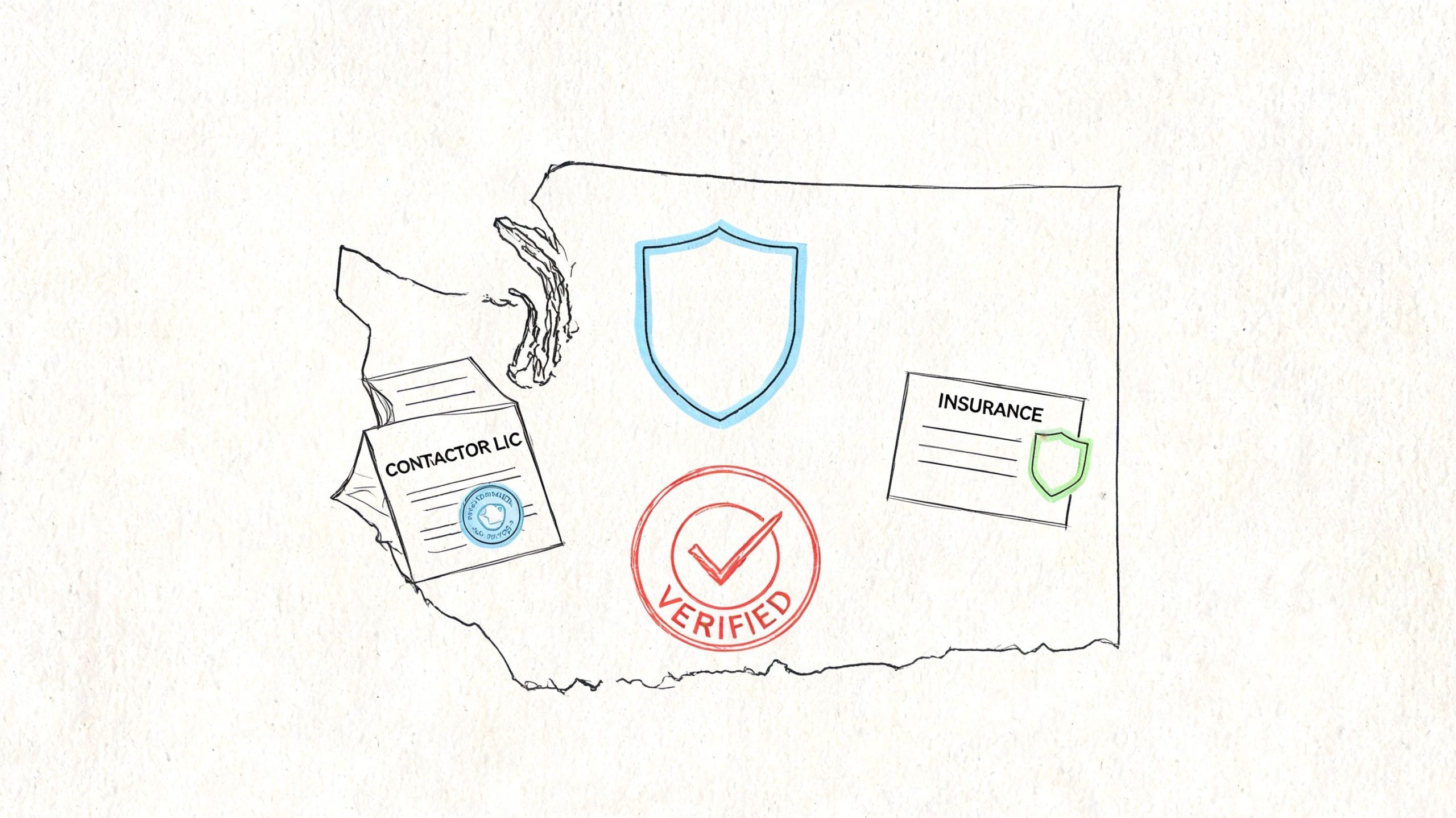
Licensing tells you the company is registered to work in Washington. Insurance matters if a worker is injured or if part of your property is damaged during the project. Bonding gives you another layer of recourse if the contractor fails to meet basic obligations. Those are real protections, not box-checking.
Ask for three things:
- License number: Verify that it is current and matches the company name on the proposal.
- Insurance certificate: Confirm they carry general liability and workers’ compensation.
- Bond information: Ask for proof, not a verbal assurance.
Pay attention to how they respond. A professional roofer who works in the Seattle area should expect this question and answer it plainly. Hesitation, vague answers, or pressure to skip verification usually point to bigger problems later.
If you want a local checklist, this guide on Seattle roofing challenges homeowners should account for helps explain why contractor vetting matters more here than it does in drier climates.
For a deeper homeowner guide, Four Seasons Roofing covers what to verify in this article on how to choose a roofing contractor.
2. How long have you been roofing in the Puget Sound area?
Experience matters. Local experience matters more.
A roofer who understands Western Washington knows what constant moisture does to roof surfaces, how shade changes wear patterns, and why the same material can perform differently in different neighborhoods. A home under tall trees in Redmond often deals with very different maintenance issues than a home closer to the water in Burien or Shoreline.

At Four Seasons Roofing, the team has served Western Washington homeowners since 1996. That kind of staying power matters because warranties only help if the company that issued them is still around to answer the phone.
What local experience looks like
A contractor with real Puget Sound experience should be able to talk plainly about:
- Moss-prone roofs: Especially on homes under trees in Sammamish, Redmond, and similar shaded areas.
- Wind-driven rain: Common during storms when water finds weak points around flashing and roof edges.
- Salt-air wear: Homes near the water can see faster corrosion on certain metal components.
Ask how long they’ve operated under the same business name in this area. Ask whether they use stable in-house crews or rely heavily on changing labor. Ask what roofing problems they see most often on homes like yours.
If you want a homeowner-focused look at the region’s roofing conditions, this page on the difficulties of roofing in Seattle WA explains why local knowledge changes the quality of the result.
3. Can I see examples of your work and talk to past customers?
A roof can look great in a photo the day it is finished. The better test is what the job looked like to the homeowner three months later, after a stretch of Seattle rain and a few windy nights.
Ask to see projects that match your home as closely as possible. A low-slope roof in West Seattle, a steep composite roof under heavy tree cover in Redmond, and a metal roof near the water in Shoreline all age differently and call for different details. Good contractors should be able to show work similar to yours and explain why they used those materials and methods. If you are still comparing systems, this guide to best roofing material for Seattle-area homes can help you ask better follow-up questions.
Recent references matter more than a gallery page. A company may have strong work from years ago but different crews today. Ask for a few customers from the last 6 to 12 months, then call them.
What to ask a past customer
Keep the conversation short and specific.
- Did the crew protect the property? Ask about landscaping, driveways, siding, and magnetic nail cleanup.
- Did the schedule hold up reasonably well? In our area, rain delays happen. What matters is whether the contractor explained changes clearly and kept the job moving.
- How did they handle surprises? Roof replacements in older Seattle homes often uncover wet decking or hidden flashing problems around chimneys and skylights.
- Has the roof performed well since the job was finished? Ask whether they have seen any leaks, loose materials, or callback issues.
Online reviews still have value, but read them with a filter. Look for patterns instead of star ratings alone. Repeated comments about missed callbacks, sloppy cleanup, or billing surprises usually tell you more than one glowing review.
If a contractor avoids sharing recent jobs, gives only vague photo examples, or steers you away from speaking with past customers, treat that as useful information. In roofing, reluctance usually shows up for a reason.
4. How will you address our region’s specific weather challenges?
This question separates general sales talk from real local knowledge.
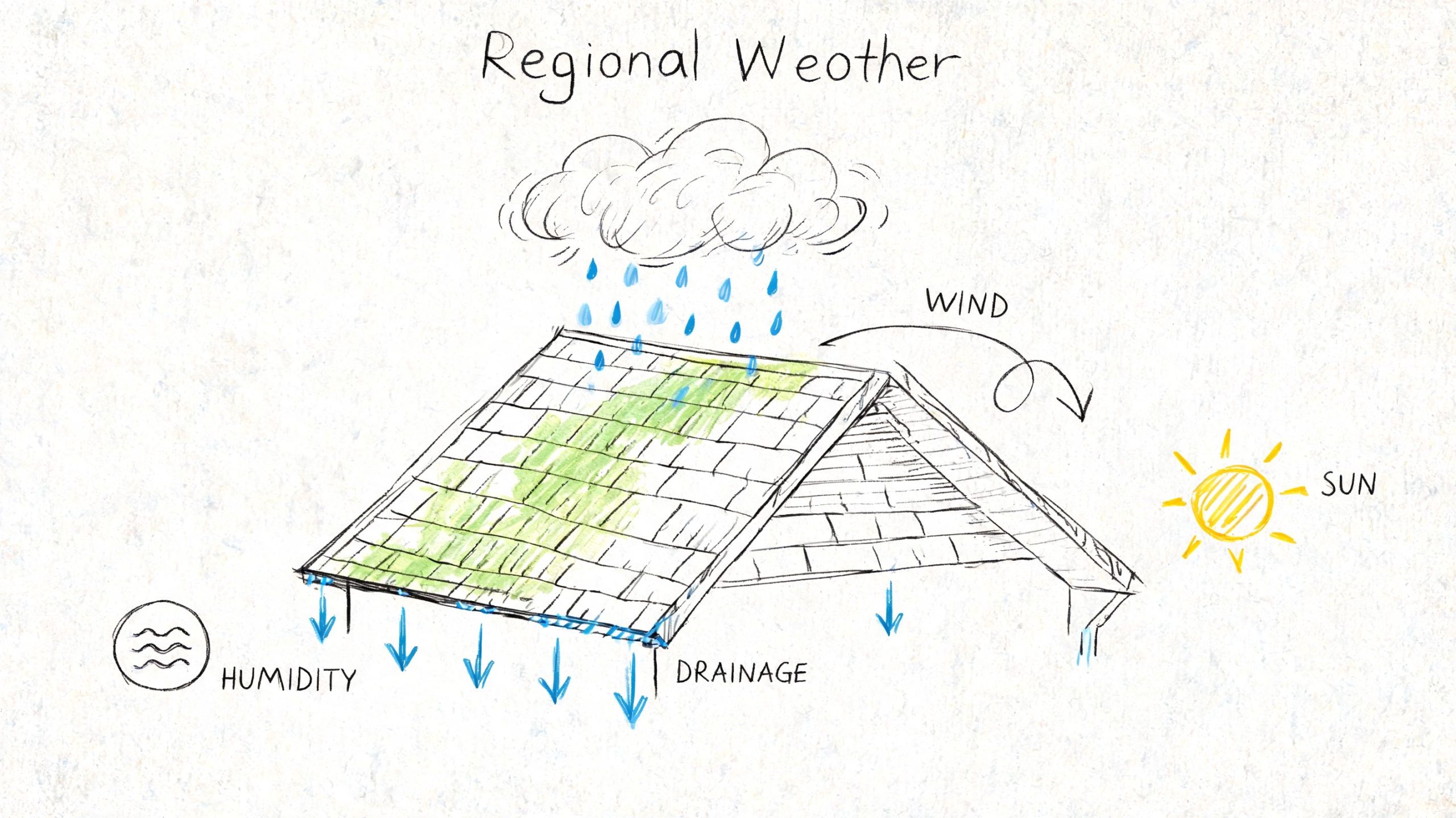
A contractor should be able to stand on your property, look at your roof, and explain where water is likely to sit, where moss is likely to grow, and what details matter most for your home. If your house sits under heavy tree cover in places like Sammamish or Redmond, you’ve probably already seen moss build up in the shaded sections. If you’re closer to the water in Shoreline or Burien, you may see faster wear on exposed metal parts.
Listen for specific answers
A strong answer should mention more than “good shingles.” It should cover how they’ll manage the full water path across your roof.
Ask things like:
- How will you handle moss risk on this roof?
- What’s your plan for flashing and valleys during heavy rain?
- How will attic ventilation help with moisture in our climate?
- What materials do you recommend for this location and exposure?
If you’re still deciding between roofing types, this guide on the best roofing material can help you match material choices to your home and the weather it deals with.
A roofer who can’t explain how your specific roof handles Seattle rain is asking you to trust them blindly.
5. What’s your communication plan during the project?
A Seattle roofing job can look fine at 8 a.m. and change by lunch. The crew tears off a section, the forecast shifts, and now you need to know who is calling you, what happens next, and how your home will stay protected before the next round of rain.
That is why communication is not a soft question. It is a job-planning question.
Ask the contractor who will keep you updated once work starts. In some companies, the person who sells the job disappears after you sign. What matters is whether you will have one reliable contact, how quickly they respond, and how changes get documented if the schedule shifts or hidden damage shows up during tear-off.
What a good communication plan includes
Clear answers should cover a few basics:
- One main contact: A project manager or crew leader who knows your job and can answer questions without passing you around.
- Update schedule: Daily check-ins, end-of-day texts, or another set routine so you know what was done and what comes next.
- Weather calls: A clear process for rain delays, site protection, and restart timing.
- Written change notes: If decking damage, flashing problems, or other extra work is found, you should see that in writing before costs change.
This matters more in the Puget Sound than many homeowners expect. Rain delays are common, and roofs here often reveal moisture damage once old materials come off. If a contractor is vague about updates before the contract is signed, that usually shows up later as missed calls, surprise charges, and confusion about who approved what.
I also tell homeowners to ask one simple follow-up question: “How will you communicate if something goes wrong?” That answer says a lot. A solid contractor will describe the process plainly, not dance around it.
If you want to compare how communication, approvals, and warranty paperwork should work together, this Seattle homeowner’s guide to roofing warranties helps connect those pieces.
At Four Seasons Roofing, homeowners are guided through a four-step process built around communication, consultation, replacement, and protection, with a dedicated crew leader on-site during the work. That kind of structure lowers stress because you know who to call and how decisions will be handled.
6. Can you explain the warranties on both materials and your workmanship?
A Seattle-area roof can fail on paper and in real life in two different ways. The shingles or membrane can have a product defect, or the roof can leak because the installation details were wrong. Those are separate warranty issues, and homeowners should hear the difference clearly before signing anything.
Material warranties come from the manufacturer. Workmanship warranties come from the roofing contractor. In our climate, workmanship often deserves the closer look. Rain exposes weak flashing, bad fastening, and sloppy penetrations fast, especially around chimneys, skylights, valleys, and roof-to-wall transitions.
Ask to see the actual warranty documents, not a sales summary. If a contractor says “lifetime warranty,” ask what that means in writing, who backs it, how long full coverage lasts, and whether coverage is prorated later.
A few questions help cut through the fine print:
- What does the manufacturer warranty cover? It should spell out defects in the roofing product itself, not installation mistakes.
- What does your workmanship warranty cover? Ask specifically about leaks tied to flashing, vent boots, valleys, and other common failure points.
- What can void the warranty? Poor attic ventilation, pressure washing, third-party repairs, or skipped maintenance can all matter depending on the roof system.
- Who handles a claim? You want to know whether the contractor helps document the issue or leaves you to deal with the manufacturer alone.
A common pitfall for homeowners: A long material warranty sounds reassuring, but it does not do much if water gets in because step flashing was installed wrong during a week of stop-and-start rain.
Four Seasons Roofing offers its Shield of Protection workmanship warranty for up to 25 years, alongside manufacturer warranties. If you want a clearer side-by-side explanation of how those two protections differ, this Seattle homeowner’s guide to roofing warranties breaks it down in plain language.
The best answer from a contractor is simple, specific, and written down. If the warranty explanation feels slippery before the job starts, it usually gets harder once there is a leak and someone has to own the fix.
7. Who handles the permits and ensures the work meets local building codes?
If a contractor suggests skipping permits to save time or money, that’s a serious warning sign.
Permits are part of how your city or county checks that work was done safely and correctly. They also matter later. If you sell your home, unresolved permit issues can slow the sale, trigger questions from buyers, or create insurance headaches after a claim.
Why this matters in real life
For homeowners, permits mean accountability. Someone besides the contractor is checking whether the work meets the required standard.
Ask these questions directly:
- Will you pull the permit? The contract should clearly say who is responsible.
- Who schedules inspections? You shouldn’t be left managing that process yourself.
- Will I get proof of final approval? Keep that paperwork with your home records.
For roofing work, this is especially important in a wet climate where code details around water handling, flashing, and fastening aren’t small details. They affect whether your roof stays watertight.
A good contractor won’t treat permits like an annoyance. They’ll treat them as part of doing the job properly.
8. Can I get a detailed, itemized quote?
A lot of roof problems start on paper, before the first bundle of shingles shows up.
In the Seattle area, a quote needs to do more than give a bottom-line number. It should spell out what is being removed, what is being installed, who handles disposal, and which parts of the roof system are included. Our weather is hard on the details. Flashing, underlayment, ventilation, and cleanup are not side items. They affect how the roof performs through months of rain, moss growth, and damp conditions.
A vague estimate makes it hard to compare contractors fairly. It also makes it easier for important work to disappear from the scope and reappear later as added cost.
Here is what a useful itemized quote should identify:
- Roofing materials by name: The quote should list the actual shingle or membrane product, not just a broad label like “composition roofing.”
- Tear-off and disposal: You want to know whether old roofing is being fully removed and hauled away.
- Underlayment and flashing: These are some of the parts that keep water out in Western Washington. They should be listed clearly.
- Ventilation work: Ridge vents, intake vents, or other changes should be described if they are part of the job.
- Cleanup and site protection: Ask how the contractor will protect landscaping, driveways, and gutters during tear-off.
- Payment schedule: Deposits, progress payments, and final payment terms should be easy to understand.
Price still matters, but scope matters just as much. A lower bid may reflect thinner materials, fewer replacement components, or missing labor that will be billed later once the project is underway.
I tell homeowners to line up quotes side by side and read them like checklists. If one contractor includes new flashing at wall lines and chimney areas and another does not mention it, those are not equal bids. The same goes for ventilation upgrades or replacing damaged sheathing if needed.
You should also be careful with payment terms. Paying the full amount upfront puts all the risk on you. A professional quote should show a reasonable payment schedule tied to real project progress and final completion.
If you want to see what a clearer estimate process looks like, Four Seasons Roofing offers a free Puget Sound roof estimate for homeowners comparing itemized roofing options.
9. How do you handle unexpected problems, like rotted wood?
Every roof looks straightforward until the old material comes off.
Then the crew may find soft decking, damaged flashing, or hidden water damage that didn’t show from the ground. In Western Washington, where roofs spend so much time wet, that’s not unusual. What matters is how the contractor handles it.
Research summarized by Extra Space notes that many homeowners report at least one surprise during a remodel, yet very few are guided to ask about a written change-order process ahead of time in this discussion of contractor question gaps. Roofing is a perfect example. Hidden damage often isn’t visible until tear-off starts.
The right answer is a written process
You want a contractor who can explain the steps clearly before the project begins.
Ask:
- How will you document hidden damage? Photos should be standard.
- How quickly will you notify me? You shouldn’t find out after extra work is already done.
- Do you require written approval before added cost? That should be in the contract.
If the contractor says “we’ll figure it out later,” you’re the one who may end up paying for that uncertainty.
A solid process looks like this. Work pauses, the issue is documented, the repair is explained in plain language, and you approve the added scope before the contractor moves forward. That protects your budget and reduces disputes.
10. What’s your team’s experience with my specific type of roof?
Not every roofer is equally strong with every roof type.
Composition shingles, standing seam metal, metal shake, and low-slope roofing all require different tools, details, and habits. A contractor who does excellent shingle work isn’t automatically the right choice for a standing seam metal roof. That’s especially true when the roof has complex lines, penetrations, skylights, or drainage challenges.
Ask for material-specific proof
If you’re considering a premium product or a less common system, ask sharper questions.
- How often do you install this exact roof type?
- Can I see nearby examples of this material on real homes?
- Has your crew been trained or certified for this system?
- What installation mistakes are most common with this roof type?
Photos of similar jobs really matter. If you’re investing in metal, ask to see metal. If you’re replacing a low-slope section over a porch or addition, ask to see low-slope work.
At Four Seasons Roofing, the team works on composition shingles, standing seam metal, metal shake and tile, and flat or low-slope systems across Western Washington. For homeowners, that matters because the details that keep water out vary a lot by material. The wrong crew can make an expensive roof fail early, even if the product itself is high quality.
Contractor Hiring: 10-Question Comparison
| Item | Implementation complexity | Resource requirements | Expected outcomes | Ideal use cases | Key advantages |
|---|---|---|---|---|---|
| Are you licensed, insured, and bonded for work in Washington State? | Low–moderate (document verification) | License, insurance certificates, bond documents, L&I lookup | Legal and financial protection, reduced homeowner liability | All roofing projects in WA; baseline vetting | Protects homeowner liability, indicates legitimacy |
| How long have you been roofing in the Puget Sound area? | Low (ask for tenure and records) | Company history, project records, local reviews | Confidence in local performance, warranty longevity | Projects in Puget Sound with climate-specific needs | Demonstrates local expertise and reliability |
| Can I see examples of your work and talk to past customers? | Moderate (contacting and reviewing references) | Before/after photos, client contacts, time to interview | Direct evidence of workmanship, timeline and cleanup practices | Evaluating contractor quality and communication | First‑hand verification of quality and service |
| How will you address our region’s specific weather challenges? | Moderate–high (technical planning) | Climate‑specific materials, ventilation strategies, design expertise | Reduced moss/moisture issues, improved drainage and durability | Homes in high‑rain, moss‑prone, windy areas | Tailored solutions for longer roof life in local climate |
| What’s your communication plan during the project? | Low (define channels and schedule) | Project manager, communication tools, written timeline | Clear expectations, fewer misunderstandings, documented updates | Large or disruptive projects; anxious homeowners | Reduces stress, central point of contact, documented progress |
| Can you explain the warranties on both materials and your workmanship? | Moderate (document review) | Manufacturer and contractor warranty documents, claim process | Defined protection for materials and installation, resale value | High‑investment materials; long‑term ownership | Long‑term protection, transferability, claims clarity |
| Who handles the permits and ensures the work meets local building codes? | Moderate (permit submission and inspections) | Permit applications, knowledge of local codes, inspection coordination | Code‑compliant installation, passed inspections, sale/insurance readiness | Any project requiring permits; resale or insurance needs | Legal compliance, inspection verification, avoids liability |
| Can I get a detailed, itemized quote? | Low–moderate (prepare itemized estimate) | Material lists, labor estimates, disposal and permit costs | Transparent pricing, easier bid comparisons, fewer surprises | Budget planning and contractor selection | Prevents hidden costs, clarifies scope and payment terms |
| How do you handle unexpected problems, like rotted wood? | Moderate–high (inspection and change order process) | Damage assessment, contingency pricing, change‑order documentation | Proper repairs with homeowner approval, minimized disputes | Older roofs or projects with unknown substrate condition | Transparent change control, protects structural integrity |
| What’s your team’s experience with my specific type of roof? | Moderate (verify certifications and portfolio) | Specialized training, material‑specific tools, project examples | Correct installation, valid manufacturer warranties, fewer defects | Specialized materials (metal, flat, premium systems) | Ensures correct technique, reduces installation failures |
Your Confident Next Step to a Secure Roof
Hiring a contractor can feel intimidating when you’re already stressed about a leak, aging shingles, or the cost of a major roof project. Most homeowners aren’t looking to become roofing experts. They just want to know who they can trust, what questions to ask before hiring a contractor, and how to avoid the kind of mistake that turns one repair into a much bigger problem.
That’s why these questions matter so much. They help you spot the difference between a contractor who gives polished answers and one who has real systems in place. You’re not just checking boxes. You’re learning how the company communicates, whether it respects permits and paperwork, how it handles surprises, and whether it stands behind the work after the crew leaves.
If you’re noticing leaks after rain, dark spots on ceilings, moss spreading across shaded roof sections, or signs that your roof is nearing the end of its life, these questions apply to you right now. Most homeowners in Seattle run into this when they’re trying to compare bids that don’t match, make sense of warranty language, or decide whether a lower price is safe. Asking the right questions early helps you slow the process down and make a cleaner decision.
The best contractors won’t be bothered by careful questions. They’ll welcome them. They’ll have documentation ready, they’ll explain things in plain language, and they’ll give you room to review the details without pressure. That kind of response usually tells you as much as the answer itself.
For homeowners in the Puget Sound area, local experience matters because your roof deals with long wet seasons, moss in shaded neighborhoods, and fast-changing weather that can expose weak workmanship in a hurry. A contractor who understands homes in Seattle, Edmonds, Redmond, Shoreline, and nearby communities should be able to connect their recommendations directly to what you’re seeing on your own home.
Four Seasons Roofing is one local option for homeowners who want that kind of conversation. The company has served Western Washington since 1996, offers complimentary inspections, and provides workmanship coverage through its Shield of Protection for up to 25 years. If you’re still deciding whether you need a repair or a full replacement, the next best step is simple. Schedule an inspection, ask these questions, and compare the answers carefully before you sign anything.
If you’d like a clear, no-pressure conversation about your roof, Four Seasons Roofing can help you understand what’s going on, what your options are, and what to do next for your home in the Seattle area.