
A lot of homeowners around Seattle, Everett, and the Eastside end up in the same spot. After a long wet stretch, they notice moss thickening on the roof, a stain showing up on the ceiling, or shingles that just don’t look right anymore. The hard part isn’t only the roof problem itself. It’s not knowing whether the fix is manageable or whether a full replacement is coming.
That uncertainty gets expensive fast in Western Washington. Constant moisture can keep small roof issues hidden until water shows up inside. Homes under heavy tree cover in places like Sammamish or Redmond often deal with moss and debris that wear roofing materials down sooner. Near the water, damp air can keep surfaces wet longer and make damage harder to ignore.
Most homeowners don’t need more roofing jargon. They need a clear answer. They need to know whether they can save the roof they have, or whether it’s time to stop patching and start over.
Is It Time for a New Roof or Can You Save Your Old One?
A roof doesn’t have to look catastrophic to be in trouble. Sometimes the warning sign is subtle. A dark spot in the attic. A leak that only shows up during heavy wind-driven rain. Granules from shingles washing into the gutters. In Western Washington, that slow kind of damage is common because rain can keep feeding the problem before anyone sees the full picture.
For many homeowners, the key question isn’t whether the roof needs attention. It’s whether the roof still has enough life left to justify restoration.
Quick answer: In a roof restoration vs replacement decision, restoration usually makes sense when the roof is still mostly watertight and has limited problem areas. It’s a lower-cost, lower-disruption option that can extend usable life by 5 to 10 years according to guidance on restoration versus replacement. Replacement is the right move when there’s structural damage, widespread leaks, or failure across the roof.
What restoration means
Roof restoration is meant to preserve a roof that still has a sound base. That can include targeted repairs and surface treatments that help the roof keep doing its job without tearing everything off.
This option is attractive because it usually costs less, creates less mess, and causes less disruption around the home.
What replacement means
Roof replacement is the full reset. The old roofing is removed down to the deck, damaged components can be found and corrected, and a new roofing system is installed.
That’s the bigger investment, but it’s also the cleaner long-term answer when the roof’s underlying condition is poor. If a homeowner is already seeing several warning signs from this list of signs you need a new roof, replacement usually deserves serious attention.
The simplest way to think about it
Restoration buys time. Replacement buys certainty.
That’s the difference most homeowners need to focus on.
Roof Restoration vs Replacement A Head-to-Head Comparison
A roof decision gets clearer when you compare what you are buying. Restoration is a shorter-term way to keep a still-serviceable roof going. Replacement is the full reset.
For Western Washington homes, that difference matters fast. Our long wet seasons, moss buildup, wind-driven rain, and debris from nearby trees can turn a small roofing problem into a bigger one if you pick the wrong path.
Here’s the side-by-side view.
| Factor | Roof Restoration | Roof Replacement |
|---|---|---|
| Upfront cost | Lower | Higher |
| Main purpose | Extend the life of an existing roof | Start over with a new roofing system |
| Best fit | Mostly watertight roof with isolated issues | Widespread damage, structural problems, repeated leaks |
| Project disruption | Usually less disruptive | More disruptive |
| Long-term outlook | Good for buying time | Better for full renewal and longer peace of mind |

Cost and value
Cost gets the first look, and that makes sense. A restoration usually comes in much lower than a full replacement. An industry cost comparison also notes that restoration can add years of service life, while replacement can improve resale appeal because buyers see a new roof as one less major expense to worry about. Those points are covered in this roof repair versus replacement cost comparison.
Here's my advice. If your roof has one problem area and the rest is still in decent shape, restoration is often smart. If leaks keep showing up in different spots, the lower price stops being a bargain.
A lower estimate means nothing if rain keeps getting in.
Time and disruption
Restoration is usually faster and easier on the household. Replacement takes more labor, more cleanup, and more coordination because the old system has to come off before the new one goes on.
That timing matters more here than it does in drier parts of the country. In Western Washington, weather windows are tighter, and a project that drags out during a rainy stretch can make homeowners understandably nervous.
What each option gives you
Restoration gives you more usable time from a roof that still has a solid base. It can be the right move if you need to control costs now and the roof qualifies for it.
Replacement gives you a fresh system from the deck up, with the chance to catch hidden trouble that patchwork repairs never fully address. If your roof has taken a beating from moss, pooled moisture, or repeated storm damage, replacement is usually the cleaner answer.
Material matters
Your roofing material changes how this decision should be made. Some materials handle moisture, moss, and age better than others, and some are harder to restore once the wear gets too far along.
If you want to compare how different systems hold up in our climate, this guide to how roofing materials compare in Western Washington conditions is worth reading before you commit.
Key Factors for Your Decision in Western Washington
A roof that might limp along in Arizona can fail fast here.
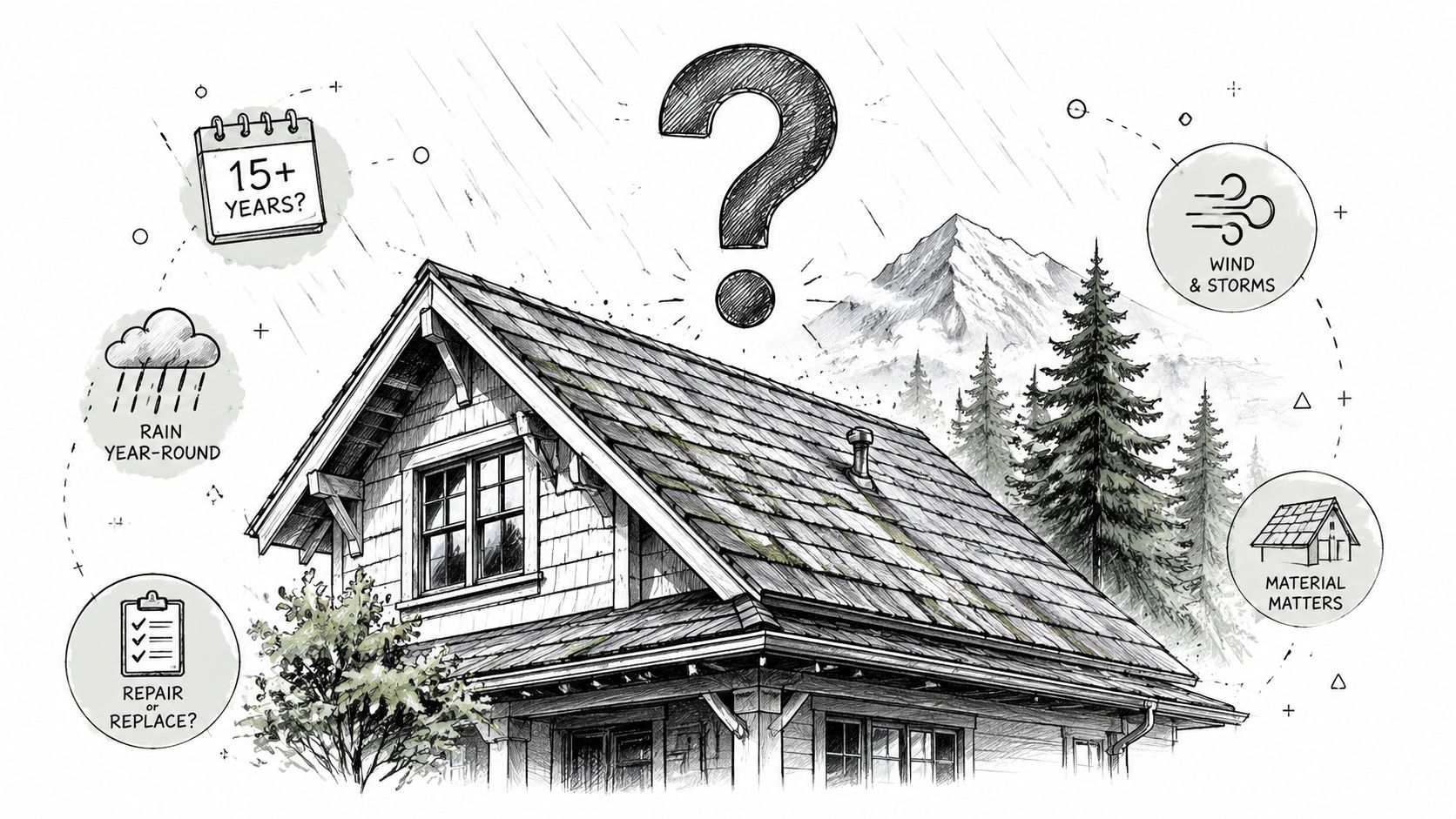
Western Washington is hard on roofing. Months of rain, long stretches of shade, moss that keeps surfaces damp, fir needles that clog valleys and gutters, and winter windstorms all change the restoration-versus-replacement decision. If you use a generic national checklist, you can miss the core problem.
Roof age matters, but moisture history matters more
Age sets the starting point. It does not settle the question by itself.
A newer roof with one damaged area often deserves repair or restoration. An older roof with recurring leaks, heavy granule loss, brittle shingles, or soft decking usually does not. In our climate, the bigger question is how long the roof has been staying wet and whether water has already worked below the surface.
That is why two roofs of the same age can need completely different answers. One may have good ventilation, clear drainage, and only minor wear. The other may sit under trees, grow moss every season, and trap moisture year after year.
Roofing material changes what is realistic
Different materials age differently in Western Washington, and that changes what you should spend money on.
Composition shingles are everywhere here for a reason. They are practical and affordable. But they wear out faster when moss takes hold or when shaded sections never really dry.
Metal roofs can often stay serviceable longer in our wet weather, but the details matter. Loose fasteners, failed sealant, seam issues, and flashing problems can turn a small repair into a bigger water-entry problem if they are ignored.
Flat and low-slope roofs need the strictest judgment. Slow drainage hides trouble. If water has been sitting, a surface treatment may dress up the roof without fixing what is underneath.
If you are weighing a shortcut like laying new shingles over old ones, read this guide on when overlaying a roof makes sense in Washington before you approve the job.
The pattern of damage tells you more than one stain on the ceiling
One leak does not always mean the whole roof is done. Trouble showing up in several areas usually means the roof system is wearing out as a whole.
Pay close attention to patterns like these:
- Leaks in more than one room or roof section: This usually points to widespread failure, not one isolated weak spot.
- Soft spots or sagging: Water may have reached the sheathing or framing.
- Heavy moss over broad areas: Moss is not just a surface mess here. It holds water against the roof and speeds up breakdown.
- Repairs that keep stacking up: If the same roof needs attention every wet season, stop feeding it patch money.
Western Washington roofs often fail slowly and imperceptibly. That is what makes them expensive. Homeowners do best when they judge the whole history of the roof, not just the latest symptom.
When a Cheaper Restoration Can Cost You More
The wrong restoration can create a bigger mess than no restoration at all.
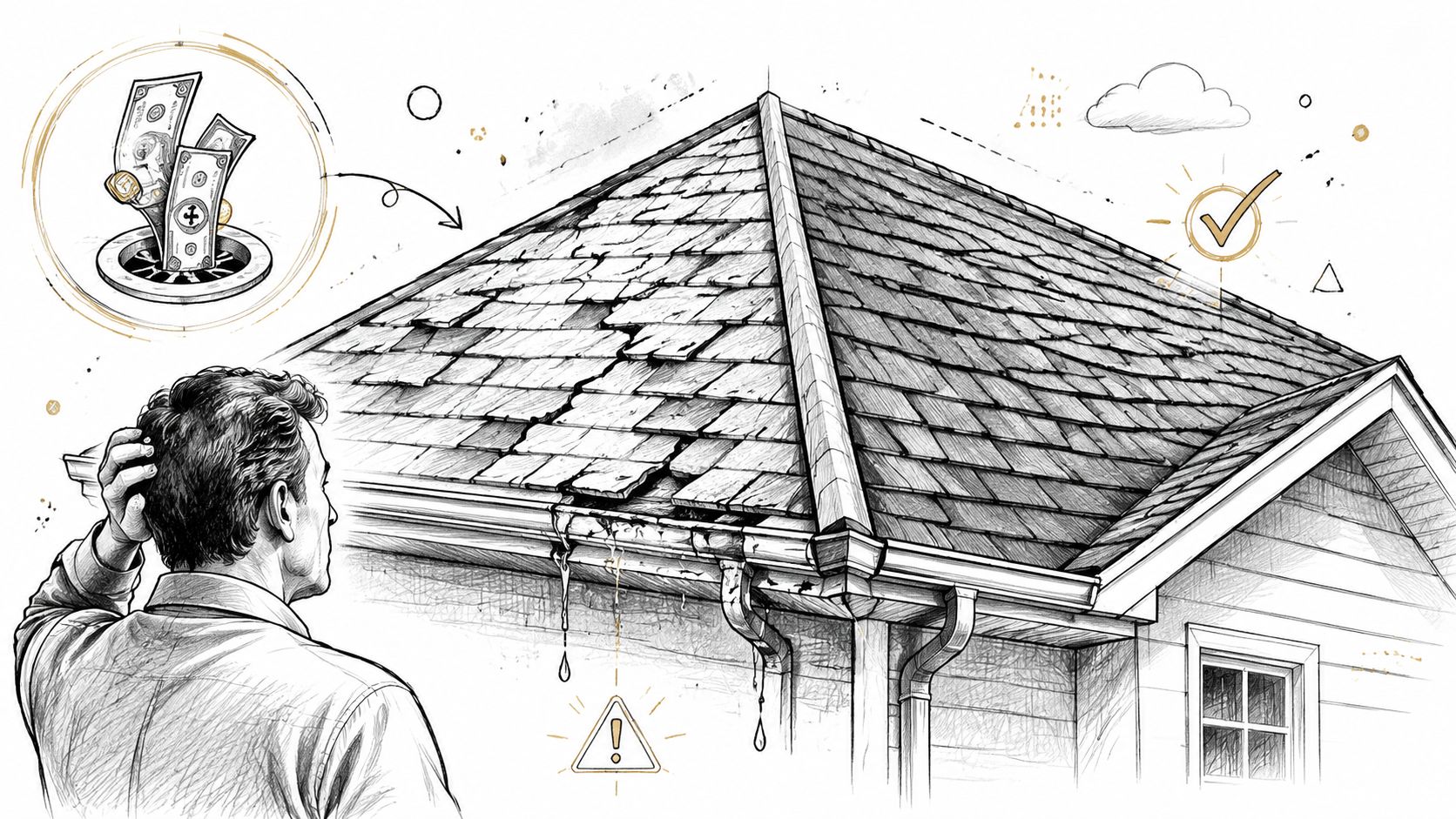
Homeowners sometimes hear “restoration” and assume it's always the smart money move. It isn't. If the roof has deeper moisture damage, widespread wear, or failing decking underneath, covering the surface is like painting over rust on a car. It may look better for a short time, but the damage keeps spreading where no one can see it.
Warning signs that shouldn't be ignored
One contractor guide says replacement becomes the only practical choice when several red flags show up together. Those signs include aging shingles, widespread wear, repeated repairs, and structural moisture concerns that a simple coating can't fix and might even hide. That guidance appears in this contractor decision guide for roof repair versus replacement.
That's the line homeowners should pay attention to. Not one small issue. A cluster of issues.
When “saving money” backfires
A restoration can cost less upfront, but it can cost more overall when it delays the repair the home needs.
That often happens when:
- The roof has leaked more than once: Repeat leaks usually mean the problem isn't isolated anymore.
- Shingles are badly worn across large areas: Restoring surface appearance won't rebuild failing material.
- There may be wet or rotten wood below: Hidden damage doesn't improve because it was covered.
For homeowners considering shortcuts like another layer over old roofing, this article on overlaying a roof is worth reviewing before making that call.
If the structure underneath is in question, replacement isn't overkill. It's protection.
Your Safe At-Home Roof Health Checklist
Most homeowners can spot useful clues without ever setting foot on the roof. That's the safest way to start. Binoculars, a flashlight, and a careful walk around the house usually tell a lot.
What to look for outside
- Missing or lifted shingles: Wind and age can loosen shingles, leaving openings for water.
- Moss in shaded sections: Moss often means moisture is staying on the roof too long.
- Granules in gutters or downspouts: On asphalt shingles, that can mean the surface is wearing out.
- Sagging rooflines: Any dip or uneven area deserves prompt professional attention.
What to look for inside
- Ceiling stains: Even a small brown spot can point to an active or past roof leak.
- Attic dampness or musty smells: Moisture may be building up before obvious interior damage appears.
- Daylight through boards: If light gets in, water can too.
- Mold near upper ceilings or attic access points: That may be tied to roof leaks or trapped moisture.
If a homeowner finds mold inside, cleaning should only happen after the moisture source is addressed. For interior cleanup guidance, these safe methods for cleaning ceiling mold can help with the next step.
When it's time to stop checking and call a roofer
A homeowner shouldn't climb the roof, step onto a wet ladder alone, or pull apart roofing materials to investigate further.
Call a roofing professional when any of these show up:
- An active leak during rain
- A sagging area
- Water in the attic
- Damage seen in more than one part of the roof
- Uncertainty about whether the roof needs restoration or replacement
That inspection is where the main decision gets made.
How Four Seasons Roofing Helps You Make the Right Call
A homeowner usually doesn't need a sales pitch at this point. A homeowner needs a straight answer, photos of what's happening, and a recommendation that fits the roof's real condition.
At Four Seasons Roofing, the team handles roof inspections, repairs that prolong roof life, and full replacements for homeowners across Western Washington. That matters because roof restoration vs replacement isn't a one-size-fits-all decision. Some homes need targeted work and more time. Others need the roof taken back to the deck so hidden damage can be found and fixed.
What a helpful inspection should include
A good inspection should do three things well:
- Show the problem clearly: Photos help homeowners see what the roofer sees.
- Explain the cause, not only the symptom: A stain inside is the result. The roof issue is the cause.
- Give a clear recommendation: Homeowners shouldn't leave the conversation confused.
This kind of clarity is what people should expect from any contractor they hire. For homeowners who are also thinking about bigger renovation work, this guide to selecting a luxury custom home builder offers practical questions that apply to contractor selection in general.
What matters most
The right roofing company should help a homeowner understand whether the roof can still be preserved or whether replacement is the safer investment.
That decision shouldn't feel rushed. It should feel obvious once the condition of the roof is clearly documented.
Frequently Asked Questions About Your Roof
Can a leaking roof still be restored?
Sometimes, yes. A roof with a limited leak may still qualify if the overall roof is mostly sound. If leaks are widespread or keep coming back, restoration usually stops being the right answer.
Is roof restoration always the cheaper option?
Up front, usually yes. In residential asphalt-shingle settings, one source says restoration treatment can cost up to 80% less than full replacement and works best before severe deterioration, often around year 10, as described in this asphalt shingle restoration overview. But lower cost doesn't mean better value if the roof already has deeper problems.
Does moss really shorten roof life in Western Washington?
It can. Moss holds moisture against roofing materials, especially in shaded, damp areas. That's a common issue for homes under large trees, and it can push a roof from manageable wear into broader deterioration.
How do warranties compare?
In general, replacement tends to come with broader long-term warranty protection because the entire roof system is new. Restoration warranties vary by product and roof condition, so homeowners should ask exactly what is covered and what isn't.
Will insurance pay for restoration or replacement?
That depends on the cause of the damage and the homeowner's policy. Sudden storm damage may be treated differently than old age, long-term wear, or neglected maintenance. The safest move is to have the roof inspected and documented before making assumptions.
What should a homeowner do first?
Start with a professional inspection. That confirms whether the roof is still a restoration candidate or whether replacement is the safer path for the home.
If a homeowner is stuck on the roof restoration vs replacement decision, the next step is simple. Schedule an inspection, get clear photos and a plain-English recommendation, and find out whether the roof can still be saved or whether it's time for a full replacement. Four Seasons Roofing helps Western Washington homeowners make that call with confidence.