
If you’re noticing black streaks, green patches, or dark fuzzy spots on the roof after another long Western Washington winter, that worry makes sense. A lot of homeowners only really spot the problem when the sun finally comes out and the roof is fully visible again.
Around Tacoma, Seattle, and up through Everett, this is one of the most common roof concerns homeowners ask about. The good news is that not every dark mark means the roof is failing. The important part is knowing whether it’s mostly a surface issue, or an early sign that too much moisture is hanging around where it shouldn’t.
Snippet answer: Roof shingle mold usually points to a moisture problem, not just a dirty roof. In Western Washington, long wet stretches, shade, and poor drying conditions let algae, mold, and moss grow faster. If a roof has visible streaks or growth, the next step is to identify what it is, check for damage, and decide whether cleaning, repair, or replacement makes the most sense.
Roof Shingle Mold
What Are These Black Streaks on My Roof?
A homeowner finally gets a clear day, steps into the driveway, looks up, and sees it right away. Dark streaks across the shingles. Maybe some green clumps near the edge. Maybe a patch on the north-facing side that looked harmless last winter but now seems bigger.
That scene is familiar across Western Washington, especially on homes under tall trees or in neighborhoods that stay damp for days after rain. What people often call roof shingle mold can be a few different things. Some are mostly cosmetic at first. Some are a warning that moisture is lingering too long and starting to affect the roof itself.

What matters most for the homeowner is what happens next. A dirty-looking roof doesn’t always mean immediate trouble, but it shouldn’t be ignored either. Visible discoloration is often the first clue that moisture is getting trapped, drying is too slow, or ventilation and drainage need attention.
Practical rule: If staining or growth is easy to see from the ground, it’s worth treating it as an early warning sign instead of just a curb appeal problem.
Is It Mold Algae or Moss
From the driveway, a lot of roof growth gets lumped together as “mold.” On an asphalt roof in Western Washington, the black streaks are often algae, the green clumps are usually moss, and true mold is more often a sign that damp conditions are hanging around longer than they should.
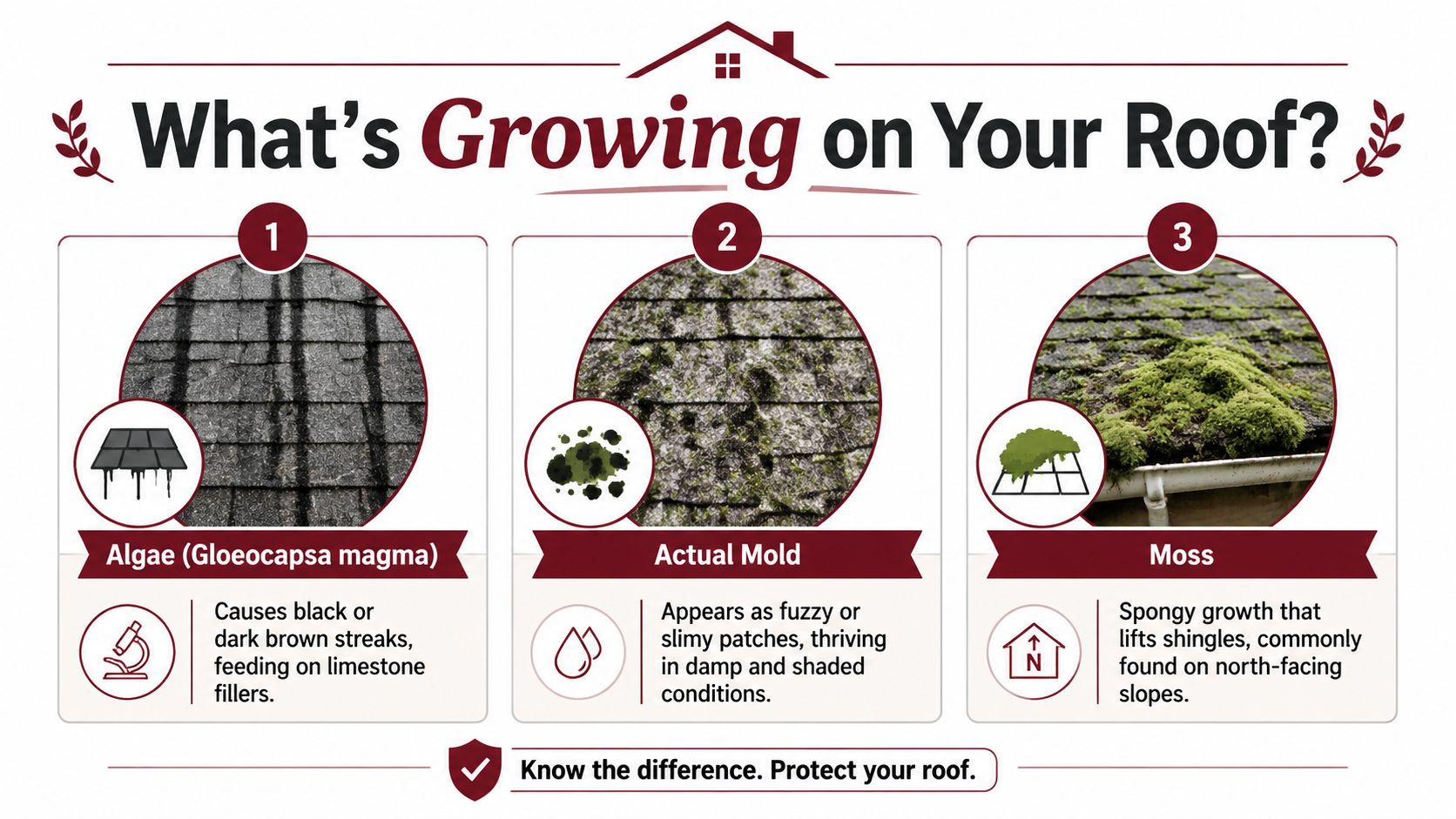
The difference matters because each one points to a different next step. Some growth mainly stains the roof. Some of it holds water against the shingles. Some of it raises concern about moisture conditions beyond the roof surface.
What each one usually looks like
Algae usually shows up as dark streaks or long stains, especially on shaded roof slopes. It can make a newer roof look older than it is, and homeowners often mistake it for mold.
Moss is easier to spot. It looks thick, green, and clumpy, often along shingle edges, in roof valleys, or on the north side where the roof stays cool and slow to dry.
Mold tends to look patchy, fuzzy, or slimy instead of streaked or tufted. If there is concern that moisture may also be affecting indoor finishes, this guide to detecting interior wall mold can help homeowners connect roof-related moisture patterns with what may be happening inside the home.
Quick comparison
| Type of Growth | What It Looks Like | What It Usually Means |
|---|---|---|
| Algae | Dark streaks or stains | Often starts as a surface staining issue, but it shows the roof is staying damp long enough for growth to take hold |
| Mold | Fuzzy, spotty, or slimy patches | Points to persistent moisture and deserves a closer look at drying conditions and surrounding materials |
| Moss | Thick, green, sponge-like clumps | Holds moisture, can lift shingle edges, and is more likely to shorten roof life if left alone |
Here is the practical way I explain it to homeowners in Tacoma. Algae is usually the least aggressive of the three at first. Moss is the one that physically interferes with the shingles. Mold is the one that makes me ask why that area is staying wet so consistently.
A ground-level check can help you sort out what you are seeing:
- Streaky and dark: often algae
- Green and clumped: usually moss
- Patchy, fuzzy, or slimy: more likely mold
- Returning in the same area: often tied to shade, debris, drainage, or poor airflow
The main question is not just what it is. More importantly, what does it mean for your roof next winter. If a section keeps growing the same buildup year after year, the roof is telling you that water is not clearing or drying fast enough. Homeowners who want more detail on upkeep can review our advice on managing moss and algae on the modern roof.
A roof with growth on it does not always need replacement, but it does need the right diagnosis before cleaning, repair, or maintenance starts.
Why This Is a Concern for Your Western Washington Home
Western Washington gives roofs a tough job. Rain is only part of it. The bigger issue is that many roofs stay damp for long stretches because of cloud cover, tree shade, debris, and slow drying conditions. Guidance on persistent moisture retention and roof growth risk points out that roofs that stay wet longer are more likely to develop biological growth and face faster wear.
That hits close to home in places like Tacoma and Shoreline, where mature trees and long gray stretches can leave the north side of a roof cool and damp well past the storm itself. A homeowner may not see an active leak, but the roof can still be under stress.
What that means for the shingles
When moisture stays trapped on asphalt shingles, the roof surface doesn't get a chance to dry out the way it should. Over time, that creates better conditions for staining and growth. It can also wear down the protective surface of the shingles and raise the chance of leaks later.
For the homeowner, the message is simple. Roof shingle mold isn't only about appearance. It often points to a moisture pattern that can shorten roof life if it's ignored.
What a homeowner might notice inside
Sometimes the roof shows the first warning. Other times the signs show up indoors later as musty smells, ceiling staining, or damp areas near exterior walls. If there are concerns about whether moisture has already moved inside, this guide to detecting interior wall mold can help homeowners understand what to look for.
A roof doesn't have to be leaking hard to have a moisture problem. In this climate, small issues can develop subtly for a long time.
Black streaks may be cosmetic at first. Repeated wetness usually isn't.
Safe Removal Options DIY vs Calling a Professional
A Tacoma homeowner usually asks this after the first dry day. The black streaks showed up over winter, the moss thickened along the shady edge, and now the question is whether a Saturday ladder job will help or make things worse.
The right answer depends on two things. How much growth is on the roof, and whether the roof can be reached safely without walking on a slick slope. On a low-pitch roof with light staining, limited cleanup around gutters or valleys may be reasonable. On a steep roof, an older roof, or one with heavy moss and recurring dark streaks, the safer move is to have a roofer inspect it before any cleaning starts.

What homeowners can safely do
Most safe homeowner work happens from the ground or from a firmly set ladder at the gutter line. If you have to step onto wet shingles to do it, it is already in the wrong category.
Good low-risk steps include:
- Inspect from the yard: Look for whether the problem is just on the north side, under tree cover, or spread across the whole roof.
- Clean out reachable gutters and valleys: Leaves, fir needles, and roof debris hold moisture where growth starts fastest.
- Trim branches that block sun and airflow: More light and faster drying matter in Western Washington.
- Take clear photos: A few pictures now make it easier to tell whether the roof is stable, getting worse, or failing in one section.
If you are also tracking moisture elsewhere around the house, this guide on keeping homes mold-free is a useful companion.
What to avoid
A few cleaning methods cause roof damage faster than the staining does.
- Pressure washing asphalt shingles: It can remove protective granules and shorten the life of the roof.
- Aggressive scraping or stiff brushing: That tears up the shingle surface and can loosen tabs.
- Bleach-heavy roof mixing without understanding runoff: The CDC says bleach solutions should not be stronger than 1 cup of household bleach in 1 gallon of water for mold cleanup on hard, nonporous surfaces, and bleach should never be mixed with ammonia or other cleaners, as explained in this CDC mold cleanup guidance. Roofs bring added concerns because runoff can affect landscaping, siding, and metal components.
- Climbing onto a wet roof: In our climate, that is how a simple cleanup turns into an injury call.
Moss is its own problem. If that is what you are dealing with, start with this guide on the best way to kill moss on a roof before trying to pull it off by hand.
When a professional makes more sense
Call a roofer when the roof is steep, high, shaded, or showing more than surface staining. That includes moss growing under shingle edges, dark areas that keep returning, shingles that look curled or brittle, or any signs of interior moisture.
This is the trade-off homeowners need to understand. Cleaning can improve appearance, but inspection is what tells you what comes next. Sometimes the black streaks are mostly cosmetic. Other times they are hiding granule loss, lifted shingles, soft decking, or a roof section that is nearing the end of its service life.
A professional cleaning visit should answer more than "Can we wash this?" It should answer whether the roof is still sound, what is causing the repeated moisture pattern, and whether cleanup buys you time or just delays a repair you already need.
Long-Term Prevention Strategies for Your Roof
In Western Washington, prevention is what buys roof life. A cleaning can make the shingles look better for a while, but the main question is whether the roof will dry well enough to stay clean and hold up through another stretch of wet seasons.
On most Tacoma-area homes, repeat staining tracks back to the same conditions. Too much shade. Debris sitting in valleys. Gutters that overflow during heavy rain. Attics that stay damp longer than they should. If those conditions stay the same, the streaks usually come back.
Some newer shingles are built to resist algae better than older products, and metal strips near the ridge can help slow regrowth on certain roofs. Those options can make sense when a replacement is already part of the plan. They do not fix poor drainage, heavy tree cover, or trapped moisture.
A practical prevention checklist
- Trim back overhanging branches: More sunlight and airflow help shingles dry faster after rain.
- Keep gutters and downspouts clear: Water should move off the roof cleanly, not back up along the edge.
- Clean valleys and roof transitions: Fir needles, leaves, and small debris hold moisture in the spots that already dry the slowest.
- Check attic ventilation and insulation: A roof dries from the outside and the inside. If warm, damp air is getting trapped in the attic, the shingles above it stay under more stress.
- Watch the north-facing slopes: Those areas usually show the first signs of recurring growth in our climate.
- Inspect the roof before and after storm season: Small moisture patterns are easier to correct before they turn into soft decking or shingle damage.
Moss needs its own prevention plan because it behaves differently from black staining. If moss keeps returning, use this guide on the best way to kill moss on a roof and address the shade and moisture that are feeding it.
The big trade-off is simple. Homeowners can pay for repeated cleanings every few years, or they can fix the conditions that keep the roof wet. Trimming trees, improving drainage, and correcting ventilation issues usually do more for long-term roof life than washing the surface again and again.
A good moisture routine inside the house helps too. Homeowners who want a broader guide on keeping homes mold-free can use that checklist to spot damp conditions that may connect back to roof or attic moisture.
Prevention also helps separate a cosmetic problem from a roof-life problem. If the roof stays cleaner after these changes, the issue was likely surface growth fed by damp conditions. If staining keeps returning fast, or the shingles keep shedding granules and holding moisture, that usually points to a roof system that needs more than maintenance.
Knowing When to Repair or Replace Your Roof
A lot of Tacoma-area homeowners call after spotting black streaks and ask the same question. Is this a cleaning job, or is the roof nearing the end?
The answer depends less on the color of the staining and more on what the shingles and roof deck are doing underneath it. On plenty of Western Washington roofs, surface growth is mostly cosmetic. On others, the staining is the first visible clue that moisture has been hanging around long enough to wear out the system.
Start with the roof's condition, not the stain itself.
Signs cleaning may be enough
Cleaning is often a reasonable next step when the roof is still structurally sound and the growth has not started damaging the materials:
- The shingles are lying flat
- Growth is light and mostly on the surface
- There are no interior leak signs
- Granules still appear intact from the ground
- The problem is limited to a few shaded areas
In those cases, a homeowner is usually dealing with a maintenance issue. The goal is to remove the growth safely, correct the moisture pattern that keeps feeding it, and keep the roof in service as long as the shingles still have life left.
Signs the roof may need repair or replacement
A full inspection makes sense if the roof is showing wear that goes beyond staining:
- Curled, cracked, or missing shingles
- Moss lifting edges or spreading under shingle tabs
- Granules collecting in gutters
- Soft spots or sagging
- Water stains inside the house
Those signs point to a different conversation. At that stage, cleaning the surface may improve appearance for a while, but it does not fix weakened shingles, wet decking, or areas where water is already getting past the outer layer.
Age matters too. An older roof with recurring staining, repeated moss return, and visible shingle wear usually deserves a hard look at remaining service life. A newer roof with isolated staining may only need targeted repair and maintenance. Homeowners weighing those options can review this guide on repairing a roof versus replacing it.
For owners of older manufactured housing or low-slope assemblies, failure can show up differently than it does on a standard steep-slope shingle roof. This resource on troubleshooting mobile home roof issues can help you spot the warning signs.
A dirty roof can often be cleaned. A roof that is soft, curling, leaking, or shedding granules needs a real plan.
How Four Seasons Roofing Helps Homeowners
A lot of Tacoma-area homeowners call after spotting dark streaks from the driveway and wondering if they are looking at a cleaning job or the start of a bigger roof problem. The useful part of an inspection is not the label. It is knowing what happens next in our wet Western Washington weather.

Four Seasons Roofing starts by looking at the roof as a system, not just a stained surface. On one home, black streaks may be mostly cosmetic. On the next, the same dark areas can show up alongside trapped moisture, worn shingle edges, or early leak entry points around vulnerable sections. In the Puget Sound area, that difference matters because a roof that stays damp for long stretches tends to age faster.
Homeowners usually need three clear answers:
- What is on the roof
- Whether the shingles are still doing their job
- What step makes the most sense next for this climate and this roof
The company has worked on Western Washington roofs since 1996, so the inspection is grounded in the patterns that show up here year after year. That includes recurring moss on shaded slopes, staining that returns after a season or two, and roofs that look dirty from the yard but are also starting to show real wear up close.
Good advice should leave a homeowner with a plan, not more guesswork. Sometimes that plan is maintenance and monitoring. Sometimes it is repair before the next rainy stretch. Sometimes the smart move is to stop spending money on cleaning a roof that is already near the end of its service life.
Frequently Asked Questions About Roof Mold
| Question | Answer |
|---|---|
| Can roof shingle mold make a roof leak? | It can point to the moisture conditions that lead to leaks. The growth itself isn't always the direct cause, but when moss lifts shingles or moisture keeps soaking the same area, water can get deeper into the roof. |
| Is black staining always mold? | No. Many homeowners call any dark roof growth mold, but black streaks are often algae instead. That's why a visual inspection matters before choosing a cleaning method. |
| Should a homeowner pressure wash roof shingles? | Usually no. Pressure washing can damage asphalt shingles by removing their protective surface. A gentler approach is much safer for the roof. |
| How often should a roof be checked in Western Washington? | In damp climates, regular roof inspections are a smart habit, and humid areas may benefit from twice-yearly checks to catch early staining before it spreads. |
| Are newer shingles better at resisting this problem? | Many newer shingles are designed to reduce algae-like staining. Some include copper granules or work with metal-ion barriers to help slow regrowth. |
If roof shingle mold, black streaks, or moss buildup are showing up on a home in Western Washington, the next step is to find out whether it's just surface growth or a sign of deeper moisture trouble. Four Seasons Roofing can help homeowners sort that out with a clear roof inspection and practical guidance on cleaning, repair, or replacement.
Suggested internal link opportunities: