
A water stain blooming around a skylight is a frustrating sight. For any Pacific Northwest homeowner, it's a common problem. Often, a skylight leak repair is needed after seals age. They simply give up after years of relentless Seattle rain. Other times, flashing was damaged in a storm. An improper installation from a decade ago can also cause issues.
For homes in wooded areas like Woodinville or Sammamish, the cause is often simple. Heavy needle debris from mature Douglas Firs and Cedars clogs water channels. Consequently, this forces water to back up and find a way inside your home.
Responding to Your Leaking Skylight
A leaking skylight is typically caused by failed seals, damaged flashing, or clogged debris channels around the unit. The first step is to place a bucket to catch drips and then determine if the issue is a true leak or condensation. A professional inspection is recommended to find the exact source.

When you spot that first drip, it’s easy to panic. Your best first step, however, is to take a breath. You must figure out what’s really going on. Water getting in is always serious. But knowing the why is the key to a lasting fix from a professional team like Four Seasons Roofing.
Here in the Seattle area, one of the most common mix-ups is condensation. Homeowners often think condensation is an active leak. Our damp, cool climate causes moisture to form inside the glass. This is especially true in high-humidity rooms like kitchens and bathrooms. Therefore, your top priority is to determine if you have a real leak or just condensation.
An active leak usually leaves behind clear evidence. Look for discolored drywall that feels soft or spongy. Additionally, you will likely see water dripping steadily while it’s raining. Condensation, on the other hand, looks more like fog. You might see tiny beads of water on the interior glass pane. It often clears up as the day gets warmer.
Quickly Assessing Your Skylight Leak
This table helps you differentiate common skylight issues. It will also help you decide on your next steps.
| Symptom You See | What It Could Mean | What to Do Now |
|---|---|---|
| Water dripping only during rain | Active leak from flashing or seals. | Place a bucket. Call a professional for inspection. |
| Fog or water beads on inside glass | Condensation due to high indoor humidity. | Improve ventilation. Run a dehumidifier. |
| Stains but no active dripping | A past leak or a slow, intermittent one. | Monitor closely during the next rainstorm. |
| Debris (leaves, needles) around the skylight | Clogged water channels causing backup. | Carefully clear debris if it is safe to do so. |
Understanding these signs helps you avoid unnecessary panic. Furthermore, it points you toward the right solution. You will know if it's a simple fix or time to call for backup.
Taking Immediate Action
As soon as you confirm an active leak, you need to move fast. Grab a bucket and old towels. Place them under the drip to protect your floors and furniture. This simple move can save you a fortune in interior repairs. A small leak can saturate drywall and ruin insulation. It can even compromise the structural wood of your home if left to drip.
It’s also crucial to check for any resulting mould growth. This can start surprisingly fast in our damp climate. If you see any, learn how to get rid of mould in your home to protect your family’s health.
For homeowners across Bellevue, Kirkland, and Snohomish County, we can't stress this enough: seasonal roof checks are vital. Our constant rain-and-dry cycles turn tiny flaws into major headaches. Proactive inspection is your best defense against costly repairs.
Sometimes, you get lucky and the fix is straightforward. You can solve the problem by clearing a blockage of pine needles. If you can safely access the area, this fix works instantly.
But for anything more complex, you need an expert. Damaged flashing, deep-seated seal failure, or a cracked skylight are not DIY jobs. If you need a temporary fix while you wait, our guide on temporary roof repair for leaks can help.
For any skylight repair beyond sweeping off leaves, call a pro. A licensed, bonded, and insured contractor like Four Seasons Roofing has the right safety gear. We have the experience to find the true source of the leak. We'll make sure the job is done right the first time.
Pinpointing the Source of the Leak
Chasing down a skylight leak can be a real headache. The drip you see on your ceiling is almost never where the water gets in. Water is sneaky. It travels down rafters and behind drywall. It moves along insulation before it finally shows up. That’s why a permanent fix means playing detective.
Start with a visual inspection from inside your home. Look at the ceiling and walls around the skylight. Do you see any faint, discolored rings? Does the paint look bubbled, or does the drywall feel soft? Make a mental note of where the damage is worst. This gives you a starting point for your investigation.
Conducting a Safe Exterior Inspection
Once you've mapped out the interior damage, head outside. This is where the real work begins. However, your safety comes first. If your roof is steep, wet, or you're not comfortable at heights, this is a job for a professional. Do not take the risk.
If you can get up there safely, check these usual suspects first.
- Flashing System: The metal flashing around the skylight is the number one failure point. Look for gaps, bent pieces, or signs of rust. Specifically, for homes near the Sound in places like Shoreline or Burien, salt air corrosion can eat through metal flashing quickly.
- Seals and Gaskets: Check the seals right around the glass lens. Our region's freeze-thaw cycles make these materials brittle. Consequently, they crack and pull away, creating a path for rain.
- Debris and Blockages: Look for pine needles, leaves, and moss. The beautiful Douglas Firs in areas like Lake Forest Park or Sammamish shed debris. This acts like a dam, forcing water under the flashing.
- Weep Holes: Many skylights have tiny channels called weep holes. They let condensation escape. If these get clogged, moisture gets trapped inside your home.
Understanding Common Leak Causes
Finding where the leak is coming from is only half the battle. You also need to understand why it started. Improper installation accounts for about 99% of all skylight leaks. When a skylight isn't installed with meticulous care, it is only a matter of time before it fails. A quality installation should last at least 20 years without a problem.
For a broader look at tracking down water issues, you can learn how to detect water leaks.
Chasing a leak can feel like a maze. The water you see inside might be several feet away from the actual entry point. This is why a methodical inspection is so vital for a permanent fix, not just a temporary patch.
The style of your home can also be a factor. This is especially true for homeowners in Bellevue or Redmond. The complex rooflines on many classic Seattle Craftsman homes create more crannies for water to get trapped. Similarly, the persistent moss growth in many shaded Eastside neighborhoods can lift flashing edges. This creates a perfect hidden pathway for water.
If you’ve done an inspection and still can’t find a culprit, the problem is likely complex. Our team at Four Seasons Roofing put together a guide on how to find roof leaks. At the end of the day, a professional diagnosis is the only way to be certain your skylight leak repair will solve the problem for good.
A Practical Guide to DIY Skylight Leak Repair
If you are a hands-on homeowner, a minor skylight leak repair can be rewarding. Many smaller issues are perfectly manageable. You must be comfortable on your roof and have the right equipment. The key is knowing what you can handle and when to call the pros at Four Seasons Roofing.
Most successful DIY repairs come down to one thing. You must find the exact source of the leak. Then, use the right materials to fix it for good. Small sealant failures or built-up debris are perfect jobs for a weekend. But compromised flashing or cracked glass are signs to call for help.
This guide will walk you through fixing simpler problems. We’ll cover how to reseal gaskets and clear out gunk. We will even show you how to use roofing cement for a quick fix.
Essential Tools and Materials
Having the right gear is non-negotiable. Trying to wing it without proper equipment is a recipe for disaster. You could cause more damage or get seriously hurt. Get everything together before you set up the ladder.
- Safety Harness and Rope: Never get on a roof without one.
- Sturdy Ladder: Ensure it’s on firm ground and extends above the roofline.
- Quality Caulk Gun: A dripless model is worth its weight in gold.
- Skylight-Rated Sealant: Use a high-grade sealant designed for roofing.
- Roofing Cement: This is for patching minor flashing cracks only.
- Putty Knife and Wire Brush: You need these to scrape off old sealant.
- Work Gloves and Safety Glasses: Basic protection is a must.
This chart breaks down where to look for a leak. It really just comes down to three main culprits.
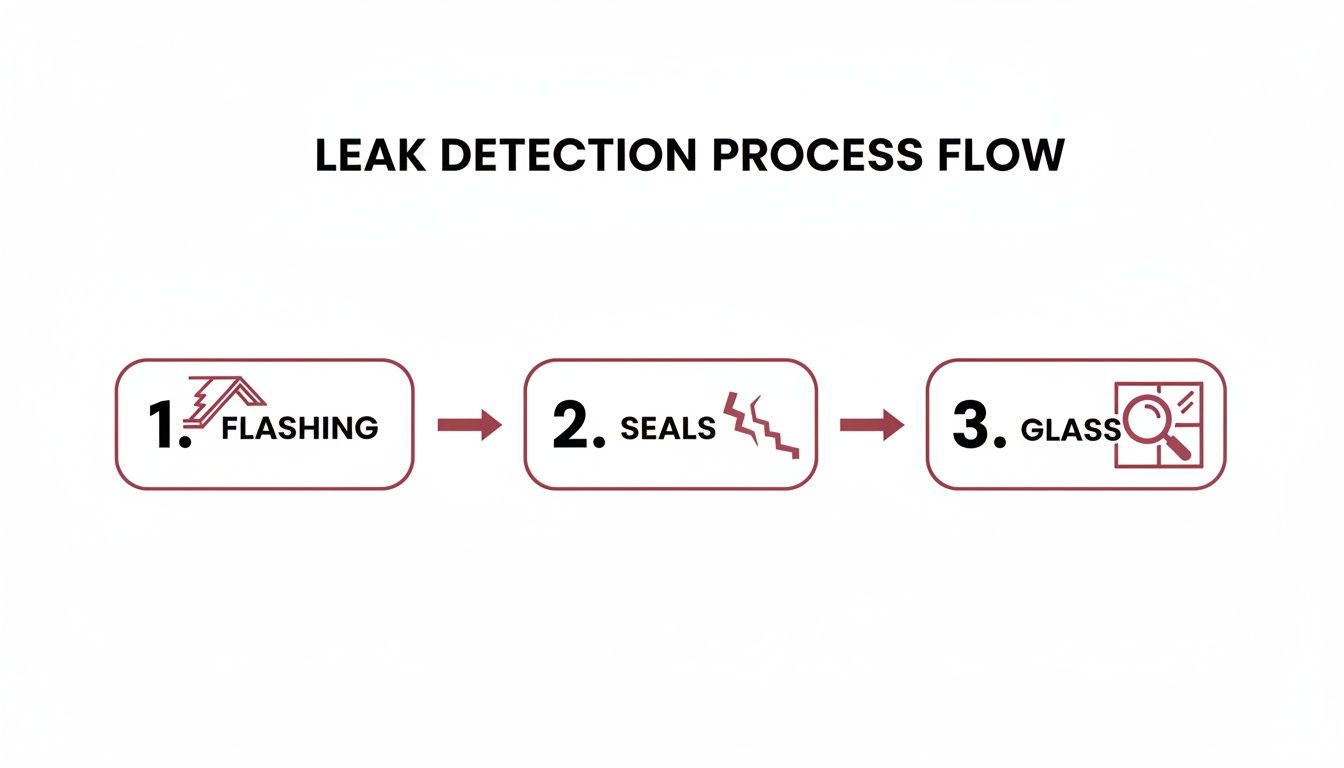
As you can see, almost every leak traces back to the flashing, the seals, or the glass unit itself.
Clearing Debris from Water Channels
One of the most frequent problems we see is clogged water channels. This is especially true in leafy neighborhoods like Woodinville or Sammamish. Needles from our beautiful Douglas Firs and Cedars pile up. They create a dam around the skylight. Consequently, water finds a way under the flashing.
Start by carefully sweeping away all leaves and pine needles. Clean the uphill side and around the entire frame. Then, look for the small weep holes along the bottom edge. A soft brush or compressed air works great for this. Honestly, this simple maintenance fixes a surprising number of leaks.
Resealing Gaskets and Seams
The rubber gaskets and sealant around your skylight have a tough life. Our Pacific Northwest cycle of rain and sun causes them to dry out. They eventually crack and fail. If you see sealant that’s cracking or peeling away, it’s time for a refresh.
Grab your putty knife and carefully scrape away all the old caulk. You must get all of it off for the new sealant to stick. Next, use a wire brush to scrub the surface until it’s perfectly clean.
Now, apply a continuous, steady bead of new exterior sealant. You can smooth the bead with a wet finger for a clean finish. Be sure to let it cure completely before the next rain hits.
A word of caution from our roofers: Using the wrong sealant is a common DIY mistake. You must use a product rated for skylights and exterior use. Interior-grade caulk will fail before the first Seattle winter is over.
When to Call Four Seasons Roofing
While DIY repairs are great for small jobs, some problems need a pro. These red flags mean you should put down the tools and call us.
- Damaged Flashing: If you spot metal flashing that is bent or rusted, that’s not a DIY fix. You can learn more about different flashing types in our guide. A bad flashing repair will always make the leak worse.
- Cracked Glass: Any crack in the skylight pane compromises the whole unit. The only real solution is a full glass or unit replacement.
- Soft or Spongy Roof Deck: If the roof sheathing around your skylight feels soft, you have a bigger issue. This is a sign of long-term water damage and rot.
- Unsure of the Source: You’ve sealed the seams, but the drip is still there. Now it's time for an expert diagnosis. Our GAF and CertainTeed certified team can track down those tricky hidden leak sources.
Understanding Skylight Repair Costs in the Seattle Area
One of the first questions we get is always about cost. Homeowners from Seattle to Bothell want to know the price. A leaking skylight is stressful enough. The final price depends on what’s causing the leak. The complexity of your roof and specific materials also matter.
Getting a handle on these variables helps you set a realistic budget. While every job is different, national averages give you a ballpark figure. Most homeowners pay around $900 for a skylight repair. The typical price falls between $454 and $1,507.
Breaking Down Repair Costs by Type
The scope of the work is the biggest cost factor. A simple seal job is a world away from a flashing replacement. The costs reflect that difference. Here’s a quick look at what different fixes typically run.
- Resealing: If the old sealant is worn out, we can apply a new bead. This is the most affordable fix, often between $75 and $250.
- Flashing Repair: This is a more involved job. When flashing is bent, rusted, or installed improperly, it needs attention. Expect this to range from $150 to $600.
- Glass Replacement: Sometimes the glass itself is the problem. A crack, broken seal, or condensation can cause issues. Replacing the glass pack generally costs between $300 and $900.
Keep in mind, these are just estimates to help you plan. The specifics of your project will determine the final cost.
Factors That Influence Your Final Cost
Several on-site conditions will adjust the price. A steep-pitched roof requires more safety gear and time. This naturally increases labor cost. The same goes for accessibility. A third-story skylight is more challenging to work on.
We also consider the home itself. We work on many beautiful Seattle Craftsman and Tudor homes. Preserving the aesthetic is paramount. In planned communities like Issaquah Highlands or Redmond, we often have to meet strict HOA standards. Four Seasons Roofing is well-versed in navigating these local requirements.
An old industry guideline we call the '50% rule' can help. If the repair quote is over 50% of a full replacement cost, it's smarter to replace the whole unit.
A complete skylight replacement typically runs between $1,200 and $3,500. It's a bigger number upfront. But a new unit comes with a fresh warranty and better energy efficiency. You will have peace of mind that you won't be calling us about another leak soon. For a deeper look at budgeting, see our guide to general roof repair costs.
Deciding Between Repair and Replacement
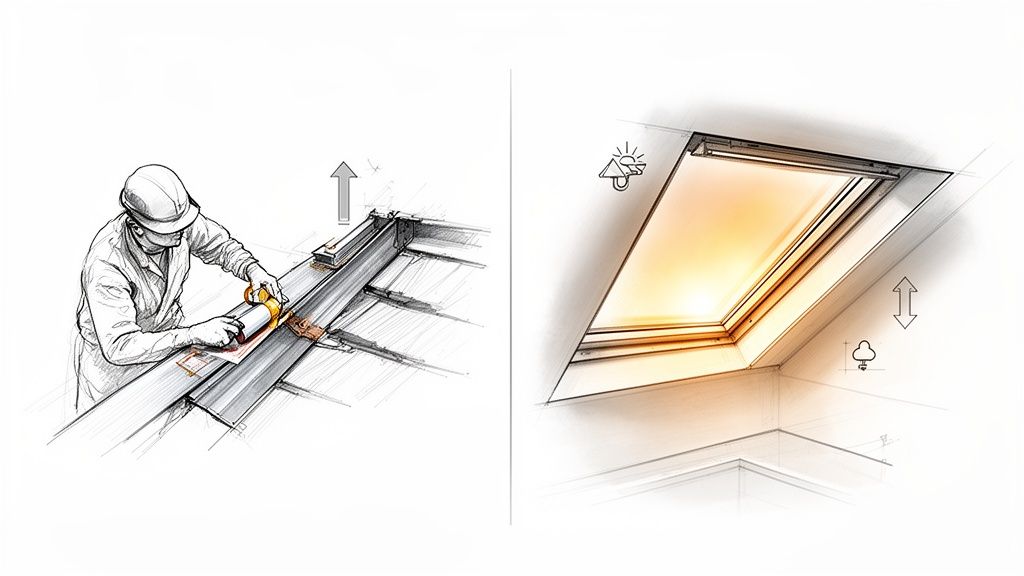
When you have a leak, you face a tough question. Is a targeted skylight leak repair enough? Or is it time for a full replacement? This isn’t a small decision. It affects your budget now and the long-term health of your home.
Making the right call involves a good look at the skylight’s age. We check the real extent of the damage. We also see how the cost of a fix stacks up against a new unit. You are really after a permanent solution. You don't want a temporary patch that will fail again.
When a Targeted Repair Makes Sense
In many cases, a professional repair is exactly what's needed. It solves the immediate problem. It can add years back to your skylight’s life. If your skylight is still relatively new, a repair is often the smartest path.
A repair is usually your best bet in these situations:
- Minor Seal Failure: The caulking or gaskets are cracking, but the frame and glass are fine.
- Localized Flashing Damage: A small piece of flashing got bent or lifted, but the rest is secure.
- Debris-Related Leaks: The leak was from clogged Douglas Fir needles. Once cleared, the problem is gone.
Basically, if the core of the skylight is sound, a strategic repair is a practical choice. It is a cost-effective fix that makes your skylight watertight again.
Clear Signs You Need a Replacement
Sometimes a repair is just throwing good money after bad. A skylight, just like a roof, doesn't last forever. At some point, continuing to patch an old unit stops making sense. The unit itself has become the weak link.
These are strong indicators that it’s time for a full replacement:
- Persistent Leaks: You’ve had it repaired once or twice, but the water stain keeps returning.
- Condensation Between Panes: A foggy look means the insulated seal has failed. Your skylight is losing a significant amount of energy.
- Significant Cracks: Obvious cracks in the glass or frame are a major red flag for structural integrity.
- Widespread Flashing Failure: If flashing is rusted out or pulling away, a patch job won’t last. We often see this on homes near the Sound in Shoreline or Burien due to salt air corrosion.
A new, modern skylight isn't just a fix for a leak. It’s an upgrade for your entire home. It offers better energy performance, UV protection, and superior manufacturer warranties.
The Financial Case for Replacement
Cost is always a huge part of the conversation. A simple repair is obviously cheaper upfront. But you have to think about long-term value. A quick fix for cracked caulk might run you $75 to $800. However, it can be a temporary solution if there are bigger issues.
If you’re facing repeated repairs, investing $1,200 to $3,500 in a full replacement is often the logical choice. It solves the problem for good. It also comes with a host of other benefits. You can find more detailed information about skylight repair and replacement costs on elitesolarsystems.com.
Energy Efficiency and Modern Upgrades
Another big argument for replacement is energy efficiency. An old, single-pane skylight can be a huge energy drain. This is especially true during our cool Pacific Northwest winters. Swapping it for a new, ENERGY STAR certified model can make a real difference.
Modern skylights also come with advanced features. These include low-E coatings to block UV rays. They have improved frame designs that prevent heat loss. Whether you're preserving a classic Seattle Craftsman or meeting strict Redmond building codes, we can find a model that fits.
As a licensed, bonded, and insured contractor, Four Seasons Roofing can give you a comprehensive assessment. We help you make the best call for your home and budget.
Why Pacific Northwest Homeowners Trust Our Team
When it comes to a skylight leak repair, picking the right contractor is critical. A fix that actually lasts comes down to skill and integrity. It depends on the team working on your roof.
Since 1996, Four Seasons Roofing has been the go-to choice. We serve homeowners across Seattle, Bellevue, and Snohomish County. We built our name one project at a time. We know that trust must be earned.
That’s why we are a fully licensed, bonded, and insured contractor. This isn't just about checking boxes. It is your guarantee that we hold ourselves to the highest standards. We protect you, your property, and our crew on every job.
Our Proven Process and Commitment to You
We built our process around straightforward communication. We leave your property better than we found it. You'll notice the difference from your very first call. We believe an informed homeowner is a confident one. Consequently, we walk you through every step of the repair before we start.
Our commitment to quality goes beyond just the repair itself. We know your home is your sanctuary.
- Dedicated On-Site Leadership: Every project gets a dedicated crew leader. You'll always have an experienced pro on-site to answer questions.
- Meticulous Worksite Management: We treat your property with respect. Our teams keep a clean job site and protect your landscaping.
- Clear and Consistent Communication: We keep you in the loop with regular updates. You’ll never be left wondering what’s happening with your repair.
This approach takes the stress out of home repairs. It's how we deliver results that make homeowners happy. We serve clients from Mercer Island to Kenmore.
We’ve repaired countless skylights on everything from classic Seattle Craftsman homes to modern flat-roofed estates in Bellevue. Our experience means we understand the unique architectural challenges and weather demands of the Pacific Northwest.
Unmatched Warranties for Lasting Confidence
A repair is only as good as the warranty standing behind it. We stand firmly behind our work. Additionally, we are certified installers for top manufacturers like GAF and CertainTeed. This elite status means we can offer the best product warranties in the business.
On top of that, we add our own Shield of Protection workmanship warranty. This covers our labor for up to 25 years. This dual-layer protection is our promise to you. It provides unmatched confidence that your investment is secure. You can learn more about our dedication to quality by exploring Four Seasons Roofing and Siding.
Our goal is a permanent solution, not just a quick patch. We’ve seen firsthand how persistent damp and heavy needle drop can take a toll. Our deep local knowledge, combined with our technical skill, ensures we get the job done right the first time. Your Roof Done Right.
Ready to solve your skylight leak for good? Trust the team that has protected Pacific Northwest homes for over 25 years. Contact Four Seasons Roofing today to schedule your complimentary inspection. Learn more at https://www.fourseasonsroofing.com.