
At its core, a composite roof is a multi-layered shield for your home, engineered from a precise blend of materials designed to work in perfect harmony. The most common type you'll see around Western Washington—the classic composition shingle—is primarily made of fiberglass, asphalt, and mineral granules. Each of these ingredients plays a distinct and vital role in protecting your home from the elements.
Decoding the Layers of a Composite Roof
When you hear "composite," think of it like baking a layered cake. You would not use just one ingredient; you choose specific ones for flavor, structure, and texture. Similarly, no single material could give a roof the strength, waterproofing, and durability it needs to survive year after year. Instead, these materials are fused together to create a final product that is far tougher than the sum of its parts.
This synergy is what has made composite roofing the go-to choice for countless homeowners. It creates an incredibly effective barrier against the demanding, damp climate we have here in the Puget Sound region.
The Three Essential Ingredients
To truly understand what a composite roof is made of, you need to look at its core components. A composite roof, often called a composition roof, is a clever blend of three main materials, making it one of the most popular and affordable options on the market.
It all starts with a fiberglass mat, which acts as a sturdy backbone. This gives the shingle its tensile strength and flexibility, allowing it to handle the temperature swings we often see. That mat is then completely saturated with asphalt, a petroleum-based binder that is fantastic at sealing out water. Finally, a layer of mineral granules—usually tiny pieces of crushed rock—is embedded into the hot asphalt surface. These granules are the unsung heroes, providing critical protection against the sun’s harsh ultraviolet (UV) rays that would otherwise cause the roof to break down over time.
These layers are not just stacked on top of each other; they are fused together with intense heat and pressure during the manufacturing process. This creates a single, unified shingle that is both resilient and cost-effective.
A well-made composite shingle acts as a complete, integrated system. The fiberglass provides structural integrity, the asphalt delivers waterproofing, and the granules serve as the first line of defense against sun, rain, and physical impacts.
To make this even clearer, let's break down how each layer contributes to the final product.
Key Components of a Standard Composition Shingle
This table provides a quick summary of the primary layers that make up a typical composite shingle and their specific roles in protecting your home.
| Material Layer | Primary Component | Function |
|---|---|---|
| Top Layer | Mineral Granules | Provides UV protection, adds color, and offers fire resistance. |
| Middle Layer | Asphalt | Acts as the primary waterproofing agent, sealing the shingle. |
| Base Mat | Fiberglass | Serves as the structural foundation, providing strength and tear resistance. |
Each of these components is critical. Without any one of them, the shingle would fail to perform its job effectively, especially in our wet climate.
Why This Combination Works So Well
This three-part structure is a time-tested formula for a reason. The fiberglass keeps the shingle from tearing or warping under stress. The thick, waterproof asphalt layer ensures not a single drop of moisture can sneak through to the decking below. And those tough little granules shield the asphalt from the sun, which would otherwise make it brittle and cause it to crack.
This intelligent, balanced design is exactly why composition roofing has become the standard for so many homes. It delivers reliable, long-lasting protection without the extreme weight or high cost of materials like natural slate or clay tile. It is an engineered solution that simply works.
How Modern Composite Shingles Are Manufactured
Knowing what’s in a composite roof is one thing, but understanding how those raw materials become a tough, protective shingle is another. The entire process is a finely tuned operation, like a high-speed assembly line for your home’s first line of defense against the elements. It is where fiberglass, asphalt, and mineral granules are fused into a single, cohesive product.
Think of it as a precise manufacturing process where every step is critical to the final result. This process is what ensures a composite shingle can handle decades of Western Washington rain, wind, and sun without failing.
The Core Foundation: A Fiberglass Mat
It all starts with a huge, continuous roll of fiberglass mat. This is not the fluffy insulation you would find in an attic wall; it's a thin, non-woven sheet of glass fibers held together with a binder. This mat acts as the shingle's skeleton, providing the essential tensile strength that keeps it from tearing during installation or cracking under the stress of changing temperatures.
This strong, flexible base is fed through a series of rollers, preparing it for the most important part: waterproofing. The entire shingle's integrity is built on this foundation.
Saturating the Mat with Hot Asphalt
Next, the fiberglass mat is fully immersed in a vat of hot, liquid asphalt. This is a crucial step. The asphalt completely saturates the mat, filling every tiny gap to create a core that is absolutely impermeable to water. The temperature and thickness of the asphalt are monitored constantly to achieve perfect penetration without damaging the fiberglass.
To enhance performance, manufacturers often mix in polymer modifiers. These special additives, usually a type of rubber or plastic, make the asphalt more flexible in cold weather and tougher against heat and UV damage. This is a significant factor in preventing cracks during our region's freeze-thaw cycles.
The goal of the saturation process is to create one unified, waterproof barrier. The fiberglass provides the structure, while the polymer-modified asphalt delivers the resilience and the critical seal against moisture.
Applying the Protective Granules
While the asphalt is still hot and tacky, the shingle moves on to receive its topcoat: a dense layer of mineral granules. Thousands of these tiny, ceramic-coated rock particles are dropped and embedded onto the asphalt surface. A heavy roller then presses them in firmly, locking them into a permanent bond.
These granules perform several important jobs:
- UV Protection: They act as a sunblock, shielding the asphalt from the sun's damaging rays that would otherwise make it brittle and weak.
- Color and Aesthetics: They give the shingle its color and can be blended to create the dimensional, high-definition look of architectural shingles.
- Fire Resistance: These mineral granules are a key reason a shingle earns a Class A fire rating—the best available for residential roofing.
- Algae Resistance: Here in the damp Puget Sound, many granules are coated with copper or zinc specifically to inhibit moss and algae growth.
This diagram shows how these critical layers—granules, asphalt, and fiberglass—are layered together.
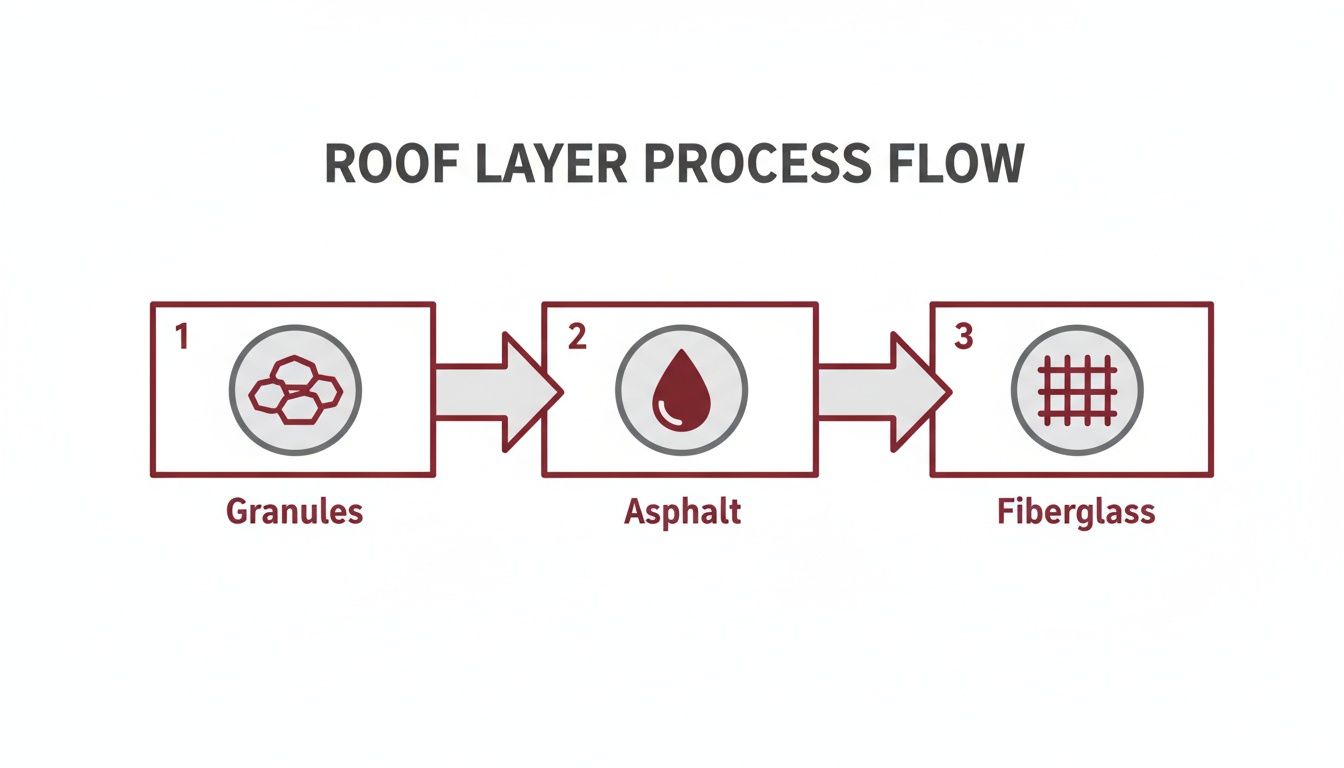
You can see how each material plays its own distinct role, from the tough outer granules all the way down to the structural fiberglass core.
Final Steps: Cutting and Curing
In the final stage, the long sheet of shingle material is cooled quickly and then precision-cut into the familiar shapes and sizes. An adhesive strip is applied to the back of each one, which is later activated by the sun's heat on your roof. This melts the strips together, sealing the shingles into a single, wind-resistant surface.
Finally, the finished shingles are bundled and packaged for shipment. This entire high-speed process turns simple raw materials into the reliable roofing product that protects millions of homes. You can get a closer look at asphalt shingles and their performance specifications to learn more about the final product.
Since many composite shingles use recycled plastics and polymers, it's interesting to see where these materials come from. The industry is always moving toward more sustainable practices, and you can learn about the complexities and new ideas in Plastic Recycling Challenges and Opportunities.
Exploring the Different Types of Composite Roofing
When you hear someone mention a "composite roof," it is easy to assume they are talking about one specific product. In reality, it is a family name covering a range of roofing options, each with its own appearance, performance, and price point. Understanding this spectrum is key to finding the perfect match for your home's style and your budget.
Think of it like the car market. You have reliable daily drivers and high-performance luxury models. They all get you where you need to go, but they do it differently. Composite roofing is similar—all options provide excellent protection, but they achieve it in different ways. We can break them down into two main categories: the incredibly popular asphalt-based shingles and the more advanced synthetic composites designed to mimic natural materials.
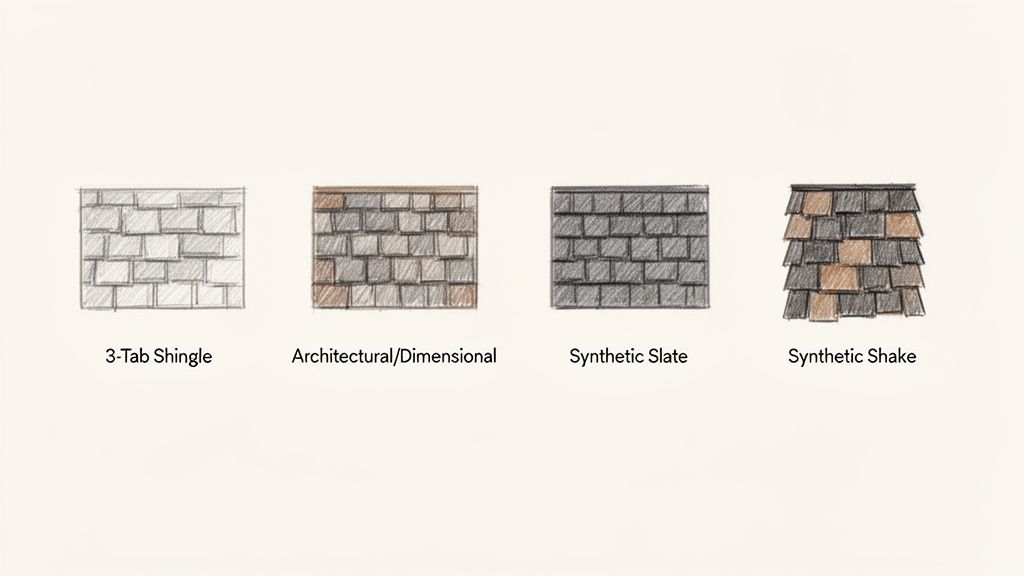
Asphalt-Based Composition Shingles
Asphalt shingles are, by far, the most common type of roofing on homes across Seattle and the Eastside. And for good reason—they offer a great balance of cost, durability, and straightforward installation. Within this category, there are two main styles.
-
3-Tab Shingles: This is the classic, entry-level workhorse. Made from a single layer of material, 3-Tab shingles are cut to create a flat, uniform look with three "tabs" per shingle piece. They are lightweight and the most affordable option, which makes them a go-to choice for budget-focused projects. The trade-off is that their simpler design offers less wind resistance and a shorter lifespan than its more robust cousins.
-
Architectural Shingles: These have become the new standard in residential roofing and are also known as dimensional or laminate shingles. They are built with multiple layers of asphalt and granules fused together, which creates a much thicker, more durable shingle. This layered construction gives the roof a rich, textured appearance with shadows and depth that mimics the look of natural wood shake. Architectural shingles deliver superior performance against wind and impacts and have a much longer lifespan, making them a significant upgrade in both protection and curb appeal. You can dive deeper into the specifics in The Ultimate Guide to a Composition Roof.
Advanced Synthetic Composites
Now we are moving into the premium end of the composite family. These advanced products use sophisticated polymers, recycled plastics, and rubber compounds to flawlessly replicate the aesthetic of high-end natural materials like slate and cedar shake. They are engineered for homeowners who want a specific, premium look without the traditional drawbacks of weight, cost, or heavy maintenance.
Synthetic composites represent a significant leap forward in roofing technology. They blend modern material science with timeless design, giving you the best of both worlds—the stunning beauty of natural materials with the engineered performance of a modern composite.
These premium options are designed to solve the inherent problems that come with their natural counterparts. For instance, they are dramatically lighter, more durable, and often carry a much higher fire-resistance rating. Let’s take a look at the two most popular types.
Composite Slate: The Look of Stone Without the Weight
Natural slate is undeniably beautiful and can last for over a century, but it's also incredibly heavy and expensive. In many cases, a home's structure needs to be reinforced just to handle the weight. Composite slate provides a brilliant alternative. These shingles are engineered from polymers and recycled materials to mimic the timeless elegance of natural slate but in a much lighter, more budget-friendly package.
While traditional slate can weigh up to a hefty 10 pounds per square foot, composite slate shingles weigh a much lighter 1.5-2.5 pounds per square foot in comparison. This makes installation far easier, especially on older homes that were not built to carry such a load. They also have a strong eco-conscious appeal, often using up to 95% recycled content.
Composite Shake: The Charm of Wood Without the Worry
A real cedar shake roof has a rustic, charming aesthetic that is incredibly popular here in the Pacific Northwest. The downside? These roofs demand regular maintenance to fend off rot, moss, and insect damage, and they typically have a lower fire rating.
Composite shake shingles are molded from actual cedar shakes, allowing them to capture that authentic wood grain texture and random-cut appearance perfectly.
Key benefits of composite shake include:
- Exceptional Durability: They are built to resist rot, moisture, and pests.
- Fire Safety: Most achieve a Class A fire rating, which is the highest possible.
- Low Maintenance: No special treatments or preservatives are needed to keep them looking great for decades.
This makes composite shake an ideal choice for anyone who loves the look of wood but wants a "set it and forget it" solution that will stand up to our PNW weather year after year.
Understanding Composite Roof Performance and Durability
Knowing what a composite roof is made of is one thing, but how does that translate to real-world performance? How does an engineered product hold up to the relentless damp, biting wind, and wild temperature swings we get here in Western Washington? A modern composite roof is not just a simple covering—it’s a high-performance shield, meticulously designed to excel in specific, measurable ways.
That performance is backed by rigorous industry testing and official ratings. These are not just marketing buzzwords; they are certifications that tell you exactly how a shingle will behave under extreme stress from fire, wind, and impacts. For any homeowner, understanding these metrics is key to choosing a roof that delivers genuine peace of mind.
Key Performance Metrics Explained
When you are looking at different composite roof options, there are a few key ratings you will want to pay close attention to. Each one addresses a different kind of threat, and together, they paint a complete picture of the roof's durability.
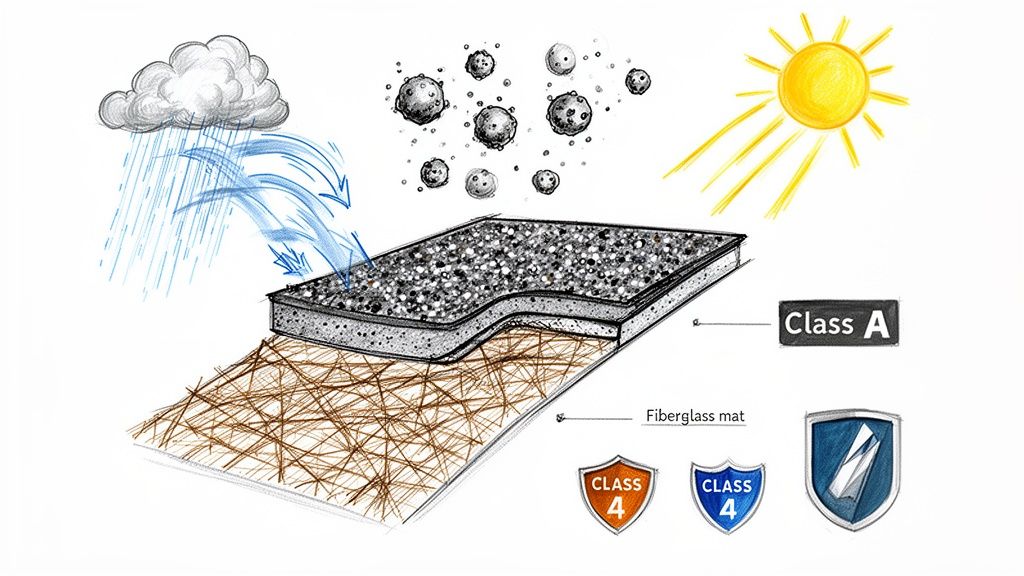
- Class A Fire Resistance: This is the highest fire rating a residential roofing material can achieve. It means the roof is effective against severe fire exposure, dramatically reducing the risk of flames spreading from an external source.
- High Wind Resistance: Shingles are lab-tested to withstand specific wind speeds without lifting, tearing, or blowing off completely. Many architectural shingles are now rated for winds up to 130 mph, a critical feature during our region's intense storm seasons.
- Class 4 Impact Resistance: This is the top rating for hail and impact damage. To earn this rating, a shingle must withstand having a two-inch steel ball dropped on it multiple times from a height of 20 feet without cracking or splitting. Think of it as armor for your roof.
These ratings are a direct result of the smart engineering behind the materials. The dense fiberglass mat provides powerful tear resistance against high winds, while the tough outer granules and flexible, polymer-modified asphalt work together to absorb impacts and resist fire.
Built for Western Washington Weather
Our climate presents a unique set of challenges to a roof—challenges that not every material can handle. The constant moisture, winter freezes, and heavy rainfall demand a system designed from the ground up for resilience.
A major issue here is the persistent dampness, which creates a perfect breeding ground for algae and destructive moss. To combat this, manufacturers infuse the shingle granules with copper or zinc. This algae-resistant (AR) technology slowly releases ions every time it rains, creating a surface where unsightly black streaks and damaging moss cannot get a foothold.
On top of that, our freeze-thaw cycles can be brutal, causing lesser materials to become brittle and crack. Composite shingles, however, are made with synthetic polymers and fiberglass that give them incredible flexibility in cold weather. They resist the brittleness that can lead to catastrophic failure, a key reason they outperform materials like clay tiles in our climate.
How Composite Compares to Other Materials
To make a truly informed decision, it is helpful to see how composite shingles stack up against other common roofing options like classic wood shake and durable metal. Each material has its own set of strengths and weaknesses.
A roof is a long-term investment. The "best" material is not a one-size-fits-all answer—it depends on your priorities, whether that is timeless aesthetics, maximum longevity, or the perfect balance of cost and performance.
Composite Roofing vs Common Alternatives
Here is a quick look at how composite roofing stacks up against other popular materials when it comes to the metrics that matter most.
| Feature | Composite Shingles | Wood Shake | Metal Roofing |
|---|---|---|---|
| Fire Resistance | Excellent (Class A) | Poor (Requires treatment) | Excellent (Non-combustible) |
| Maintenance | Low (AR technology helps) | High (Needs regular treatment) | Very Low (Resists growth) |
| Weight | Moderate | Moderate to Heavy | Very Lightweight |
| Initial Cost | $$ | $$$ | $$$$ |
| Lifespan | 20-50+ years | 20-30 years | 50-70+ years |
While wood shake offers that iconic PNW aesthetic, it demands significant upkeep to prevent rot and moss and has poor natural fire resistance. Metal roofing is incredibly durable and can last a lifetime, but it comes with the highest upfront cost and a distinctly modern look that does not suit every home.
Composite roofing hits that sweet spot. It gives you the aesthetic flexibility to mimic natural materials, delivers top-tier performance ratings, and offers a durable, low-maintenance solution at a much more accessible price point. Its ability to effectively manage our heavy rainfall and integrate with a proper attic ventilation system makes it an incredibly well-rounded choice for our area. Speaking of which, you can learn more about why roof ventilation is so important right here on our blog.
Budgeting for Your Composite Roof: Cost and Lifespan
We have covered the nuts and bolts of what goes into a composite roof, but for most homeowners, it all boils down to two simple questions: "How much will it cost?" and "How long will it last?"
A new roof is a major investment in your home's safety and value. Getting a handle on a realistic budget and understanding the long-term return is crucial. The final price is not a one-size-fits-all number; it depends on everything from the specific shingle you pick to the unique characteristics of your home's roofline.
The good news is that the cost spectrum for composite roofing is incredibly broad, which is a big reason it is so popular here in the Puget Sound. There is a solid option for just about every budget.
Breaking Down the Costs
The final bill for a new roof is more than just the price of the shingles. It is a total package that includes all materials, the skilled labor to install them, the tear-off of your old roof, and the fees for hauling it all away.
Several key factors will influence the final number:
- Shingle Quality: Basic 3-tab shingles are your most budget-friendly option. Architectural shingles are a significant step up in quality and price, while luxury synthetic composites sit at the premium end of the scale.
- Roof Complexity: A simple, low-sloped gable roof is straightforward and costs less. Multiple dormers, steep pitches, valleys, and skylights require more labor and custom flashing, which adds to the cost.
- Local Labor Rates: Skilled roofing labor is a huge part of the total cost, and rates can fluctuate based on demand and economic factors right here in Western Washington.
To get a more personalized look at what these factors mean for your home, our guide on assessing the cost to replace a roof offers a deeper dive.
Understanding Lifespan and Long-Term Value
The true value of a roof is not just its upfront cost—it is measured in how many years of reliable protection you get from it. This is where the difference between standard and premium composite options really shines.
A roof's lifespan is not just a number on a warranty; it is a direct reflection of the quality of its materials and, most importantly, the precision of its installation. A great shingle installed poorly will fail prematurely every time.
A standard architectural composition shingle, when installed correctly and maintained, will typically last 20 to 30 years. For most homeowners, this hits the sweet spot between performance and affordability.
If you are looking for a "forever" roof, premium synthetic composites are a compelling choice. These high-tech products, engineered to look just like real slate or wood shakes, can boast lifespans of 50 years or more. They deliver exceptional long-term value and incredible peace of mind.
Protecting Your Investment with Simple Maintenance
Once your new roof is on, you can play a huge part in helping it last as long as possible. A little simple, proactive maintenance is the key to stopping small issues from turning into big, expensive headaches.
Follow these tips to keep your roof in top shape:
- Conduct Annual Inspections: At least once a year (and after any major storm), grab a pair of binoculars and safely inspect your roof from the ground. Look for any shingles that are missing, cracked, or curling at the edges.
- Keep Gutters Clean: Gutters clogged with leaves and debris will cause water to back up under the edge of your shingles, which is a recipe for rot and leaks. Make sure they are cleaned out every spring and fall.
- Trim Overhanging Branches: Keep tree limbs cut back so they do not scrape against the shingles. This also prevents them from dropping leaves and needles that trap moisture and encourage moss to grow.
- Ensure Proper Attic Ventilation: Good airflow in your attic is critical. It prevents the buildup of heat and moisture that can literally cook your shingles from the inside out and dramatically shorten their life.
Why Professional Installation Is Crucial for Your Roof
Knowing what a composite roof is made of—from its fiberglass core to its tough mineral granules—is a great start. But the performance of all those advanced materials depends almost entirely on the quality of the installation.
It is a truth we have seen play out for decades. A premium, top-of-the-line shingle installed poorly will fail faster than a basic shingle put on by an expert. That is why choosing the right contractor is the single most important decision you will make for your home’s roof.
Even tiny mistakes in nailing, flashing, or ventilation can snowball into catastrophic leaks, voided manufacturer warranties, and a drastically shorter lifespan for your investment.
The Four Seasons Roofing Process
At Four Seasons Roofing, we have spent years since 1996 perfecting a process that ensures your roof is done right, every time. No guesswork, no cutting corners. Our approach is built on a foundation of clear communication and meticulous execution, so you feel confident and informed from start to finish.
Our proven four-step process includes:
- Communication: We start by listening. Our goal is to understand your needs and keep you updated every step of the way. There are no surprises here.
- Consultation: One of our experts will perform a thorough inspection and walk you through a detailed proposal. We will explain your options without any high-pressure sales tactics.
- Replacement: An on-site crew leader and foreman manage every last detail. This ensures your new roof is installed to the exact manufacturer specifications required for a valid warranty.
- Protection: When we are done, we leave your property immaculate. More importantly, we back our work with an industry-leading workmanship warranty for genuine, long-term peace of mind.
Your roof is a complete system, and its success hinges on every component working together. Our commitment to excellence is why we back our work with the Shield of Protection, a workmanship warranty of up to 25 years.
This promise, combined with top-tier manufacturer warranties, provides an unmatched layer of security for your home. We serve homeowners all across the Puget Sound, from Bellevue to Everett, with a commitment to quality that has defined our family-owned business since 1996.
Ready to protect your home with a roof built to last? Schedule a complimentary inspection with our team or get a quick estimate with our online Roof Cost Calculator.
Your Top Composite Roofing Questions Answered
Even after getting the big picture, a few specific questions always come up. That is only natural. We have put together some quick, straightforward answers to the most common questions we hear from homeowners around Puget Sound, helping you feel completely confident about your choice.
Are Composite Shingles an Eco-Friendly Choice?
Absolutely. Many of today's composite shingles are a surprisingly responsible choice for your home, and the technology keeps improving.
Standard asphalt composition shingles, for example, are a big part of the recycling loop. Once they have served their time protecting your home, they are often repurposed into materials like pavement, which keeps a massive amount of waste out of our landfills.
Premium synthetic composites take it a step further. Those beautiful shingles that look just like natural slate or wood shake? Many are made with a high percentage of recycled materials, like post-consumer plastics and reclaimed rubber. This clever engineering not only diverts waste but also reduces the need for brand-new materials. Plus, because they are so much lighter than real stone or clay, they have a smaller carbon footprint when it comes to transportation.
How Does a Composite Roof Hold Up to Western Washington Moss and Algae?
This is probably the number one question we get, and for good reason in our damp climate. The great news is that most reputable shingle manufacturers have addressed this problem. They infuse their protective mineral granules with special algae-resistant (AR) technology.
This is usually done with tiny bits of copper or zinc. When it rains, these metallic ions are slowly and safely released, creating a surface where ugly black algae and destructive moss cannot get a foothold. It is incredibly effective at preventing those dark streaks and green buildup you see on older roofs. This not only keeps your home looking great but also prevents the moisture damage that happens when moss gets underneath your shingles and lifts them up. For any home in the Puget Sound region, insisting on a quality AR shingle is non-negotiable.
What's the Real Difference Between a "Composition" and a "Composite" Roof?
It is easy to get tangled up in these terms because people often use them interchangeably in casual conversation. While they are definitely related, there is a small but important difference.
Think of it this way: 'Composite' is the broad family name for any roofing material engineered from multiple ingredients. 'Composition' is a specific, very popular member of that family—the classic asphalt shingle.
So, when someone says 'composition', they are almost always talking about the tried-and-true asphalt shingles made from a fiberglass mat, asphalt, and mineral granules.
'Composite' is the umbrella term that covers composition shingles plus all the newer, advanced synthetic products. These are the ones made from a sophisticated blend of polymers, recycled plastics, and other materials engineered to perfectly mimic the look of natural slate, wood shakes, or even clay tile.
Making sense of all these options is what we do every day. At Four Seasons Roofing, our team can walk you through the real-world differences of each material, helping you find the perfect fit for your home's style and your budget. Find out more about our commitment to quality and our Shield of Protection warranty.