
If a homeowner has seen a storybook cottage roof and wondered whether that same look could work on a home near Seattle, Bellevue, or Everett, that’s a fair question. In Western Washington, roof choices aren’t just about style. They’re about rain, moss, long wet seasons, and whether a roof can protect the home without turning into a constant maintenance project.
A thatched roof sounds simple at first. It’s made from plant material instead of shingles or metal. But the full answer is more practical than that. The roof shape, the local climate, fire concerns, and the need for specialized labor all matter.
For most homeowners in the Puget Sound area, the bigger question isn’t only what is a thatched roof. It’s whether that kind of roof makes sense for a real house in a wet climate. In most cases, it doesn’t. Still, it’s worth understanding because it helps explain why modern roofing systems are built so differently.
A thatched roof is a roof covered with tightly layered dried vegetation, usually installed on a steep slope so rain can run off quickly. It’s a historic roofing method used for thousands of years, but today it’s rare, highly specialized, and usually impractical for most modern homes in Western Washington.
What a Thatched Roof Is Actually Made Of
A thatched roof isn’t one single product that comes off a truck in bundles with a brand label. It’s a roofing method. The material can vary by region, but the basic idea stays the same. A craftsperson uses dried plant material and fastens it in thick layers across the roof.
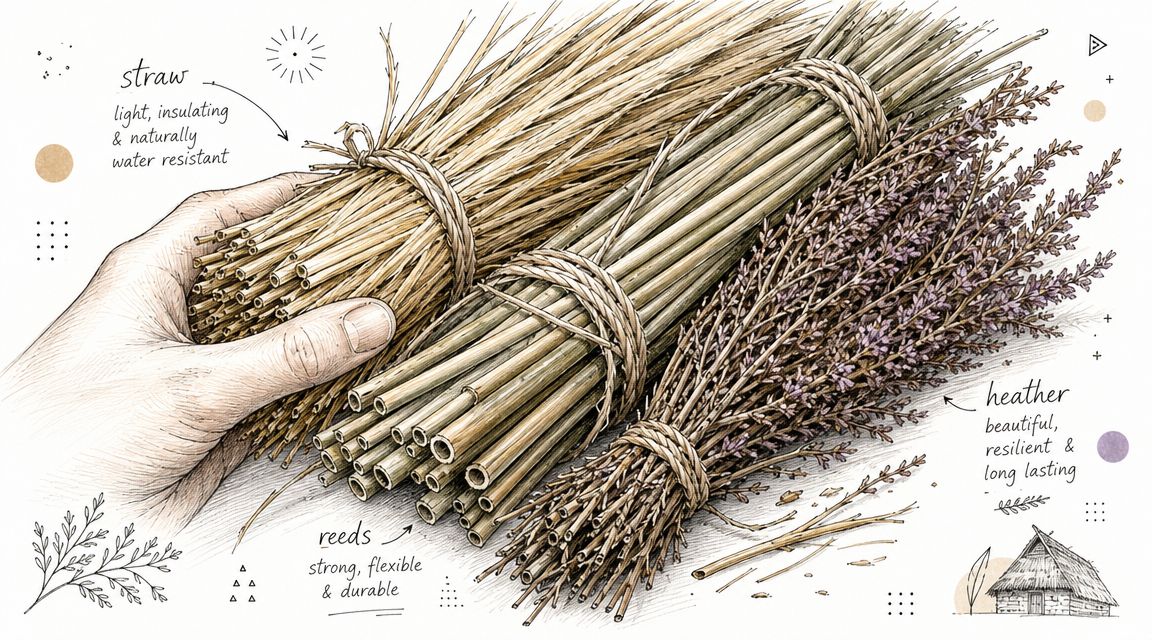
Common materials used for thatch
Traditional thatch has included:
- Straw from crops such as rye, barley, or wheat
- Reeds gathered from wetland areas
- Heather in some regions
- Grasses or palm branches where those materials are local and practical
That broad definition matters. “Thatch” doesn’t mean one exact material. It means vegetation used as a roof covering. To put it in context: Asphalt shingles are one roofing product. Thatch is more like a whole family of natural roof coverings built by hand.
According to a conservation history of thatch, it was the most common type of roofing in many parts of Europe until the 1800s, using locally available vegetation such as rye, wheat, heather, and reeds, and it had already been used for thousands of years in both tropical and temperate climates (historical overview of thatch roofing).
Why thatch mattered for so long
For most of history, people built with what they had nearby. If a community had straw after harvest, reeds near marshes, or grasses that dried well, those materials could become roofing. That made thatch practical long before factory-made roofing products existed.
Practical rule: A thatched roof is less like installing a manufactured material and more like building a roof by layering natural fibers into a weather-shedding surface.
That also explains why thatch still carries a certain charm today. It doesn’t look mass-produced because it isn’t. It reflects local materials, local building traditions, and skilled handwork.
What this means for a homeowner
For a homeowner asking what is a thatched roof, the key takeaway is simple:
- It’s not a standard retail roofing material
- It depends heavily on craftsmanship
- Its success comes from design and installation, not just the plant material itself
That distinction matters because many modern homes aren’t shaped or detailed for this type of roof in the first place.
How a Thatched Roof Is Built to Keep Water Out
The first reaction many homeowners have is understandable. If a roof is made of straw or reeds, how can it possibly keep rain out?
The answer comes down to tight layering and a very steep roof slope. A thatched roof works because water travels down the outside of the material instead of pushing deep into it.
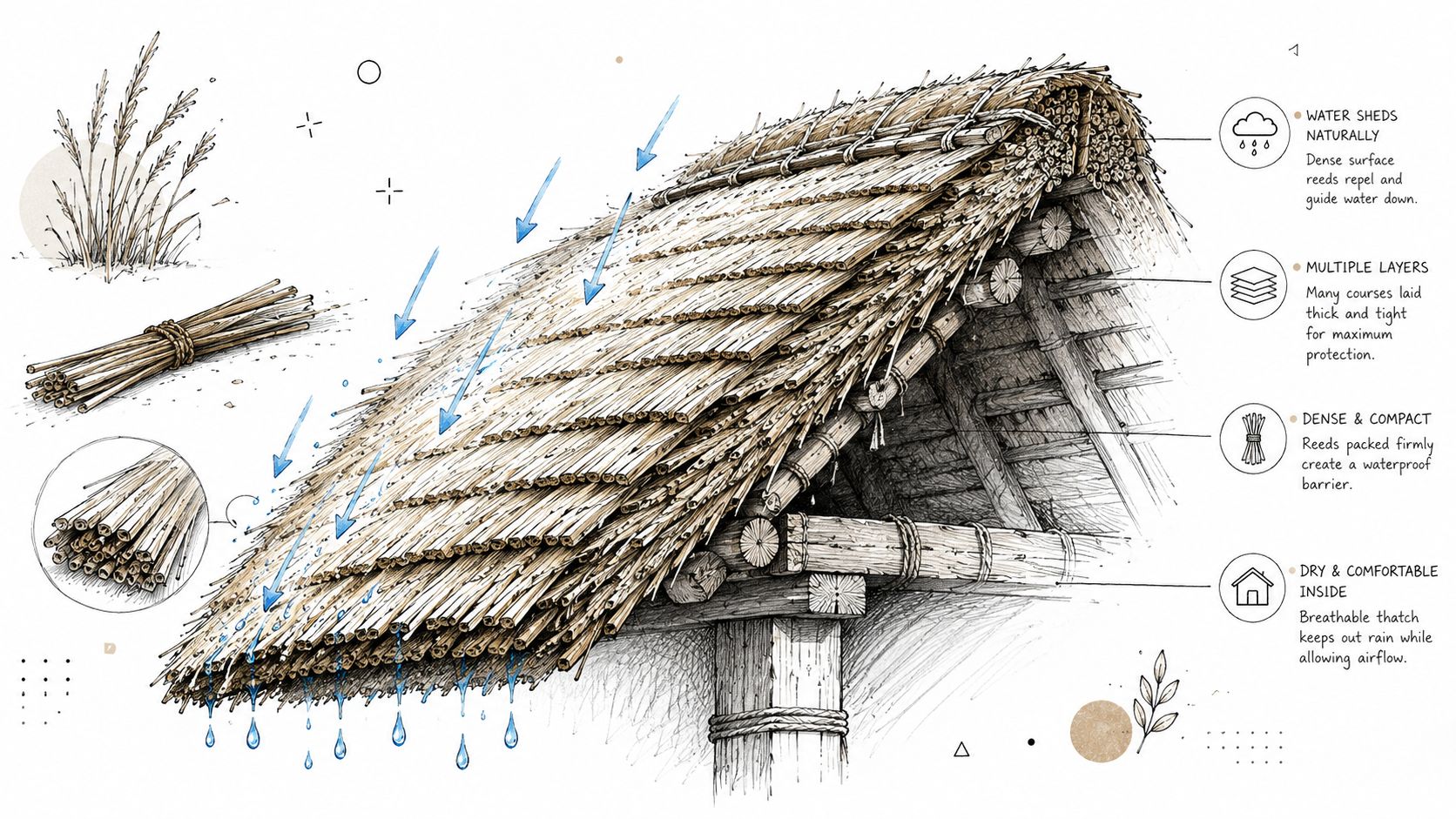
Dense layers act like a skin
A thatcher installs bundles of dried material so the stems point downward and overlap. That creates a thick outer surface. Rain hits the outside, then runs down and away.
It helps to picture shingles, but softer and much thicker. The roof doesn’t stay dry because the material is waterproof in the usual sense. It stays dry because the outer layers are packed tightly enough, and angled sharply enough, to move water off fast.
The roof pitch is not optional
For many modern homeowners, the first practical problem arises with roof pitch. A thatched roof needs a minimum pitch of 45°, and 50° is considered better because the steeper angle sheds water faster and helps the roof last longer (guidance on thatched roof pitch).
A house can’t usually switch to thatch the way it might switch from one type of shingle to another. The roof shape itself has to suit the material.
Many homes in Western Washington have roof lines that were designed for composition shingles, metal, or other modern systems. If the slope is too low, thatch won’t perform the way it should.
Why this confuses homeowners
A lot of basic articles make thatch sound like a style choice. It’s more than that. It’s also a structural and design choice.
For a homeowner, that means:
- Roof angle matters
- Eaves and edges need special detailing
- The thickness of the roof covering changes how the roof is built
That’s why a thatched roof usually isn’t a simple reroofing option for an existing suburban home.
Weighing the Pros and Cons of a Thatched Roof
A thatched roof has real strengths. It also comes with serious tradeoffs. For most homeowners, the practical side matters more than the postcard look.
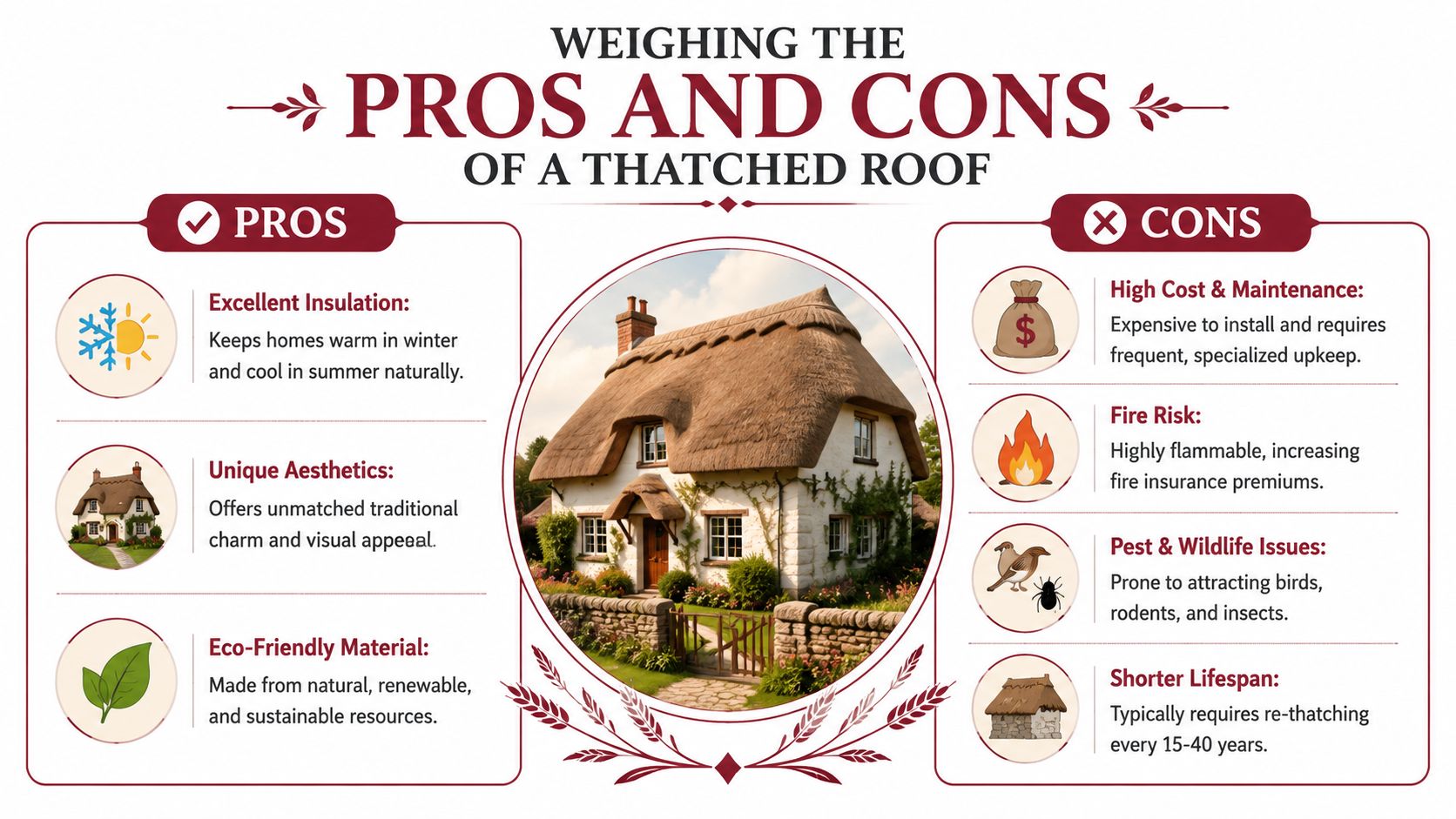
The pros homeowners usually notice first
Natural insulation
Thatch is widely described as a renewable and highly insulating material. That means it can help a building resist outdoor temperature swings and create a cozy interior feel.
Distinct appearance
No one chooses thatch because it blends in. It stands out. For cottages, historic homes, garden structures, or destination-style buildings, that handmade texture can be the whole point.
Renewable material
Because thatch uses plant-based material, many homeowners see it as a more natural option than factory-made roofing products. That appeal is real, especially for people drawn to traditional building methods.
The cons that affect daily ownership
Fire risk
The biggest concern is straightforward. Fire is a major concern with thatch, and that can affect both safety planning and insurance decisions. A homeowner needs to think beyond appearance and ask what happens if a nearby spark, chimney issue, or outside flame reaches the roof.
Insurance costs
Because of that fire concern, overviews of thatching note that insurance costs can be significantly higher than for conventional homes (thatching overview and risk factors). That doesn’t mean every policy works the same way, but it does mean homeowners should expect this to be a real part of the conversation.
Maintenance and repairs
A thatched roof isn’t a roof that can be neglected for years at a time. It needs specialized attention. If something starts to loosen, thin out, hold moisture, or attract pests, the repair process isn’t like replacing a few common shingles.
Limited skilled labor in the United States
This may be one of the biggest practical issues for American homeowners. Even if someone loves the look of thatch, finding qualified help for installation or repairs can be difficult.
A roof can be beautiful and still be the wrong fit for the home, the climate, and the owner’s long-term budget.
A simple homeowner view
A thatched roof may make sense when:
- A building is historic or designed specifically for thatch
- The owner accepts specialty maintenance
- The roof is part of a heritage or custom architectural goal
A thatched roof usually doesn’t make sense when:
- The home needs dependable, low-hassle weather protection
- Insurance and fire concerns are already top priorities
- The owner lives in a damp climate with moss and ongoing moisture exposure
That’s the point where most Western Washington homeowners start leaning back toward modern materials.
Understanding Thatched Roof Lifespan and Maintenance
When homeowners ask about thatch, they’re often really asking about upkeep. They want to know whether this is a charming roof or a constant project. In practical terms, it’s both.
A thatched roof can last for many years, but it’s not a set-it-and-forget-it roof. Its condition depends on the material, the craftsmanship, the roof shape, and the climate. Organic roofing materials need regular attention because moisture, wear, and animal activity can change the outer surface over time.
What maintenance actually looks like
A homeowner with a thatched roof may need to keep an eye on:
- Surface wear: areas that start thinning or weathering faster than the rest
- Wildlife activity: birds or pests pulling at material
- Moisture trouble: places that stay damp longer than they should
- Ridge wear: the top section often needs special upkeep before the rest of the roof does
That’s very different from what many owners expect from a standard modern roof. Most homeowners in Western Washington are already dealing with rain, debris, moss, and shaded roof sections. A roof made from vegetation raises that maintenance burden, not lowers it.
Why inspections matter more with specialty roofs
A small issue on a specialty roof can be easy to miss from the ground. That’s why inspection matters. Homeowners who are already understanding critical property inspection issues during a purchase or remodel should treat any unusual roofing material as a closer-look item.
For comparison, homeowners researching modern roof longevity can look at how long different roofs last to understand why common roofing systems are usually easier to plan for over the long run.
Specialty roofs often need specialty maintenance. That affects budgeting, scheduling, and who can safely work on the home.
What this means before buying or building
If a homeowner is considering a property with thatch, the right question isn’t just whether it looks good today. The better question is whether local experts, insurance coverage, and ongoing maintenance support are realistically available.
That’s especially important in areas where moisture problems can stay hidden until water shows up inside.
Is a Thatched Roof Practical for Western Washington?
For most homeowners in Western Washington, a thatched roof isn’t a practical choice. It may be beautiful, but beauty doesn’t change the weather.
The Puget Sound region gets long damp stretches, cool seasons, shaded rooflines, and heavy moss pressure. If a homeowner has seen moss spread across a composition roof in places like Sammamish or Redmond, it’s easy to understand why an organic roof covering would face even tougher conditions. Moisture that lingers is hard on any roof. It’s especially hard on one made from natural plant material.
Local climate makes the tradeoff harder
In Seattle-area neighborhoods with mature trees, roofs can stay wet for long periods. Homes near the water in places like Shoreline or Burien also deal with steady moisture exposure and weather wear. That doesn’t mean every roof fails quickly. It means the roofing material has to match the climate.
A thatched roof asks for the opposite of what many homeowners here need. It asks for ideal design, careful upkeep, and tolerance for higher risk. Most homeowners want dependable rain shedding, lower maintenance, and materials that local roofing crews can service easily.
What most homeowners should do instead
If a homeowner is comparing roof options for a replacement, the better path is usually to focus on systems designed for wet conditions and everyday serviceability. A guide to the best roofing material for local conditions can help narrow down choices that fit Western Washington homes more realistically.
That’s the practical answer. A thatched roof is fascinating to learn about, but for a working home in this climate, it usually creates more problems than peace of mind.
Modern Roofing Alternatives That Protect Your Home
Once a homeowner understands what a thatched roof requires, modern options start to make more sense. The goal isn’t to copy an old roofing tradition. The goal is to protect the home from rain, moisture damage, and avoidable repair costs.

Two practical choices for wet climates
Composition shingles are common for a reason. They work well on many home styles, they’re familiar to local crews, and they give homeowners a reliable balance of appearance, serviceability, and weather protection.
Metal roofing is another strong option for homeowners who want long-term performance and excellent water shedding. Anyone curious about broader metal roofing design can review this overview on understanding commercial metal roofs, even though residential needs are different.
Why modern systems fit local homes better
Modern roofing materials are built around today’s houses, today’s codes, and today’s weather challenges. They’re easier to inspect, easier to repair, and easier to replace when the time comes.
Homeowners comparing system types can use this roofing materials comparison to see how common options differ in maintenance, appearance, and suitability.
A safe DIY step is simple ground-level observation. If a homeowner is noticing stained ceilings, missing shingles, moss spread, or water around roof edges, it’s time to document those signs and schedule a professional inspection. What they shouldn’t do is climb onto a wet roof to investigate.
Get Expert Advice on the Right Roof for Your Home
A homeowner in Western Washington usually starts with a simple question. Will this roof keep rain out without turning into a constant maintenance project?
That question matters more than the novelty of a roof style. A thatched roof may be memorable in photos, but a working roof in the Seattle area has a harder job. It needs to handle long wet seasons, moss-friendly conditions, and the day-to-day demands of a modern home.
At Four Seasons Roofing, the certified team inspects, repairs, and replaces roofs across the Seattle area. For homeowners sorting through options, that often means helping them tell the difference between a problem that needs a repair, a roof that is reaching the end of its service life, and a roof that needs a trained set of eyes on it.
A professional inspection makes sense if a homeowner is noticing any of the following:
- Ceiling stains or active leaks
- Older roofing materials that may be wearing out
- Moss growth or heavy debris buildup
- Storm damage concerns
- Questions before buying or selling a home
Roofing choices can feel confusing because the roof is mostly out of sight until something goes wrong. A good inspection brings the issue down to earth. It shows what condition the roof is in, what risks are present now, and what kind of system makes practical sense for this climate and this house.
The right roof is the one that protects the home reliably in the climate where the home actually sits.
Frequently Asked Questions About Thatched Roofs
Are thatched roofs waterproof?
They aren’t waterproof in the same way metal or shingles are. They work by using thick, dense layers and a steep roof slope so water runs off the outside before it can penetrate the material.
Can a thatched roof go on any house?
Usually not. A thatched roof needs a steep roof shape and special detailing, so many modern homes aren’t designed for it.
Why aren’t thatched roofs common in the United States?
Thatch is extremely rare in the U.S. One source estimates there are only about 20 residential thatched homes in the United States, largely because of fire-safety rules and the dominance of mainstream roofing materials (overview of thatch rarity in the U.S.).
Is a thatched roof a good fit for rainy places?
In general, very wet climates make thatch a harder choice to own and maintain. Western Washington homeowners usually need roofing materials that handle long damp seasons with less upkeep.
Is thatch mostly decorative today?
In many developed markets, yes. It’s often tied to historic preservation, cultural traditions, or custom design rather than everyday residential roofing.
If a homeowner is asking what is a thatched roof, the practical next step is usually figuring out what roofing system will protect the home in Western Washington. Four Seasons Roofing helps homeowners evaluate leaks, aging roofs, moss issues, and replacement options with clear recommendations and professional inspections.