
When you picture a typical residential roof in North America, you are almost certainly thinking of an asphalt composition roof. It is the undisputed champion of the roofing world for a reason—it’s a carefully engineered shingle that hits the sweet spot between durability, affordability, and versatility. This blend of features makes it the go-to choice for millions of homeowners, especially here in the Puget Sound.
Understanding the Modern Asphalt Composition Roof
Forget thinking of it as just a simple covering. A modern asphalt composition roof is a sophisticated, multi-layered shield designed to protect your home from everything the Pacific Northwest can throw at it. Each part of the shingle is engineered to work together, providing strength, water resistance, and longevity.
Its popularity is no accident. In the US, asphalt composition shingles account for a staggering 81% of residential roofing demand as of 2023. This isn't just a trend; it's a testament to a product that perfectly balances cost, ease of installation, and real-world durability for markets just like ours. (For a deeper dive, check out the Freedonia Group industry study on roofing trends).
The Three Core Components
To truly understand what makes these shingles effective, it helps to break them down into their three core layers. Think of it like a knight's suit of armor, where each piece has a specific job.
- The Fiberglass Mat (Core Strength): This is the shingle's skeleton. A woven mat of glass fibers provides a tough, stable base that will not rot or soak up moisture. This core gives the shingle its structural integrity and contributes to its Class A fire rating.
- The Asphalt (Waterproof Barrier): Next, the fiberglass mat is completely saturated with waterproof asphalt. This is the muscle, the part responsible for shedding water and keeping the underlying roof deck dry from our persistent rain, snow, and ice.
- The Mineral Granules (Durable Armor): Finally, the top surface is coated with a thick layer of crushed, ceramic-coated mineral granules. This is the outer armor. It shields the asphalt from damaging UV rays, helps resist algae and moss growth, and gives the shingle its final color and texture.
This layered design is the secret to an asphalt composition roof's resilience. You can learn more about how these components come together in different styles in our detailed guide on composition roofing options.
By combining a strong fiberglass core, a waterproof asphalt coating, and a tough granule exterior, this type of roofing delivers reliable protection that stands up to demanding climates without the premium cost of materials like slate or metal.
Now that we have the foundation down, we will get into the different shingle styles you will encounter—from basic 3-tab to stunning architectural designs—and how they perform specifically in our damp, moss-prone environment. Understanding how they are built is the first step toward making a confident, informed decision for your home.
The Anatomy of a Modern Roofing Shingle
To really understand why an asphalt composition roof is such a popular choice, it helps to look under the hood. From the ground, a shingle looks simple enough, but it is actually a highly engineered product. Think of it as a precisely made sandwich where every single ingredient is chosen for maximum strength and weather resistance.
Once you understand these layers, you can spot quality a mile away. When a roofer starts talking about materials, you will know exactly what they mean and why it is so important for protecting your home long-term. That kind of knowledge is what lets you make a confident investment.
This quick breakdown shows you the essential layers that make up a modern asphalt shingle.
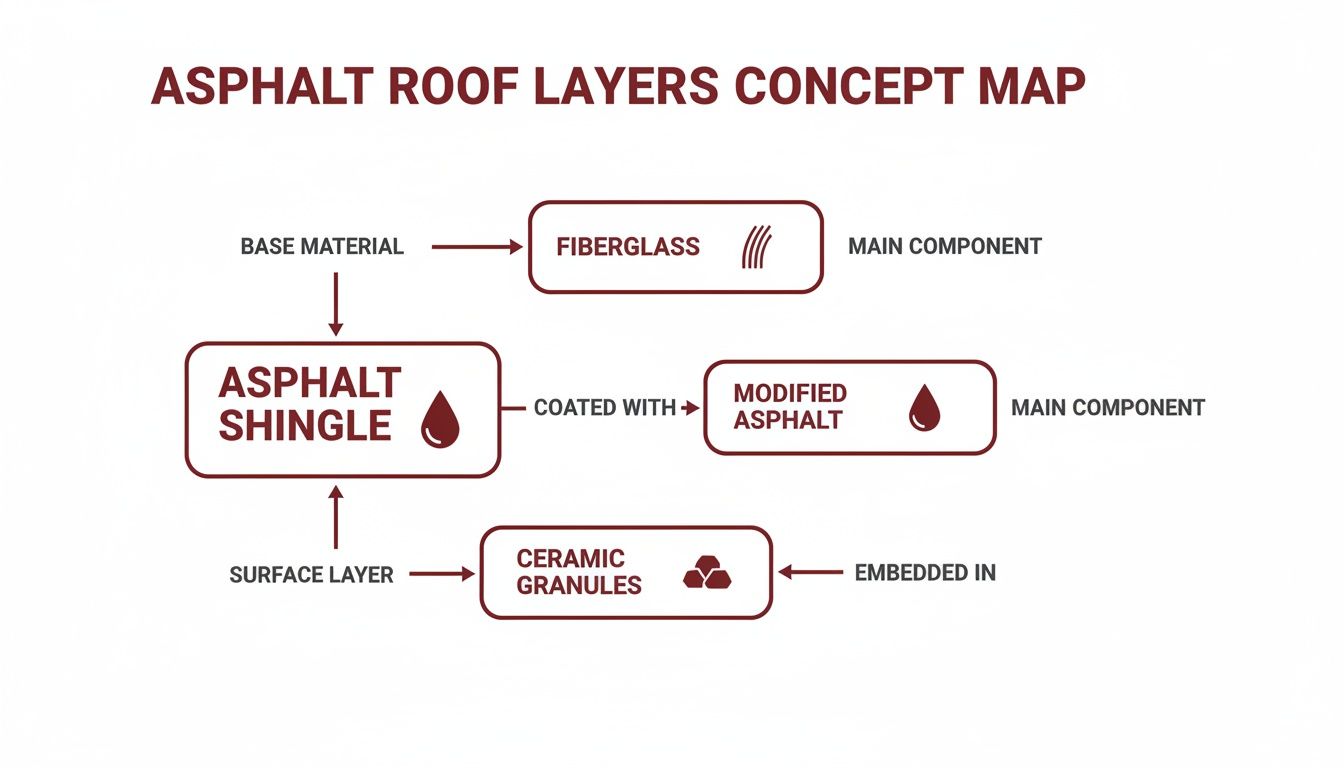
You can see how the shingle's core, its waterproof body, and its protective surface all work together to create a tough shield for your home.
The Fiberglass Mat Core
At the very heart of every modern asphalt shingle lies the fiberglass mat. This woven sheet of glass fibers is the shingle’s skeleton, giving it a strong, stable foundation to build upon.
This is a huge improvement over the old organic (paper-based) mats from decades ago. Fiberglass does not absorb moisture, so it will not rot, warp, or become brittle. That stability is absolutely critical for preventing shingles from curling in the face of the Puget Sound’s constant temperature swings and dampness. Best of all, it gives the shingle a Class A fire rating—the highest available for residential roofing.
The Waterproof Asphalt Layer
Next, bonded to both sides of that fiberglass mat, is the shingle's muscle: a thick layer of waterproof asphalt. This is what does the heavy lifting, repelling water and stopping it from ever touching the wood decking underneath.
Roofing manufacturers often mix polymers into this asphalt to make it more flexible and durable. This lets the shingle expand and contract with the temperature without cracking, keeping it effective for decades.
The Protective Granule Surface
The final layer—the one you actually see from the street—is a dense coating of ceramic-coated mineral granules. This is the shingle's armor. It shields the asphalt from the elements and gives your roof its specific color and texture.
These small granules have a few critical jobs:
- UV Protection: They block the sun's harsh ultraviolet rays, which would otherwise dry out the asphalt and cause it to fail prematurely.
- Physical Durability: They provide a tough surface that can handle impacts from hail, small branches, and foot traffic during maintenance.
- Algae Resistance: Many modern shingles, especially those built for damp climates like ours, have copper-infused granules that stop the growth of the blue-green algae that leaves unsightly dark streaks.
The dominance of this layered design is clear. Fiberglass-based asphalt composition shingles hold a massive 78.5% global market share in their category. They are valued for a lightweight strength that protects homes everywhere from Western Washington to locations all over the world.
The combination of a fire-resistant fiberglass skeleton, a waterproof asphalt body, and a tough granule shield creates a roofing material that is far greater than the sum of its parts.
Of course, the quality of these materials is only half the battle. The real-world performance of your roof also depends heavily on proper shingle nailing techniques. The best shingle in the world will not do its job if it is not installed correctly, ensuring every layer functions as part of a complete system.
Choosing Your Shingle Style and Performance
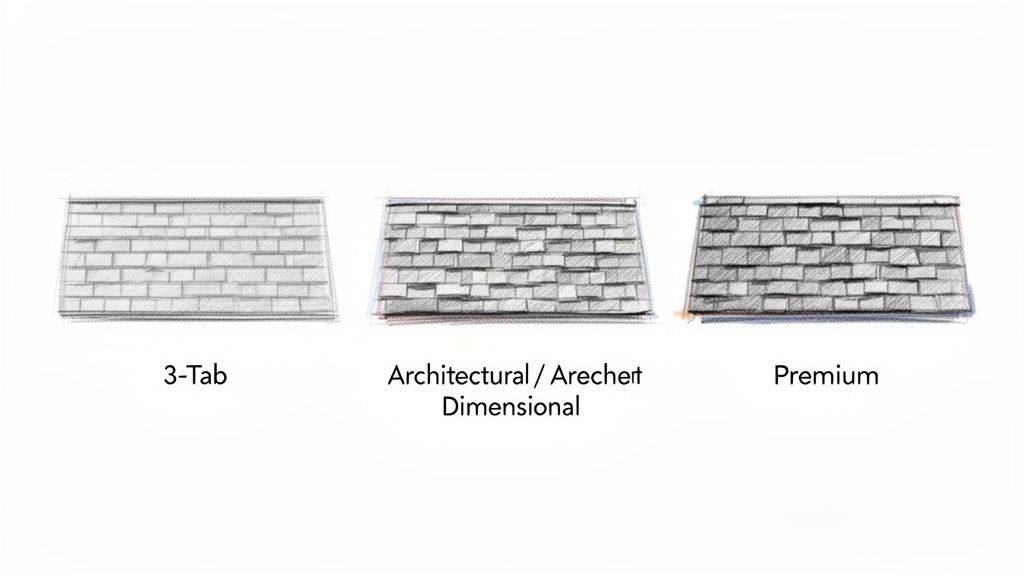
Now that you have a handle on what goes into an asphalt composition roof, it is time for the fun part: picking the right shingle for your home. This is where you get to weigh your budget against your performance needs and, of course, your personal style. Not all shingles are made the same—they fall into three distinct categories, each offering its own blend of durability, design, and overall value.
Picking the right style is about more than just finding the perfect color. It is about making sure the shingle’s performance can stand up to your home's architecture and the unique demands of our Pacific Northwest climate. Let’s break down the three main types to help you find that perfect fit.
3-Tab Shingles: The Basic Standard
Think of 3-tab shingles as the foundational, no-frills option for an asphalt roof. They are cut from a single, flat layer of material, with three distinct cutouts (or "tabs") along the bottom edge. The result is a simple, clean, and uniform pattern across the roof.
Because of this straightforward, single-layer design, 3-tab shingles are the most affordable choice. You can typically expect a lifespan of around 15-20 years and a wind resistance rating of about 60 mph. While they are easy on the wallet, they offer the least amount of visual dimension and are best suited for budget-driven projects or rental properties where basic, reliable protection is the top priority.
Architectural Shingles: The Popular Choice
Also known as dimensional shingles, architectural shingles are, without a doubt, the most popular choice for homeowners today, especially in neighborhoods across Sammamish and Redmond. Unlike their 3-tab cousins, these shingles are made from multiple layers of asphalt and granules laminated together. This layered construction creates a much thicker, more robust shingle that has a varied, textured look.
The random pattern adds incredible depth and shadow, doing a fantastic job of mimicking the appearance of natural materials like wood shake. That visual appeal is a huge part of their attraction, but their performance is just as compelling.
- Enhanced Durability: Those laminated layers make them significantly tougher and more resistant to impacts.
- Longer Lifespan: Architectural shingles typically last 25-30 years, giving you much better long-term value.
- Superior Wind Resistance: They can handle winds of 110-130 mph, a critical feature when our seasonal storms roll through.
This perfect balance of aesthetic flexibility and rugged performance makes architectural shingles the go-to middle ground for most homeowners.
The global dominance of asphalt composition shingles is clear, as they hold a 34.0% share of the roofing materials market. Architectural styles alone account for 44.2% of that segment, favored for their ability to deliver a premium look without the high cost of slate or wood. As construction continues to grow, these shingles provide the energy efficiency and style that Puget Sound families need for affordable, reliable roof replacements. You can find more details in this global roofing materials market analysis.
Premium Shingles: The Luxury Option
At the very top of the lineup, you will find premium shingles, often called luxury or designer shingles. These are the thickest, heaviest, and most durable asphalt shingles money can buy. They are specifically engineered to replicate the stunning appearance of high-end natural roofing materials like slate tiles or hand-split cedar shakes.
For homeowners with classic Seattle homes or anyone looking to maximize curb appeal, premium shingles deliver an unmatched aesthetic. Their multi-layer, often oversized design creates dramatic shadow lines and a rich, deeply textured finish. Their performance is just as impressive, with lifespans that can stretch to 40-50 years or more and the highest possible ratings for wind and impact resistance. While they do come with a higher price tag, premium shingles provide a truly distinctive look and the ultimate peace of mind.
How Your Roof Performs in the Pacific Northwest
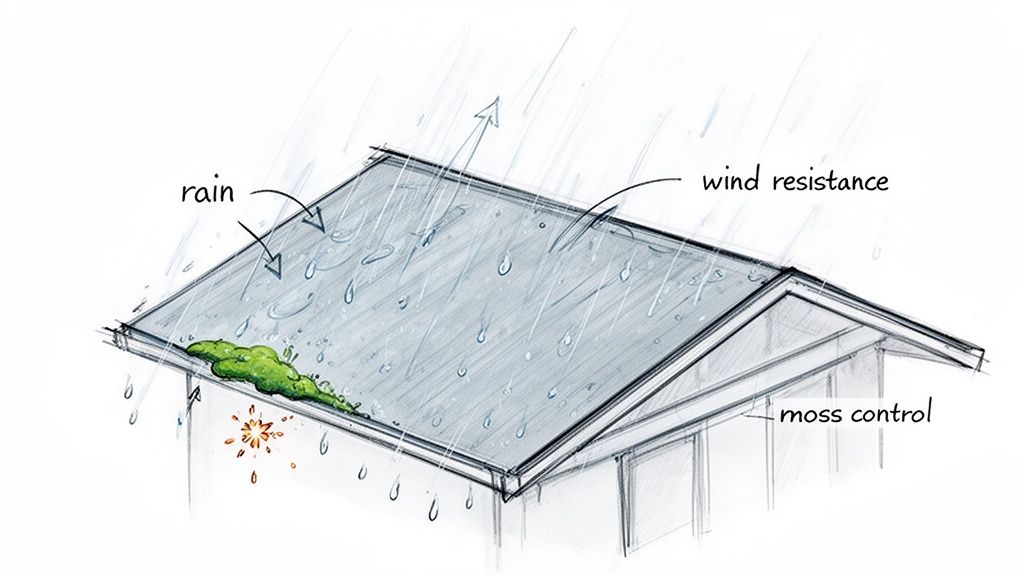
A roof in Western Washington does not have an easy job. It is up against a unique set of challenges thrown at it by our famously damp and often wild climate. Thankfully, an asphalt composition roof is particularly well-suited for this environment, engineered with specific features to handle our persistent rain, seasonal windstorms, and the relentless advance of moss.
Understanding how these shingles actually perform right here in our backyard is the key to making a confident investment. It is not just about picking a color; it is about choosing a defense system designed for the specific threats your home will face, year after year.
Standing Up to Wind and Rain
Let's start with the basics: a roof's main job is keeping water out. The layered, overlapping design of asphalt shingles is fantastic at this, creating a continuous barrier that sheds water efficiently down into your gutters. Modern architectural shingles are even better, with a multi-layer construction that adds an extra dose of durability.
However, our seasonal windstorms add another layer of complexity. High winds can get underneath shingles, breaking the sealant strip that bonds them together and creating a path for water to sneak in. This is where wind-resistance ratings become absolutely critical.
- Standard 3-Tab Shingles: Typically rated for winds up to 60 mph.
- Architectural Shingles: Offer a huge leap in protection, with ratings often between 110 mph and 130 mph when installed to the manufacturer’s specifications.
Opting for a shingle with a higher wind rating gives you essential peace of mind when those big storms roll through the Puget Sound.
The Battle Against Moss and Algae
For any homeowner from Bellevue to Everett, the constant moisture creates the perfect breeding ground for moss and algae. Moss is a real problem—it traps water against the shingles, leading to granule loss and premature aging. Algae is more of a cosmetic issue, leaving behind unsightly dark streaks.
To fight this, manufacturers infuse the surface granules of the shingles with copper. When it rains, trace amounts of copper ions wash over the roof, creating an environment where moss and algae cannot survive. It is a simple but brilliant solution.
This built-in resistance is a must-have feature for any roof in our region. It protects both its appearance and its structural integrity, making it one of the smartest long-term decisions you can make.
Realistic Lifespan Expectations
While manufacturers provide lifespan estimates, our local climate definitely has a say in how long a roof truly lasts. Proper installation and ongoing maintenance are just as important as the shingle itself. Here in the Pacific Northwest, one of the most critical—and often overlooked—factors is proper attic ventilation.
A well-ventilated attic acts like a breathing system for your roof. It helps regulate temperature and moisture, preventing intense heat buildup in the summer and moisture condensation in the winter. This stability keeps shingles from curling or cracking and stops moisture from rotting the roof deck from below. Without it, even the best shingles can fail years ahead of schedule. We have seen firsthand the difficulties of roofing in Seattle, WA, and we can tell you a properly ventilated system is non-negotiable for getting the full life out of your roof.
Decoding the Cost of a New Composition Roof
Figuring out the price of a new asphalt composition roof is the first step toward making a smart investment in your home. It’s natural to want a simple price per square foot, but the truth is, a handful of key variables come together to determine the final cost. A good, transparent quote will break all of this down for you, so you know exactly where your money is going.
Our process is built on clarity. We believe that when a homeowner understands the project, they can make the best decisions. That is why we provide detailed proposals with no surprises or hidden fees. This approach lets you evaluate any roofing quote with a confident eye, seeing the real value behind each line item.
Primary Cost Factors You Should Know
There are three main components that have the biggest impact on your total investment. The specific choices you make in each of these areas will directly shape the scope and final price of your project.
- Shingle Type and Quality: As we have covered, your choice between 3-tab, architectural, and premium shingles is a major cost driver. Architectural shingles, the most popular option by far, strike a fantastic balance between durability and style for the price. Premium shingles, on the other hand, represent a larger upfront investment but deliver maximum longevity and incredible curb appeal.
- Roof Size and Complexity: It's straightforward—a larger roof needs more materials and labor, which increases the cost. But complexity is just as important. A roof with a steep pitch, multiple dormers, valleys, and skylights is a different challenge. It demands more intricate work, specialized safety gear, and precision cutting, all of which adds to the labor time.
- The Necessity of a Tear-Off: It might seem like a way to save money, but roofing over an old layer is almost always a bad idea. A complete tear-off of the old shingles is essential. It is the only way to properly inspect the underlying wood sheathing for rot or damage. This step ensures your new roof has a solid foundation, which is absolutely critical for its long-term performance and for keeping your manufacturer's warranty valid.
What Goes Into a Solid Roofing Quote?
A trustworthy quote is much more than just a final number; it's a detailed game plan. To help you understand how these factors come together, here's a look at the primary variables that determine your total investment.
| Key Factors Influencing Your Roof Replacement Cost |
| :— | :— | :— |
| Cost Factor | Description | Impact on Price |
| Shingle Selection | The type of asphalt shingle you choose (3-tab, architectural, or premium). | High. Premium shingles cost significantly more than basic 3-tab options. |
| Roof Size | The total square footage of your roof's surface area. | High. A larger roof requires more materials and labor, directly increasing costs. |
| Roof Complexity | The pitch (steepness) and number of features like valleys, hips, dormers, and skylights. | High. Complex roofs require more skill, time, and custom cuts, raising labor costs. |
| Tear-Off & Disposal | The process of removing and hauling away the old roofing materials. | Medium. This is a necessary labor and disposal expense for a proper installation. |
| Underlayment & Decking | The protective barrier under the shingles and the condition of the wood sheathing. | Variable. If decking is rotted and needs replacement, this can add significant cost. |
| Labor & Installation | The cost of the professional crew to install the new roofing system. | High. This reflects the skill, experience, and safety measures of the installation team. |
| Permits & Warranties | Local building permits and the warranty coverage for materials and workmanship. | Low to Medium. Necessary costs that provide legal compliance and long-term protection. |
This breakdown should give you a clearer picture of what to look for in a quote. It should clearly outline the costs for materials, labor, tear-off and disposal, permits, and warranty coverage, leaving no room for surprise charges down the line.
Understanding these variables is the key. You can get an even clearer picture by assessing the complete cost to replace a roof with our detailed guide. It will empower you to compare quotes effectively and make sure you are paying a fair price for quality work that protects your home for decades.
Your Top Questions About Composition Roofing, Answered
To wrap things up, let's tackle some of the most common questions we hear from homeowners about asphalt composition roofs. This should clear up any lingering thoughts and help you feel confident as you plan your project.
How Long Does an Asphalt Composition Roof Really Last in Washington?
This is a great question, and the answer really depends on the shingle you choose and the quality of the installation. Your basic 3-tab shingles will typically give you 15-20 years of service.
However, the thicker, more durable architectural shingles are built to last much longer, usually in the 25-30 year range. Some of the premium lines can even push 50 years. The key in our damp Puget Sound climate is proper attic ventilation and keeping the roof clear of debris—that is what helps you get every last year out of it.
Can I Install a New Composition Roof Over My Old One?
While building codes sometimes allow for a single "layover," it is almost never the best approach. A complete tear-off is what we strongly recommend. Installing a new roof over an old one can hide serious issues lurking underneath, like rot in the roof deck, and all that extra weight puts a strain on your home's structure.
A full tear-off gives us a chance to thoroughly inspect the sheathing. This ensures we are building your new roof on a solid, flat foundation, which is absolutely critical for long-term performance and is often required to keep the manufacturer's warranty valid.
What Is the Difference Between Architectural and 3-Tab Shingles?
The biggest differences are in their construction and how they look on your home. A 3-tab shingle is a single, flat layer with cutouts that create a very simple, uniform pattern. It is the lighter, more budget-friendly option.
Architectural shingles, on the other hand, are made from multiple laminated layers of asphalt and granules. This gives them a much thicker profile and a textured, dimensional look that can mimic natural materials like wood shake. They also boast superior wind resistance and a longer lifespan, making them a much better investment for the long run.
How Do I Know if My Asphalt Shingle Roof Needs Replacement?
There are a few tell-tale signs to watch for. Keep an eye out for widespread cracked, curling, or entirely missing shingles. Another huge red flag is finding a lot of sandy granules in your gutters—that is the protective layer of your shingles washing away. Dark streaks from algae or, of course, any sign of a leak in your attic are also clear indicators.
If your roof is over 20 years old and showing any of these symptoms, it is definitely time to get a professional inspection. It is also smart to understand what is covered by your warranty; you can learn more by reading about roofing warranties in Seattle in our homeowner's guide. This knowledge will help you feel prepared for the replacement process.
Your roof is one of the most important investments you will make in your home. At Four Seasons Roofing, we are committed to providing transparent information and expert craftsmanship to protect that investment for decades. If you have more questions or are ready for a professional assessment, request your complimentary inspection today.