
When it’s time to replace your roof, the sheer number of choices can feel overwhelming. What if that decision could be more than just selecting a color? What if your new roof could be a smart, sustainable investment in your home?
That’s the idea behind environmentally friendly shingles. They are designed with the whole picture in mind—using materials that are recycled, recyclable, and energy-efficient. It’s a choice that’s not just good for the planet but also for your wallet in the long run.
Choosing a Greener Roof for Your Home
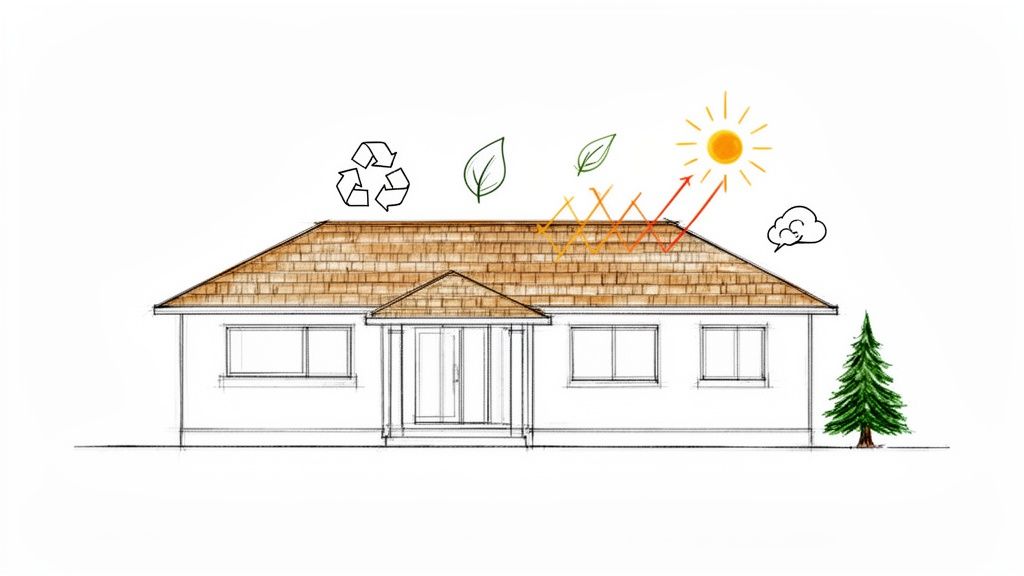
As homeowners across the Pacific Northwest place a greater focus on sustainability, the question of what makes a roof “green” comes up frequently. The term “environmentally friendly shingles” isn’t just a trend; it points to tangible qualities that make a roofing material truly responsible.
To make an informed choice, you must look at the shingle’s entire lifecycle. Think of it as a journey, from its creation in the factory to what happens decades from now when it’s time for a replacement. A genuinely green roof performs well at every stage of that journey, making it a sound investment for your home’s performance and value.
Key Qualities of Sustainable Shingles
Knowing what to look for is the first step toward making a confident decision. For homeowners here in Seattle, Bellevue, and across Snohomish County, these are the factors that truly count:
- Recycled Content: Many of today’s shingles are made with recycled materials, like plastics and rubber, which reduces the demand for virgin resources.
- Manufacturing Footprint: The best manufacturers are actively working to reduce the energy and water used to produce their shingles.
- Energy Efficiency: You’ll often hear the term “cool roof.” These shingles have special technologies that reflect more sunlight, which can help lower your cooling bills in the summer.
- End-of-Life Plan: The most sustainable materials are 100% recyclable, keeping them out of landfills after they’ve protected your home for years.
This move toward sustainability is more than just a local trend. The global market for eco-friendly shingles is booming, with projections showing it could reach $6.5 billion by 2029. This isn’t surprising. Homeowners and builders are recognizing the impact of traditional roofing and are embracing greener building standards.
When you frame this decision as a long-term investment, it becomes clear how a greener roof is both a responsible and a resilient choice. Our guide to sustainable roofing options dives deeper into how these materials perform right here in our climate, giving you the confidence to pick a roof that protects your home and aligns with your values.
What Defines an Environmentally Friendly Shingle
When you hear “environmentally friendly shingles,” what comes to mind? It’s easy to picture something literally green, but the true meaning is much deeper. It’s not about a single feature, but the shingle’s entire lifecycle—from how it’s made to how it performs on your home and what happens to it decades from now.
To truly know if a shingle is a responsible choice, we must look at four core pillars that define its sustainability. Think of it like a report card: a shingle might excel in one subject, like being made from recycled materials, but fall short in another. A truly eco-friendly option earns high marks across the board. Let’s break down what that looks like.
The Source: Sustainable Materials
The journey of a green shingle begins with its ingredients. Instead of relying solely on new raw materials, many sustainable options are built with a high percentage of post-consumer or post-industrial recycled content. This is where materials like reclaimed plastics, rubber, and even wood fibers get a second chance.
For instance, composite shingles often use a blend of recycled polymers, making them incredibly durable while diverting waste that would otherwise sit in a landfill. Similarly, a metal roof might be made from up to 95% recycled aluminum or steel. When you choose shingles made from recycled sources, you’re supporting a circular economy—a system designed to eliminate waste and lessen the environmental toll of mining and extraction.
The Process: Low-Impact Manufacturing
The next piece of the puzzle is how the shingles are made. A product’s green credentials can be undermined if its manufacturing process is wasteful and energy-intensive. The best manufacturers are actively working to shrink their environmental footprint.
This involves a few key actions:
- Reducing Energy Consumption: Using more efficient machinery and smarter processes to lower the amount of electricity and fuel needed for production.
- Conserving Water: Adopting closed-loop systems that recycle and reuse water instead of constantly drawing from fresh sources.
- Minimizing Waste: Fine-tuning production lines to reduce scrap material and finding innovative ways to recycle any waste that is generated.
Choosing a shingle from a manufacturer committed to responsible production ensures your green choice starts long before the materials ever arrive at your home. It’s an investment in companies that prioritize planet-friendly practices.
The Performance: Energy Efficiency on Your Roof
Once installed, the best eco-friendly shingles get to work helping you save energy. This is where the concept of a “cool roof” comes into play. These shingles are engineered with special granules that reflect more of the sun’s infrared radiation, rather than absorbing it as heat.
During our warm summer months, this solar reflectance keeps your attic and home cooler, which means your air conditioning system doesn’t have to work as hard. That translates directly to lower energy bills and a smaller carbon footprint. The color of your shingles plays a significant role here, and you can learn more about which roof color has the highest energy efficiency in our detailed guide. A critical part of any green shingle is its ability to contribute to your home’s overall performance, and there are many ways for how to improve home energy efficiency.
The Lifecycle: End-of-Life Recyclability
Finally, we must consider the end of the line. Traditional asphalt shingles are a major contributor to construction waste, with millions of tons piling up in landfills every year. A truly sustainable shingle is designed with its own retirement in mind.
Materials like metal and many modern composite tiles are 100% recyclable at the end of their long service lives. Instead of becoming trash, they can be collected and transformed back into new products, closing the loop and starting the cycle again. This full-lifecycle approach is the ultimate hallmark of a thoughtfully designed, environmentally friendly shingle. It ensures your roofing choice is a responsible one, not just for today, but for generations to come.
Comparing Your Eco-Friendly Shingle Options
Now that you have a firm grasp of what makes a shingle genuinely sustainable, let’s get practical and look at the options for your roof. The world of eco-friendly roofing is surprisingly diverse, with different materials offering their own unique blend of benefits, costs, and styles. For those of us in Western Washington, finding the right product that can stand up to our climate is just as crucial as its green credentials.
We’ll break down the most popular and effective choices available. This will help you cut through the marketing noise and focus on what truly matters for your home, your budget, and your environmental goals.
Composite Shingles: The Recycled Innovator
Composite shingles represent a significant leap forward in sustainable roofing. These are not your grandfather’s shingles; they are engineered from a smart blend of recycled materials, often incorporating post-consumer plastics, old tires, and cellulose fibers. By giving these materials a second life, composite shingles keep a tremendous amount of waste out of our landfills.
They are designed to mimic the appearance of high-end natural slate or cedar shakes, but you get that premium look without the environmental impact of quarrying stone or logging forests. Furthermore, their toughness is a major environmental win. Many composite options are built to last 50 years or more, meaning fewer roof replacements over your home’s lifetime and a much smaller overall carbon footprint.
Metal Roofing: The Durability Champion
When you talk about longevity and recyclability, it’s tough to beat metal roofing. Most metal roofs, whether you choose steel or aluminum, are made with a significant amount of recycled material—often up to 95%. This makes them a fantastic example of a closed-loop product where old materials become new again.
However, the real environmental power of metal comes at the end of its life. After protecting a home for 40 to 70 years, a metal roof is 100% recyclable. Instead of being hauled to a landfill like many other roofing materials, it can be melted down and forged into new products, starting the cycle over again. As a bonus for us in the Pacific Northwest, its smooth, hard surface is naturally resistant to the moss and algae that seem to love every other type of roof.
A Note on Recycled Asphalt Shingles
While traditional asphalt shingles have a challenging environmental reputation, manufacturers are making real progress. Some modern options now include recycled content. If you’re set on the classic look and affordability of asphalt, it’s worth asking about these greener versions. You can get a closer look at asphalt shingles and how they’re made in our detailed guide.
Cool Roof Shingles: The Energy Saver
Cool roof technology tackles the “performance” side of sustainability head-on. These shingles are engineered with special granules that reflect more of the sun’s infrared radiation away from your home. Think of it like wearing a white shirt on a hot day instead of a black one; the lighter color reflects heat and keeps you cooler.
That reflective property prevents your attic and home from overheating during the summer, which gives your air conditioning system a much-needed break. The result is lower energy bills and a smaller carbon footprint for your household. For homeowners who want to see a direct impact on their energy consumption, cool roof shingles are an excellent choice.
This chart can help you visualize the decision-making process, depending on which benefit matters most to you.
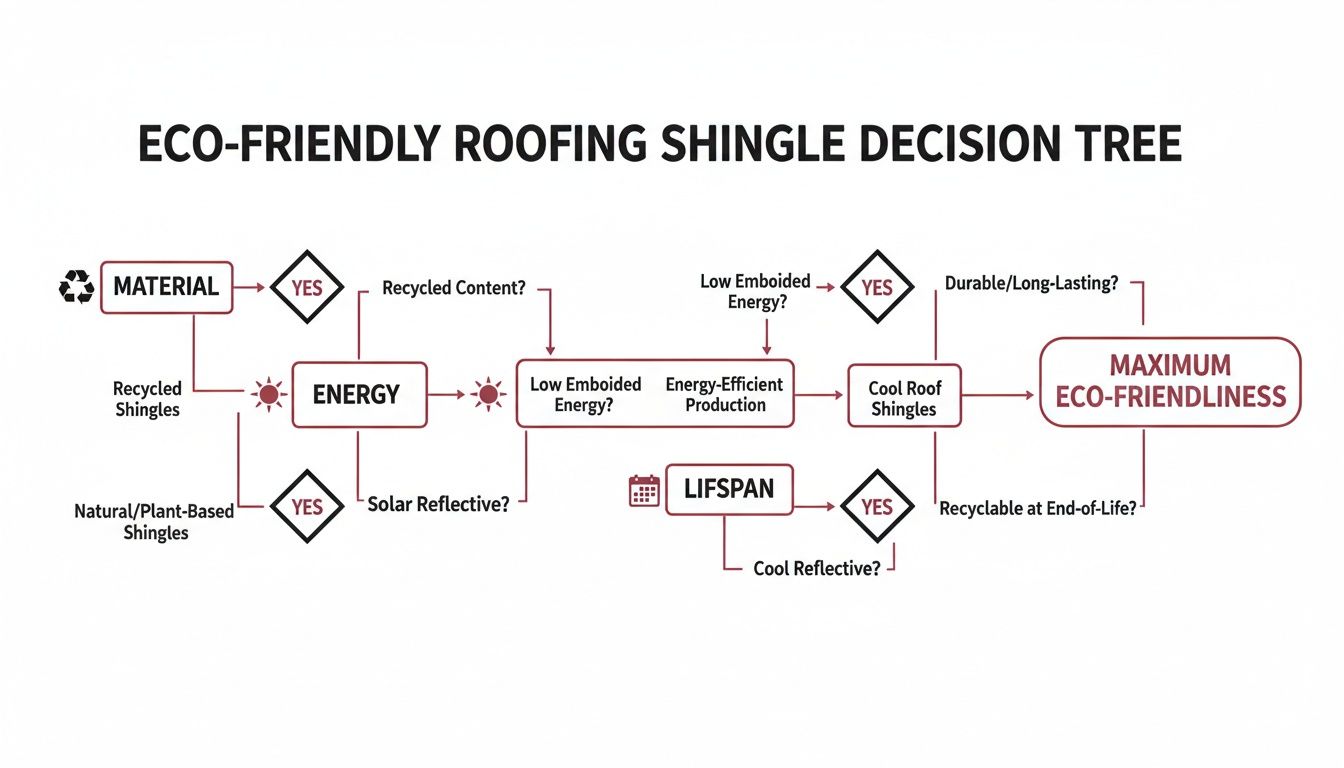
As you can see, whether you prioritize recycled materials, energy savings, or sheer longevity, there is a sustainable roofing solution that fits the bill.
Solar Shingles: The Future Is Now
Solar shingles are pushing the boundaries of what a roof can do. They integrate photovoltaic cells directly into the roofing material itself, turning your entire roof into a power generator. Instead of just passively protecting your home, these shingles actively produce clean, renewable electricity. It’s the ultimate two-for-one: a durable roof and a solar array combined.
While the upfront cost is higher, the long-term payoff from energy savings can be substantial. For homeowners truly committed to a green home, a full solar panel installation is another powerful option to explore alongside solar shingles.
Comparing Environmentally Friendly Shingle Materials
To help pull all this information together, the table below provides a quick snapshot of how these eco-friendly options stack up against each other. It’s a simple way to compare the key factors that matter most.
| Shingle Type | Typical Lifespan | Average Cost | Key Eco-Benefit | Best For |
|---|---|---|---|---|
| Composite Shingles | 50+ years | $$$ | High recycled content, diverts waste | Homeowners who want the high-end look of slate or wood with incredible durability. |
| Metal Roofing | 40–70 years | $$$ | Extremely high recycled content, 100% recyclable | Those who prioritize longevity, low maintenance, and complete end-of-life recyclability. |
| Cool Roof Shingles | 20–30 years | $$ | Reduces cooling costs by reflecting solar energy | Homeowners in sunnier climates focused on lowering their home’s energy consumption. |
| Solar Shingles | 25–30 years | $$$$ | Generates clean, renewable electricity | Those aiming for maximum energy independence and a high-tech, integrated solution. |
By weighing these factors—lifespan, cost, and core benefit—you can feel confident choosing the environmentally friendly shingles that are the perfect match for your home, your style, and your values.
Analyzing the Cost and Return on Your Investment
Let’s get right to it—for most homeowners, the big question is whether a green roof makes financial sense. It’s easy to hear “eco-friendly” and immediately think “expensive.” However, the initial price tag is only one part of the complete financial picture.
Think of choosing environmentally friendly shingles as a long-term investment, not just a one-time purchase. While some sustainable materials may have a higher upfront cost, they are designed to deliver value year after year. Often, they end up providing a much stronger return than their conventional counterparts.
Looking Beyond the Initial Price Tag
The true cost of a roof isn’t just the number on your first estimate; it’s what you spend over its entire lifespan. Sustainable options are engineered for better performance and a longer life, which completely changes the math.
Here are a few factors that contribute to that long-term value:
- Exceptional Durability: Materials like metal and composite shingles are built to last 50 years or more, sometimes double the lifespan of traditional asphalt. That means you avoid the cost and headache of a second roof replacement down the road.
- Reduced Maintenance Costs: Many eco-friendly options, especially metal, naturally resist moss and algae—a constant battle here in Woodinville and Sammamish. That resilience saves you real money on frequent cleanings and repairs over the decades.
- Enhanced Property Value: A durable, energy-efficient roof is a significant selling point. It tells potential buyers that the home is well-maintained and will have lower future costs, adding tangible value to your property.
Calculating Your Return Through Energy Savings
One of the clearest financial wins comes from reducing energy use, especially with cool roof technology. These shingles aren’t just a passive layer of protection; they’re an active part of your home’s energy system.
By reflecting a much larger portion of the sun’s heat, cool roofs keep your attic and home cooler during our warmer months. This takes a significant load off your air conditioning system, leading to noticeable savings on your utility bills every summer.
This efficiency is a major reason why the global market for eco-roofing is projected to jump from $15 billion in 2025 to $27 billion by 2033. Cool eco-shingles can reflect 25-35% more solar radiation, which can slash annual cooling costs by 10-15%. For many homeowners, this means recouping the initial premium in as little as 5-7 years.
A green roof actively pays you back over time. The energy savings, combined with lower maintenance and a longer lifespan, create a compelling financial case that extends far beyond the initial installation cost.
Factoring in Rebates and Tax Credits
In addition to the savings you see on your bills, government and utility incentives can shorten that payback period even more. Federal, state, and local programs frequently offer tax credits or rebates for installing energy-efficient home upgrades, including qualified cool roofing materials.
These incentives are designed to encourage homeowners to adopt greener technologies. While the programs vary and change over time, it’s always a good idea to check for current programs available in our area before you start a project. For a deeper dive into the factors that influence overall project expenses, check out our guide on assessing the cost to replace a roof. It can help you put together a complete budget that accounts for all the variables.
Finding the Right Shingles for the Pacific Northwest Climate
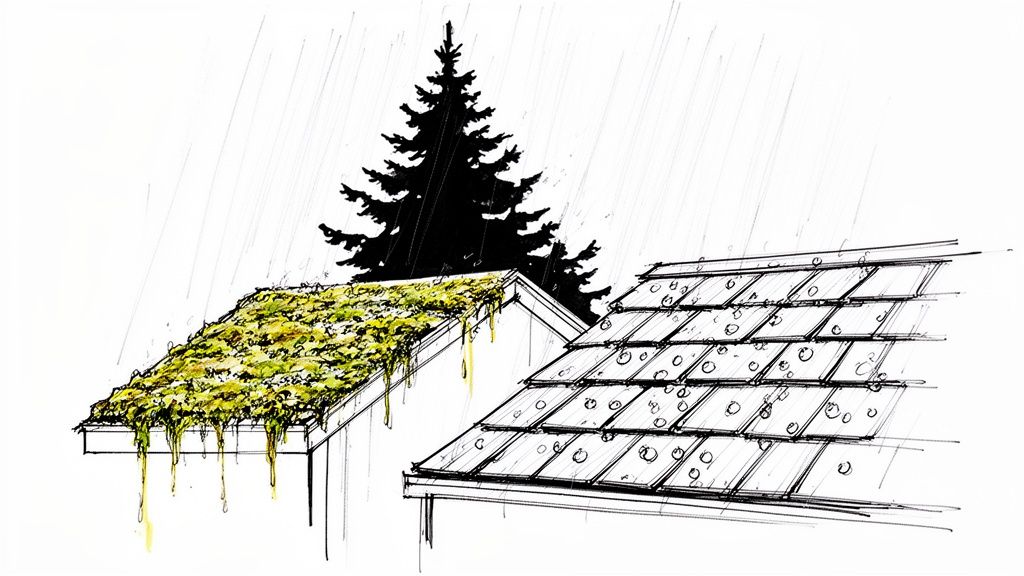
Choosing an environmentally friendly shingle is a fantastic goal, but a roof’s true performance is always tied to its surroundings. Here in the Pacific Northwest, our unique climate—defined by persistent rain, high humidity, and gusty seasonal winds—puts every roofing material to the test. A shingle that works wonders in a dry, sunny state might struggle here.
To make a truly sustainable choice, you need an eco-friendly roof that is also built to last in our famously damp environment. After all, longevity is a huge part of sustainability. The longer a roof lasts, the less waste is created over time. Matching the material to our local challenges is absolutely essential for homeowners from Everett to Shoreline.
Resisting Moisture and Moss Growth
Let’s be honest: the number one enemy of roofs in Western Washington is moisture. Our near-constant drizzle and damp air create the perfect breeding ground for moss, algae, and mildew. These are not just unsightly; they trap water against your roof’s surface and can seriously accelerate its decline.
This is where certain eco-friendly shingles have a distinct advantage:
- Metal Roofing: Its smooth, non-porous surface makes it incredibly difficult for moss and algae to get a foothold. Rain simply washes the surface clean, making it a low-maintenance and extremely durable option for our climate.
- Composite Shingles: Many of today’s premium composite options are engineered with moisture-resistant polymers. They often include special additives that actively inhibit algae growth, and their robust construction prevents the water absorption that can plague other materials.
A roof that successfully fights off moss and moisture isn’t just a cosmetic victory—it’s a structural one. By preventing that organic growth, these materials protect the underlying roof deck from rot and decay, which can add years to your roof’s functional lifespan.
Handling Wind and Temperature Swings
While we may not deal with extreme desert heat, our region definitely sees its share of seasonal windstorms and temperature fluctuations. A roofing material has to be resilient enough to handle these pressures without cracking, lifting, or becoming brittle over time.
This is where the engineering behind specific materials really shines. Composite shingles, often made from smart blends of recycled plastics and rubber, offer excellent flexibility. This allows them to expand and contract with temperature changes without sustaining damage. Likewise, modern metal roofing systems are fastened to withstand high winds, providing reliable protection during our most intense storms.
For more insights tailored to our area, you can explore our guide to environmentally friendly roofing in Seattle. By selecting a product that’s proven to thrive right here, you ensure your sustainable choice is also a lasting one.
Partnering with a Trusted Sustainable Roofing Expert
Picking out the right environmentally friendly shingles is a huge step, but the materials are only half the story. The quality of the installation is what truly determines your roof’s performance, longevity, and sustainability. When you partner with a qualified, trustworthy expert, you’re not just buying a roof; you’re ensuring your investment is protected and your vision for a greener home becomes a reality.
The entire process should begin with clear communication and a thorough evaluation. Any reputable contractor will offer a complimentary, no-obligation inspection to understand your home’s unique needs, from its ventilation to its structural requirements. This first meeting is your chance to assess their comfort and expertise with the specific eco-friendly materials you have in mind.
What to Expect From a Professional Partner
A true professional doesn’t just sell you a product. They guide you through a transparent process built on trust and genuine expertise, making sure you feel confident at every stage, from the initial conversation to the final cleanup.
Key elements of a seamless partnership include:
- A Detailed Proposal: You should receive a clear, itemized proposal that explains every part of the project. This document must detail the specific materials, labor costs, and project timeline without confusing industry jargon.
- Proven Expertise: Your contractor should have demonstrable experience installing the type of sustainable roofing you want, whether that’s composite, metal, or another modern system.
- Strong Warranties: Peace of mind comes from knowing your investment is protected. Look for a contractor who stands behind their work with a robust workmanship warranty, in addition to the manufacturer’s product warranty.
Asking the Right Questions
Finding a partner who shares your commitment to sustainability means asking direct questions about their practices and experience. Before you consider signing a contract, ask them about their approach to waste management and how they handle recycling old roofing materials. An eco-conscious contractor will have a solid plan for diverting as much debris as possible from the local landfill.
The right partnership transforms a complex construction project into a stress-free experience. When your contractor prioritizes clear communication, proven skill with environmentally friendly shingles, and a shared commitment to quality, you can be sure your new roof will be ‘Done Right’—protecting both your home and the planet for decades to come.
Lingering Questions About Eco-Friendly Shingles
Deciding to go green with your new roof is a big step, and it’s normal to have some questions before you commit. We’ve compiled answers to some of the most common questions we hear from homeowners. The goal here is to give you the confidence you need to move forward with a sustainable roofing project you’ll be proud of.
How can I be sure a shingle’s “green” claims are legitimate?
It’s smart to look beyond marketing brochures and check for third-party verification. Reputable manufacturers are not afraid to have their products tested to earn certifications that back up their performance and eco-friendly promises.
Here’s what to look for:
- ENERGY STAR® Rating: This is your clearest signal that a shingle meets the strict energy efficiency standards set by the U.S. Environmental Protection Agency. It’s the official stamp of approval for a “cool roof” product that will help lower your energy bills.
- Recycled Content Certification: Organizations like UL Environment or the Cool Roof Rating Council (CRRC) will certify the exact percentage of recycled materials in a shingle. This confirms that the product genuinely uses post-consumer or post-industrial content.
- LEED Credits: This isn’t a direct certification for a shingle, but manufacturers will often specify how their products can help a building project earn points toward a Leadership in Energy and Environmental Design (LEED) certification.
These labels are objective proof that a shingle does what it claims.
What kind of maintenance do eco-friendly shingles need in our climate?
Maintenance really depends on the material, especially here in the damp Pacific Northwest. A huge part of sustainability is longevity, and proper care ensures your roof lasts as long as possible.
Metal roofing, for instance, is ideal for our climate. It’s incredibly low-maintenance because it naturally resists the moss and algae that thrive here. Composite shingles are also built tough and often come with algae-resistant additives, meaning they usually just need routine inspections and a gentle cleaning if they get dirty. The key is to pick a material that is a natural fit for our wet weather, which reduces the need for constant, heavy-duty upkeep.
What happens to green shingles at the end of their life?
Where a shingle ends up after it’s done its job is a critical piece of its environmental story. Unlike traditional asphalt shingles that are usually dumped in a landfill, many environmentally friendly shingles are designed for a second act.
The most sustainable choices, like metal and many composite materials, are 100% recyclable. After a long service life—often 50 years or more—they can be collected and melted down to create brand-new products. This closes the loop and keeps them out of the landfill. When you’re talking to a contractor, be sure to ask about their plan for recycling your old materials.
This focus on recyclability means your roofing decision is not just good for your home; it’s a responsible choice for the broader environment for decades to come.
Ready to explore sustainable, high-performance roofing options for your home? The team at Four Seasons Roofing has the expertise to guide you through every step, from selecting the right materials for our climate to ensuring a flawless installation. Visit us at https://www.fourseasonsroofing.com to schedule your complimentary inspection and get a transparent proposal for a roof that’s truly Done Right.