
If there’s moss spreading across the roof, granules collecting near the downspout, or a ceiling stain that suddenly appears after another long stretch of rain, most homeowners in the Seattle area start asking the same question. Is it time to patch this roof again, or is it smarter to replace it and be done with it?
That’s where the asphalt vs metal roofing decision usually begins. Not with product brochures or showroom samples, but with a practical concern about leaks, budget, and how long the next roof needs to last in Western Washington weather.
Asphalt vs Metal Roofing for Seattle Homeowners
Snippet answer: For most Seattle-area homeowners, asphalt shingles are the more affordable choice upfront, while metal roofing usually costs more at the start but lasts much longer. In Western Washington’s rainy, moss-prone climate, the better option depends on budget, how long the homeowner plans to stay, and whether easier repairs or longer service life matters more.
Choosing Your Next Roof in Western Washington
A lot of Seattle-area roof decisions start the same way. After another wet winter, the moss is thicker on the north side, a few shingles have lifted near a valley, and somebody notices a stain on the ceiling during a hard rain. At that point, the question usually is not just asphalt or metal. It is which roof will be easier to live with in Western Washington for the next 20 to 50 years.
That matters here because our roofs stay wet for long stretches, dry slowly under tree cover, and take more abuse from moss and debris than many homeowners expect. The right choice is not only about lifespan on paper. It is also about what happens after the first repair call, the first windstorm, or the first time a branch scrapes a section of the roof.
What homeowners are really weighing
For many homes around Seattle, the choice comes down to composition asphalt shingles or metal roofing.
- Asphalt shingles are the familiar option. They fit most home styles, cost less upfront, and are usually simpler to patch if a small area gets damaged.
- Metal roofing is the longer-term option. It costs more to install, sheds water well, and can hold up for decades, but repairs are often more specialized.
That repair difference gets overlooked. In real terms, it can mean replacing a handful of wind-damaged shingles on an asphalt roof in one visit, versus tracking down a matching metal profile, color, and trim detail for a panel repair that takes more planning. In a wet climate where small problems need attention quickly, that trade-off deserves more weight than it usually gets.
Shaded neighborhoods like Sammamish, Redmond, and much of North Seattle make this even more noticeable. Roofs under firs and maples stay damp longer. Moss builds faster. Homeowners are not only choosing a material. They are choosing what future maintenance and repair work will look like on their house.
Practical rule: Pick the roof that fits your budget, your plans for the home, and the kind of repair and maintenance burden you are willing to deal with later.
A quick side-by-side view
| Factor | Asphalt shingles | Metal roofing |
|---|---|---|
| Upfront cost | Lower | Higher |
| Service life | Shorter | Longer |
| Weight | Heavier | Lighter |
| Spot repairs | Easier | More specialized |
| Look | Traditional | Modern to premium |
| Fit for long-term ownership | Good | Often stronger |
If you are still sorting out price versus long-term ownership, our breakdown of metal roof cost vs asphalt in Seattle helps put those trade-offs into plain terms.
If a homeowner still is not sure whether replacement is even necessary, reviewing common roof replacement signs can help clarify what is happening before making a material choice.
Upfront Cost vs Lifetime Value
Sticker price drives a lot of roofing decisions, and that is reasonable. In Western Washington, the gap between asphalt and metal is usually large enough to change the plan before homeowners even get to maintenance, repair, or how long they expect to stay in the house.
Industry cost ranges consistently show the same pattern. Asphalt shingles cost less to install up front. Metal roofing costs more, sometimes a lot more, depending on the panel type, trim details, roof complexity, and how much finish work the home needs around chimneys, skylights, and transitions.

Why the upfront number matters
A lot of homeowners are replacing a roof because they have to, not because they picked the timing. If the current roof is leaking, the plywood needs work, or the gutters and flashing are overdue too, asphalt often keeps the whole project within reach.
That does not make it a compromise by default. It makes it a practical choice for households that need a dependable roof now without stretching the budget into a different category.
Why lifetime value can point the other way
Metal starts to make more sense when the house is a long-term home. The higher install cost can be easier to justify if the goal is to avoid going through another full replacement in the same ownership period.
That said, lifetime value is not only about how many years a material can last on paper. Around Seattle, it also includes what it is like to own and service that roof over time. Asphalt is usually easier and less specialized to patch after localized damage. Metal can hold up for a long time, but repairs often require matching panel profiles, coatings, and trim components, which can make small fixes more involved.
For homeowners planning to stay long term, the question shifts from “Which roof costs less today?” to “Which roof is less likely to become a repeat expense, and what will repairs look like if something goes wrong?”
A practical next step
National price ranges are a starting point, not a bid. Roof pitch, tear-off layers, access, decking condition, and detail work can swing the numbers fast on a Seattle-area home. For a local breakdown, our guide to metal roof cost vs asphalt in Seattle puts those cost differences into real Puget Sound terms.
Performance in Washington's Rain and Moss
A roof in Western Washington can look fine in July and start showing its weak spots by February. Months of rain, wet leaf debris, shaded slopes, and moss growth put different pressure on roofing materials than heat and sun do.
That local weather pattern matters more than brochure lifespan numbers.
How asphalt handles local weather
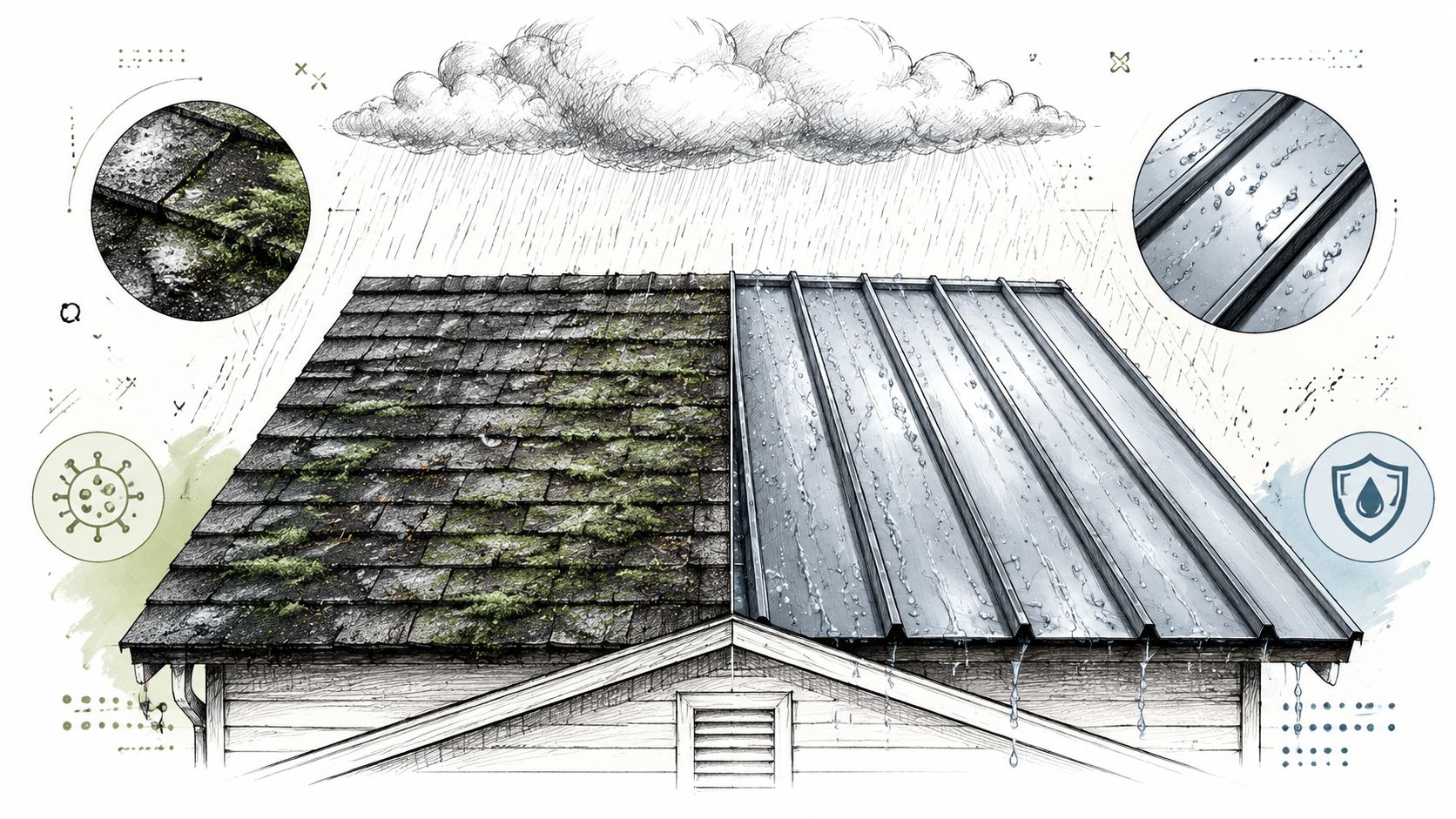
Asphalt shingles do well here when they are installed correctly and kept clear. The trouble starts on roofs that stay damp for long stretches, especially under firs, maples, and cedar trees. On those homes, moisture tends to linger longer on the surface, and moss gets a better foothold.
The pattern is familiar on Seattle-area roofs:
- Shaded sections stay wet longer after rain
- Moss grows between and over shingle tabs
- Valleys and gutters collect needles and leaves, which slows drainage
- Wear shows up gradually, often long before the leak appears inside
That does not mean asphalt is a poor fit for Western Washington. It means asphalt usually needs more routine attention to keep drainage working and moss from shortening the roof's service life.
How metal responds differently
Metal sheds water faster and dries out sooner. In a rainy climate, that is a real advantage. Moss and algae can still show up on a metal roof where debris sits or shade is heavy, but the material itself is less likely to hold moisture the way an aging shingle surface can.
That difference shows up over the years, not just after one storm. On homes with recurring tree debris or north-facing slopes, metal often stays cleaner with less surface breakdown. Homeowners dealing with that problem should understand how to manage moss and algae on a roof in our climate before deciding whether maintenance will solve the issue or whether the roof material is part of the problem.
Why roof weight can matter on older homes
Weight is another practical point, especially on older houses and some reroof projects. Roofing material data indicates metal is usually lighter than a typical asphalt roof assembly, which can make planning easier when the structure needs a careful review.
That said, lower weight by itself should not decide the job. In our area, drainage, moss exposure, roof details, and future serviceability usually matter more day to day than the material's weight alone.
Long-Term Maintenance and Repair Realities
A roof can look fine from the driveway and still turn into a headache the first time a branch scrapes it loose or a small leak shows up around a vent. That is where asphalt and metal start to feel very different to own in Western Washington.
The key maintenance question is not only which material needs less attention over time. It is how simple the repair is when our weather, tree cover, and moss create a localized problem.
Asphalt is usually easier to patch
Asphalt shingles have a practical advantage here. If one area gets damaged, a roofer can often remove and replace the affected shingles without disturbing a large section of the roof.
That matters on Seattle-area homes where service calls are often small at first. A lifted shingle after wind, wear around a pipe boot, or moss-related deterioration on one shaded slope usually has a straightforward repair path. For homeowners who want a roof that is easier to service in pieces, asphalt is often the simpler choice.
Metal holds up well, but repairs are more specialized
Metal roofing usually asks for less routine intervention, but the repair process is less forgiving once something does go wrong. Panel profiles have to match. Fasteners, seams, and flashing details need to be handled correctly. If the finish is damaged during the repair, that can create a second problem.
In the field, this shows up most often with:
- Panel damage from fallen limbs or storm debris
- Scratches or coating wear that need proper treatment
- Leaks at transitions, skylights, chimneys, or other roof details
A good metal repair is absolutely doable. It just depends more on having the right crew and the right replacement materials available.
What homeowners usually feel after a few years
Homeowners who want the easiest spot repair tend to be happier with asphalt. Homeowners who are comfortable paying for more specialized work in exchange for longer-term durability often still prefer metal.
Neither roof is hands-off in our climate. Gutters still need to stay clear. Debris still needs to come off valleys. Moss still needs attention before it turns a small maintenance issue into premature wear.
That ownership reality also affects resale conversations, much like front yard improvements for agents can shape first impressions before a buyer ever walks inside.
The best choice usually comes down to your tolerance for two different kinds of upkeep. Asphalt tends to need more routine attention and offers easier repairs. Metal usually asks for fewer interventions, but when repair work is needed, the job is more technical and often more expensive.
Appearance Home Styles and Resale Value
Roofing changes how a house feels from the street. That matters more than many homeowners expect, especially when the home already has a clear style.
Asphalt shingles tend to blend in well across much of King and Snohomish counties. They look familiar, fit traditional neighborhood homes, and come in a wide range of colors and profiles. For a lot of homeowners, that “normal” look is exactly the goal.
When asphalt looks right
Asphalt usually fits best when the homeowner wants the roof to support the house without becoming the main feature. That works well for many ramblers, craftsman-style homes, and more conventional suburban designs.
It's often the easier visual match when:
- The home already has a classic neighborhood look
- The owner wants broad color options
- Resale depends on keeping the exterior familiar and approachable
When metal adds character
Metal roofing has a different visual effect. A standing seam metal roof can give a home a cleaner, more modern profile. Other metal styles can create a high-end look while avoiding some of the upkeep people associate with natural wood shake or tile appearances.
For buyers, that can read as a premium upgrade. It signals durability and a longer-term investment, especially when the roof style fits the architecture instead of fighting it.
Curb appeal matters before resale conversations start
Roof choice is only one part of how buyers see a home, but it's a big one. Homeowners thinking ahead to resale often benefit from looking at the entire front-of-home presentation, not just the roof in isolation. This guide to front yard improvements for agents is useful for understanding how exterior presentation shapes first impressions before buyers ever step inside.
A roof shouldn't be chosen only for resale. Still, buyers do notice when a roof looks new, fits the house, and suggests fewer future headaches.
Your Decision Checklist Asphalt vs Metal Roofing
Some homeowners decide quickly once they see the price gap. Others need to weigh how long they'll stay, what kind of maintenance they're comfortable with, and how much they care about the final look.
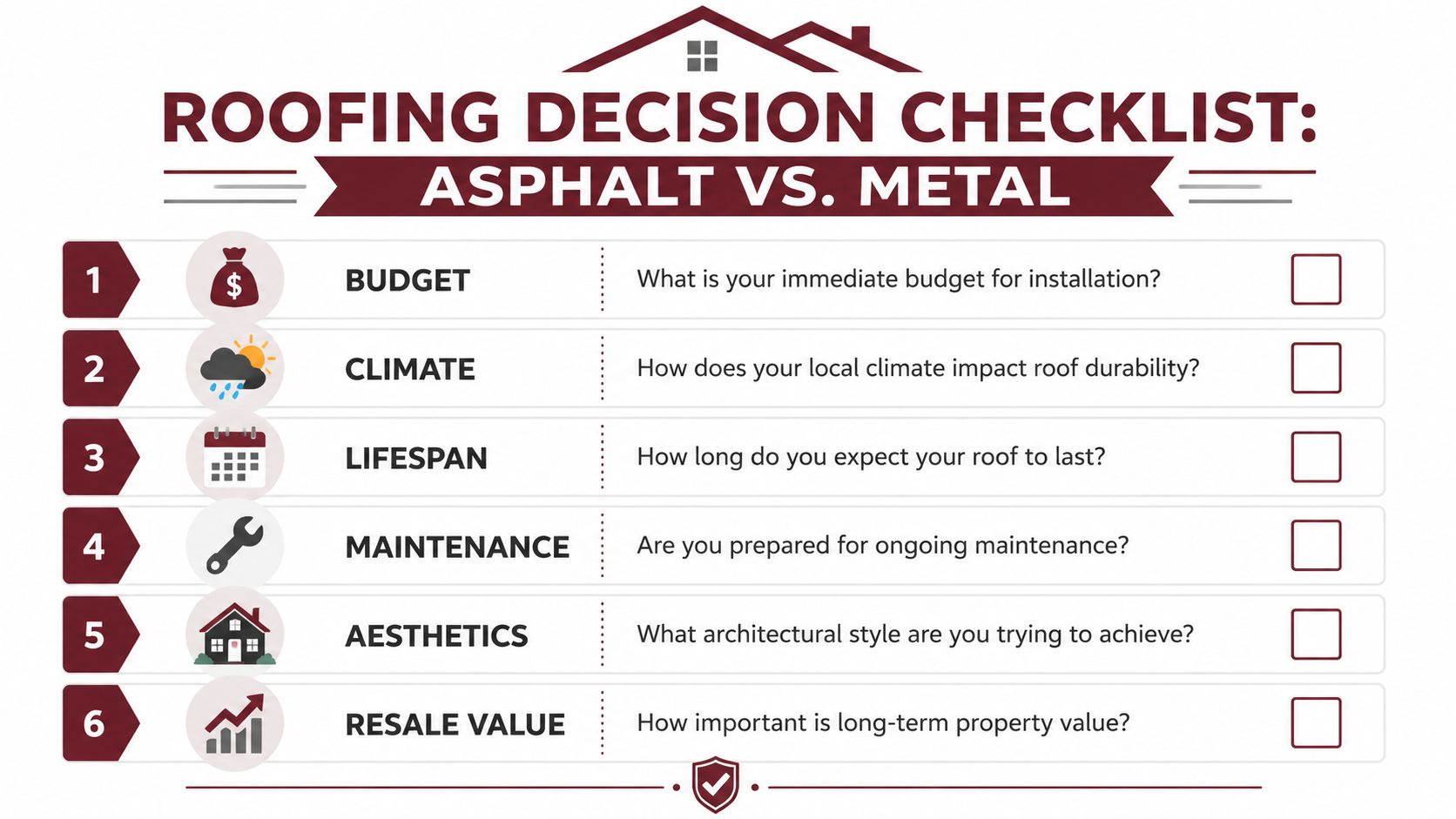
This checklist helps narrow the choice.
Questions worth asking before choosing
- What can the household comfortably spend now? If the roof needs to be replaced soon and budget pressure is high, asphalt may be the more realistic path.
- How long will the homeowner stay in the house? If this is a long-term home, metal becomes easier to justify.
- How much tree cover is over the roof? Homes under firs, cedars, and maples usually deal with more debris and moss.
- Is easier repair work important? Asphalt is often simpler when small sections need attention.
- Does the home's style lean classic or modern? Shingles usually support a traditional look. Metal stands out more.
- Would a lighter roof help on an older structure? That can be part of the conversation during inspection.
A simple way to use the checklist
If most answers point to lower upfront cost, familiar appearance, and easier patching, asphalt is often the better fit.
If most answers point to long ownership, durability, and less concern about specialized repair work, metal is often the stronger long-term match.
Why Your Installer Matters Most
A roof usually fails at the details first. Around chimneys, skylights, pipe boots, valleys, wall lines, and low-slope transitions, installation quality matters more than the brochure for the material.
Material choice still matters, of course. But in Western Washington, I've seen good shingles outlast poorly installed metal, and I've seen metal roofs perform well for years because the installer handled drainage, fastening, flashing, and ventilation correctly from day one. That is the difference homeowners feel after a few rainy seasons.

What to look for in a roofing contractor
A bid should explain how the roof will be built, not just what it will cost.
A homeowner should look for:
- Clear inspection findings that show why repairs or replacement are being recommended
- Experience with the chosen material because asphalt and metal require different installation habits and problem-solving
- Written scope details covering tear-off, deck repairs, flashing, underlayment, ventilation, and cleanup
- A workmanship warranty that clearly states what the contractor will fix if installation issues show up later
For homeowners sorting through proposals, this guide on how to choose a roofing contractor gives a practical way to compare the company, not just the price.
Local experience matters in Western Washington
Seattle-area roofs deal with steady moisture, moss, fir needles, and long wet stretches that expose shortcuts fast. An installer who works here regularly knows where water backs up, where debris collects, and which roof details need extra attention to stay trouble-free.
Four Seasons Roofing has served Western Washington homeowners since 1996 and installs both composition and metal roofing systems. That matters because the key question is not just whether a contractor can put on a roof. It is whether they can install the specific roof you chose in a way that still makes sense years later when maintenance, repairs, and weather start testing the work.
The roof covering gets the attention. The installation determines whether it holds up the way it should.
Frequently Asked Questions About Roofing Materials
Are metal roofs really noisy in the rain
In a finished Seattle-area home, a properly installed metal roof usually does not sound dramatically louder than asphalt. What you hear inside depends more on the full roof assembly, attic insulation, sheathing, and ventilation details than on the panel itself.
I hear this concern a lot from homeowners who picture a barn or shed roof. Residential systems are different.
Can a new roof go over the old one
Sometimes code allows it, but a full tear-off gives a much clearer picture of the roof deck underneath. In Western Washington, that matters because long exposure to moisture can hide soft decking, small leaks, and decay around penetrations or edges.
An overlay can save money at the start, but it can also leave problems buried where no one sees them until they get worse.
Which roof is better if solar panels may be added later
Either one can work. The bigger question is timing.
If solar is likely in the next few years, the roof should have enough service life left that you are not paying to remove and reinstall panels for an early reroof. Metal can appeal to homeowners planning for the long haul, but a newer asphalt roof can also make sense if the budget is tighter and the system is designed with future panel placement in mind.
Do metal roofs need maintenance if they last so long
Yes. Metal lasts a long time, but it is not maintenance-free. Valleys still collect fir needles, moss can still show up in shaded areas, and flashings, fasteners, sealants, and penetrations still need periodic attention.
That is one of the biggest misunderstandings I see. Long lifespan and low maintenance are not the same thing.
Are asphalt shingles always the cheaper option overall
Asphalt usually costs less to install. Overall value depends on how long the homeowner expects to stay, how much future repair flexibility matters, and how the roof handles local conditions over time.
That repair side gets missed in a lot of sales conversations. Damaged shingles are often straightforward to patch. Metal repairs can be more material-specific and harder to blend visually, especially if the exact profile or finish is no longer easy to match later.
What should a homeowner do before deciding between asphalt and metal
Start with the house, not the brochure. Look at the roof shape, surrounding trees, moss exposure, drainage patterns, budget, and how long you expect to own the home.
Then ask a practical question. If this roof needs a small repair ten or twelve years from now, which system fits your comfort level better? Some homeowners like the long service life and clean look of metal. Others prefer asphalt because repairs are usually simpler, less specialized, and easier to budget for in a wet climate like ours.
If a homeowner in the Seattle area is weighing asphalt vs metal roofing and wants a clear recommendation based on the home's condition, budget, and long-term upkeep, Four Seasons Roofing offers inspections and replacement guidance built around Western Washington roofing conditions.