
When you invest in a durable metal roof, the underlayment you choose is just as critical as the metal panels themselves. For optimal performance and longevity, a high-temperature synthetic underlayment or a self-adhering membrane is the professional standard. These advanced materials are specifically engineered to withstand the intense heat metal roofs generate, providing an essential secondary layer of protection that traditional felt simply cannot match.
The Unseen Importance of Metal Roof Underlayment
It’s easy to focus on the visible parts of a new roof, but the underlayment is a foundational component of a high-performance roofing system. Think of it as the silent guardian working beneath the surface to protect your home and ensure your investment is sound for decades to come.
A properly selected and installed underlayment is your first step toward effective roof leak prevention, creating a multi-layered defense that safeguards your home's structure from water damage.
Your Roof’s Secondary Line of Defense
The primary function of underlayment is to serve as a robust, secondary moisture barrier. While metal roofing is exceptionally water-resistant, penetrations for vents, complex flashing details, or severe wind-driven rain can occasionally allow moisture to get beneath the panels.
This is where the underlayment performs its most crucial role. It intercepts any water that bypasses the metal and directs it safely down to the eaves, preventing slow leaks that can lead to wood rot, mold growth, and costly structural repairs. This is an especially important defense against the ice dams that can form in the Puget Sound region during winter.
Protection During and After Installation
Underlayment also plays a vital role during the construction phase. Once installed, it shields the exposed roof decking from rain and UV radiation if there are delays before the metal panels are installed. Depending on the product's specifications, this temporary protection can last from several weeks to several months.
The global roofing underlayment market is a rapidly growing sector, projected to grow from USD 31.0 billion in 2025 to USD 51.5 billion by 2035. This growth highlights the industry's shift toward more resilient and technologically advanced materials. Discover more insights about this growing market on futuremarketinsights.com.
This market growth reflects a deeper industry understanding of how critical these materials are for modern roofing. Beyond weather protection, underlayment serves as a necessary separation layer. Some pressure-treated wood decking contains chemicals like ACQ (Alkaline Copper Quaternary), which can be highly corrosive to certain metals. A quality underlayment creates a stable, non-reactive barrier, preventing chemical reactions that could degrade your roof from below.
To see how all these components work together in a complete system, you can explore the details in our guide on what you should know about metal roofing.
Comparing the Main Types of Metal Roof Underlayment
Choosing the right underlayment requires an understanding of how different materials perform under the unique stresses of a metal roof. Metal panels can reach extremely high temperatures, which will bake whatever is beneath them. Your underlayment must be engineered to withstand this environment without degrading. This comparison breaks down the primary options to help you make an informed, long-term decision.
The infographic below clearly illustrates the core functions an underlayment serves, from weathering storms to preventing corrosion over the roof's lifespan.

As you can see, this is not just a simple water barrier. It is a critical, multi-functional component essential to the health and longevity of your entire roof system.
High-Temperature Synthetic Underlayment
Today, modern synthetic underlayments are the preferred choice for nearly all metal roofing applications. Constructed from durable woven polymers like polypropylene, they are specifically engineered to overcome the limitations of older materials. Their most significant advantage is their exceptional high-temperature tolerance, often rated to withstand 240°F or higher.
This thermal stability is non-negotiable. Metal panels in direct sun can reach temperatures that would cause traditional asphalt felt to become brittle and crack, rendering it ineffective. In contrast, synthetics remain flexible and intact, preserving the crucial secondary water barrier for the entire service life of the roof.
Furthermore, synthetic underlayments offer superior durability. They have excellent tear resistance, which is a major benefit during installation when installers are walking on the material. This toughness ensures the protective layer is not compromised before the metal panels are even installed.
Self-Adhering Ice and Water Shields
For absolute waterproofing in critical areas, professionals turn to self-adhering membranes, commonly known as "peel-and-stick" or ice and water shields. These products feature a rubberized asphalt adhesive that bonds directly to the roof deck, creating a seamless, watertight seal.
This aggressive bond is what makes them so effective. When a fastener penetrates a self-adhering membrane, the pliable, rubberized material forms a gasket around the fastener's shank. This self-sealing capability prevents water from migrating down the screw or nail into the roof decking—a protective feature that other underlayments cannot replicate.
Key Differentiator: While a quality synthetic underlayment is water-resistant, a self-adhering membrane is truly waterproof. Its purpose is to fortify the most vulnerable areas of a roof, not necessarily to cover the entire surface.
Due to their higher cost, ice and water shields are applied strategically in the areas most susceptible to leaks:
- Eaves and Rakes: Provide a primary defense against ice dams and wind-driven rain.
- Valleys: Protect channels where large volumes of water are concentrated.
- Roof Penetrations: Seal the vulnerable areas around chimneys, skylights, and vents.
- Low-Slope Sections: Essential for any roof pitch below 3/12, where water drains more slowly.
For metal roofs, it is mandatory to use a high-temperature version of any ice and water shield to ensure the adhesive remains stable and does not liquefy in the summer heat.
Traditional Asphalt-Saturated Felt
Felt paper, often called "tar paper," was once the industry standard, but for modern metal roofing, it is an unsuitable choice. While inexpensive, its organic base and asphalt coating cannot withstand the extreme temperature fluctuations under metal panels.
Over time, intense heat bakes the volatile oils out of the asphalt. This process leaves the felt dry, brittle, and prone to cracking, completely destroying its water-shedding capabilities. Within just a few years, it can degrade significantly, leaving your roof deck unprotected.
Additionally, felt has very low tear strength. It is easily damaged during installation, and the thousands of fasteners required to secure it create a field of unsealed penetrations. When installing a roof designed to last 50+ years, relying on a material that fails prematurely is a significant risk that jeopardizes the entire system. Any reputable roofing professional in the Puget Sound will advise against using felt for a metal roof.
Slip Sheets and Vapor Barriers
In some specialized roofing assemblies, you may encounter other layers. A slip sheet is a thin, smooth material—such as rosin paper or a single layer of synthetic underlayment—placed over another underlayment, typically beneath a standing seam roof. Its sole purpose is to provide a low-friction surface that allows the metal panels to expand and contract without binding against the primary underlayment.
A vapor barrier, on the other hand, is a non-permeable membrane designed to prevent humid air from inside the building from reaching the cold underside of the roof deck and condensing. These are used in specific "hot roof" designs and require careful building science to avoid trapping moisture. For most standard vented roofs, a breathable synthetic underlayment is the recommended choice.
Underlayment Performance for Metal Roofing at a Glance
Selecting the right underlayment involves balancing performance characteristics with the specific demands of your roof design and local climate. This table provides a quick comparison of how the main types perform.
| Underlayment Type | High-Temp Tolerance | Waterproofing | Durability & Tear Resistance | Walkability (Slip Resistance) | Best Use Case |
|---|---|---|---|---|---|
| High-Temp Synthetic | Excellent (up to 260°F+) | Water-Resistant | Excellent | Good to Excellent (varies by brand) | Primary underlayment for nearly all metal roof types. |
| Ice & Water Shield | Good (requires HT version) | Waterproof (self-sealing) | Good | Fair to Good | Strategic use in eaves, valleys, and around penetrations. |
| Asphalt Felt | Poor (becomes brittle) | Water-Resistant (degrades quickly) | Poor | Poor (slippery when wet) | Not recommended for metal roofing. |
| Slip Sheet/Vapor Barrier | N/A | N/A (not a primary barrier) | Varies | N/A (not a walking surface) | Specific assemblies (standing seam, unvented roofs). |
As the table illustrates, high-temperature synthetic underlayment offers the best all-around performance for the majority of a metal roof. However, for maximum protection, supplementing it with a high-temperature ice and water shield in critical areas is the gold standard for a resilient, long-lasting system.
Matching Underlayment to Your Metal Roofing System
Not all metal roofs are the same, and their underlayment requirements differ accordingly. The specific style of metal panel you choose directly influences which underlayment will provide the most effective long-term protection. Matching the product to the system is not just a best practice—it is essential for preventing leaks, ensuring longevity, and realizing the full value of your investment.
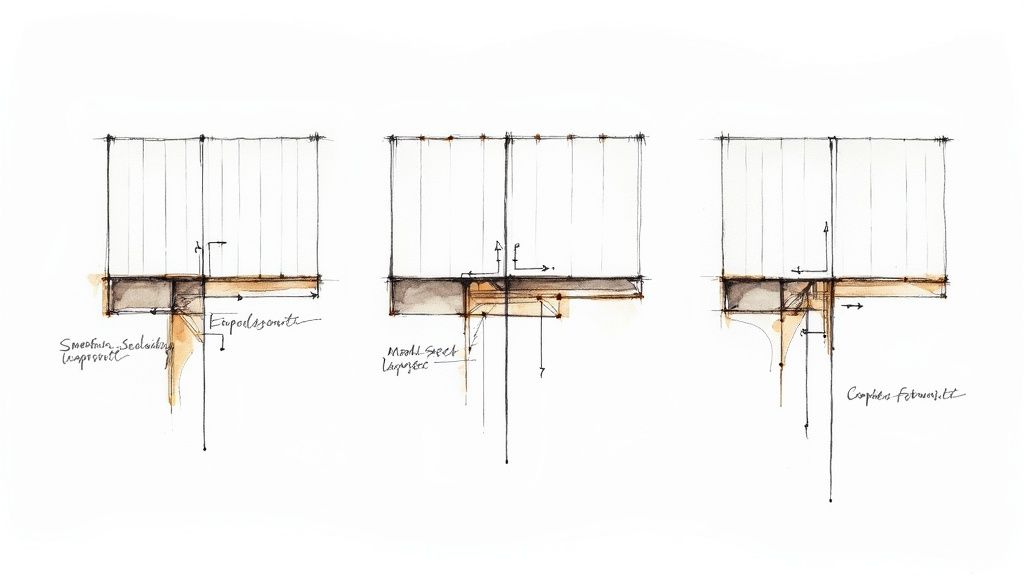
The interaction between the panel, its fasteners, and the underlayment is what truly defines a successful installation. Let's examine the ideal pairings for the most common metal roofing systems in the Puget Sound area.
Underlayment for Standing Seam Roofs
Standing seam is a premium roofing system, valued for its clean aesthetic and concealed fasteners. Its most important technical characteristic is the thermal movement—the expansion and contraction of large metal panels with daily temperature changes. This movement is the single most important factor when selecting the best metal roof underlayment for this system.
The ideal choice is a smooth, high-temperature synthetic underlayment. Its surface acts as an integrated slip sheet, creating a low-friction plane that allows the metal panels to move freely. This prevents the panels from binding or grabbing, which could cause abrasion, stress, or a wavy appearance known as "oil canning." Understanding all the advantages of a standing seam metal roof helps clarify why this pairing is so critical for its long-term performance.
An incompatible, abrasive underlayment can slowly wear away the protective coating on the underside of a standing seam panel. This microscopic damage can lead to premature corrosion, undermining the roof's longevity from a layer you cannot even see.
Because standing seam systems have no exposed fasteners piercing the main field of the roof, a full self-adhered membrane is generally not necessary. A high-quality synthetic provides robust secondary water resistance, while a high-temp ice and water shield is used strategically in valleys, at eaves, and around penetrations where vulnerabilities are concentrated.
Underlayment for Exposed-Fastener Systems
Exposed-fastener roofs, such as classic corrugated or R-panel systems, are secured by driving thousands of screws directly through the metal panels into the roof deck. Each screw represents a potential point of water entry. While these screws have rubber washers designed to create a seal, the gaskets can degrade over decades of UV exposure and weather cycles.
This reality makes the underlayment's role absolutely critical. For these systems, you need a product that can effectively seal around every one of those penetrations. This leaves two primary professional choices:
- A full "peel-and-stick" application: A high-temperature, self-adhering membrane is the ultimate solution. Its rubberized asphalt layer forms a tight, waterproof gasket around every screw shank.
- A premium, thick synthetic underlayment: Certain high-end synthetic products are thick and dense enough to create a competent seal around fasteners, though they are not fully self-sealing like a true membrane.
For exposed-fastener systems, investing in a robust, self-sealing or premium synthetic underlayment is non-negotiable for long-term leak prevention. Using a lower-quality product is a recipe for slow leaks that can go unnoticed for years.
Underlayment for Metal Shingles, Shakes, and Tiles
Metal shingles, shakes, and tiles combine the durability of steel or aluminum with traditional aesthetics. These systems consist of many smaller, interlocking panels, creating a complex network of seams and intersections. While designed to shed water effectively, the numerous joints present more opportunities for water to find its way underneath, especially during heavy, wind-driven rain.
Given this complexity, the objective is to create a completely waterproof secondary barrier. A high-temperature, self-adhering ice and water shield applied to the entire roof deck is the gold-standard recommendation. This approach ensures that if moisture bypasses a complex flashing detail or an intricate panel interlock, it encounters a seamless, impenetrable membrane and is safely routed off the roof. It provides the highest level of assurance for these beautiful but intricate roofing systems.
Evaluating Key Underlayment Performance Factors
To select the right underlayment for a metal roof, it's important to look past marketing claims and focus on the technical specifications that truly matter. Understanding these factors will ensure your roof's secondary defense is as resilient as the metal panels above it. This is a guide to what those specifications mean for protecting your home for decades.
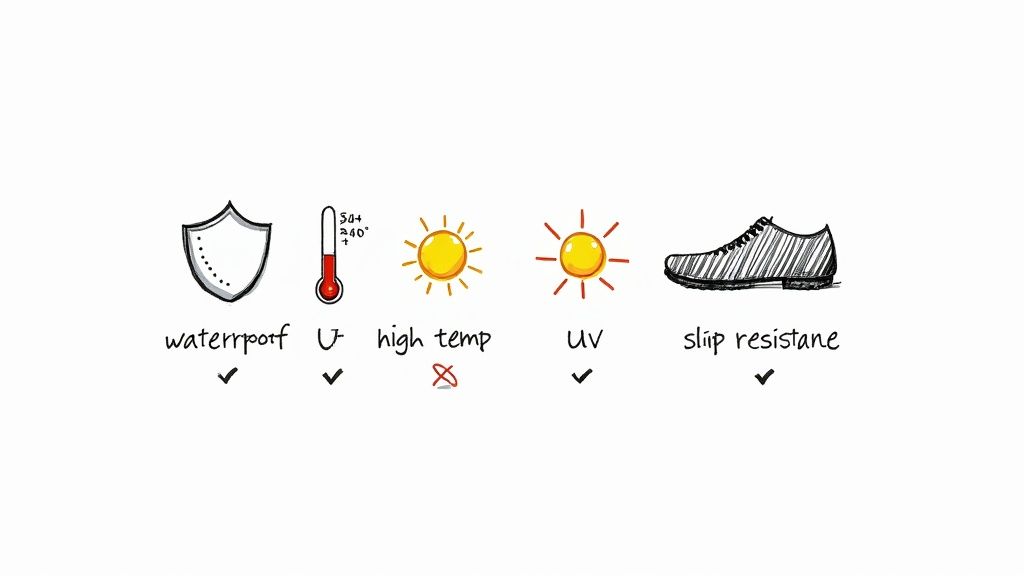
This deeper dive will help you evaluate products like a professional, ensuring you choose an underlayment that can handle the specific demands of a metal roofing system.
Waterproof vs. Water-Resistant
"Waterproof" and "water-resistant" are often used interchangeably, but in roofing, the distinction is significant. A water-resistant underlayment, like a standard synthetic, is designed to shed water as it flows down the roof. It excels at this but is not intended to handle standing or pressurized water. Think of it like a good rain jacket.
A truly waterproof material, such as a self-adhering ice and water shield, creates an impenetrable barrier. Its adhesive backing bonds directly to the roof deck and, most importantly, forms a watertight gasket around every nail or screw that penetrates it. This self-sealing capability is what makes it completely waterproof, not just resistant to water.
High-Temperature Tolerance
This is a non-negotiable requirement for any underlayment installed under metal. In direct sunlight, metal panels can become extremely hot, easily reaching temperatures from 160°F to 190°F or higher. This intense, sustained heat will degrade a standard underlayment, causing premature failure.
Therefore, any quality underlayment for a metal roof must be rated to withstand at least 240°F. This rating ensures the material remains stable and flexible for decades instead of becoming brittle and ineffective after only a few hot summers. Any product without a high-temperature rating is not suitable for this application.
Beyond the underlayment, the entire roof system's thermal performance is important. It's worthwhile to explore different steel building insulation options to improve your home's overall energy efficiency.
UV Exposure Rating
Construction projects can face delays. Inclement weather or scheduling conflicts can leave the underlayment exposed to the sun for weeks or even months before the metal panels are installed. This is where the UV exposure rating becomes critical.
A quality synthetic underlayment will have a UV rating indicating how long it can be exposed to direct sunlight without degrading—this often ranges from 90 days to a full year. This rating is a hallmark of a durable, well-manufactured product that won’t be compromised before the roof is even completed, protecting your deck during unexpected delays.
Slip Resistance and Walkability
Finally, slip resistance is a vital but often overlooked performance metric that reflects both safety and product quality. Roofing professionals must walk on the underlayment during installation, often on steep pitches and in varying weather conditions.
An underlayment with a textured, high-traction surface provides secure footing, significantly reducing the risk of falls. This not only protects the installation crew but also indicates that the manufacturer has invested in thoughtful engineering. A product that is safe to install is almost always a better product overall.
A superior slip-resistant surface often correlates with a more robust and dimensionally stable product. It demonstrates the manufacturer's attention to detail, from long-term durability to the safety of the professionals who handle it.
How Climate and Building Codes Influence Your Choice
Choosing the best metal roof underlayment is about more than just pairing it with your roof panels. It involves a realistic assessment of our local climate and a thorough understanding of building regulations. A product that performs exceptionally in a hot, arid climate like Arizona could be unsuitable here in the damp, temperate Puget Sound. You must tailor your choice to these factors to guarantee your roof performs correctly, achieves its maximum lifespan, and meets all legal requirements.
This location-specific approach is crucial. There’s a reason North America is the primary driver of the global roofing underlayment market—our diverse climates and stringent building codes demand high-performance materials. The potential for heavy snow, hurricanes, or wind-driven rain creates a need for products that make a home truly resilient. You can review the full research on the roofing underlayment market on zionmarketresearch.com.
Adapting to Rainy and Temperate Climates
Here in Western Washington, we are familiar with long seasons of persistent rain, high humidity, and mild temperatures. This environment creates ideal conditions for condensation to form within a roof assembly. If this moisture becomes trapped, it can lead to wood rot, mold, and even structural decay over time.
For our climate, two features are non-negotiable:
- Superior Waterproofing: A robust secondary water barrier is needed to block any wind-driven rain that might penetrate the metal panels.
- Breathability: A vapor-permeable synthetic underlayment is highly recommended. It allows moisture vapor from within the home to escape, which helps keep the roof deck dry and healthy.
In a damp climate like ours, a non-breathable underlayment can act like a plastic bag over your roof deck. While it stops water from getting in, it also traps any moisture trying to get out, potentially causing more harm than good over the long term.
Best Practices for Heavy Snow and Ice
While we may not experience the heavy, persistent snowfall of other regions, the risk of ice dams is a serious threat each winter. When snow on your roof melts and then refreezes at the eaves, it can form a dam that forces water back up and under your metal panels.
To combat this, local building codes almost always mandate the use of a self-adhering ice and water shield. This waterproof membrane is installed from the eaves up the roof to a point at least 24 inches inside the home's heated exterior wall line. It creates an impenetrable seal exactly where ice dams are most likely to form. This is a crucial defense when you consider how snow and ice impact your roof.
High-Heat and High-Wind Considerations
For homes in hotter, sunnier climates, the primary concern shifts to high-temperature stability. The underlayment must withstand the intense heat radiating from the metal panels without melting, sagging, or degrading. In these regions, some homeowners may also opt for radiant barrier underlayments that reflect heat away from the attic, improving the home's energy efficiency.
Furthermore, homes in coastal areas or other regions prone to high winds have their own set of requirements. Building codes often become highly specific, dictating not only the type of underlayment but also the precise fastening patterns required to prevent wind uplift. It is always essential to consult with your local municipality to ensure your roofing system is fully compliant and designed to withstand severe weather events.
Common Questions About Metal Roof Underlayment
Even after understanding the different materials and their functions, practical questions often arise when planning a metal roof project. Getting clear, accurate answers is key to making a confident and informed decision.
This section addresses the most frequent questions we hear from homeowners and contractors, covering everything from material compatibility to cost, providing the practical knowledge needed to get the job done right.
Can I Use Standard Roofing Felt Under a Metal Roof?
While it may seem like a cost-saving measure, using standard asphalt-saturated felt under a metal roof is a poor practice that reputable roofers will advise against. The primary issue is heat. A metal roof can easily exceed 160°F, which effectively bakes the volatile oils out of asphalt felt.
Within a few years, the felt becomes extremely brittle. It will crack, tear, and eventually disintegrate, leaving your roof deck without a reliable secondary water barrier. For a roof system expected to last 50 years or more, it is counterproductive to use a component that is guaranteed to fail prematurely. A high-temperature synthetic underlayment provides far superior performance and longevity for a marginal increase in the initial project cost.
Do I Need an Ice and Water Shield on My Entire Roof?
For the vast majority of residential homes, the answer is no. Covering an entire roof with a self-adhering ice and water shield is typically unnecessary and not cost-effective. The true value of this material lies in its ability to create a completely waterproof, self-sealing barrier in the specific areas most prone to leaks.
Building codes and industry best practices guide us on where to apply an ice and water shield for maximum effectiveness:
- Eaves and Rakes: This is the primary defense against ice dams and severe wind-driven rain.
- Valleys: These areas channel large volumes of water and require a failsafe seal.
- Around All Penetrations: This includes chimneys, skylights, plumbing vents, and exhaust pipes—anywhere the roof plane is interrupted.
- Low-Slope Areas: Any roof section with a pitch below 3/12 is more susceptible to water intrusion and benefits from this extra protection.
The most intelligent and common strategy is a hybrid approach: use a high-quality, high-temperature synthetic underlayment for the main roof surfaces, and then apply a self-adhering ice and water shield only in these critical, leak-prone areas.
This method provides exceptional protection where it matters most without unnecessarily inflating the project budget. It is the professional standard for building a durable, long-lasting metal roof, especially in a climate like the Puget Sound.
Is Breathable Synthetic Underlayment a Better Option?
Whether a "breathable" underlayment is the right choice depends entirely on your roof's ventilation design. A breathable, or vapor-permeable, underlayment is engineered to perform two functions: stop liquid water from entering from the outside, but allow water vapor to escape from the inside.
This is a significant advantage in a well-vented roof system, particularly in damp climates. It allows any trapped moisture from within the attic or living space to dry toward the exterior, preventing the condensation that can lead to mold, rot, and damaged insulation.
Conversely, for an unvented "hot roof" assembly, you often need the opposite—a non-permeable underlayment that functions as a vapor barrier. This is to prevent moist interior air from contacting the cold underside of the roof deck and condensing. Always consult with your roofing contractor to ensure the underlayment's permeability is correctly matched to your home's specific ventilation strategy.
What Is the Cost Difference Between Synthetic and Peel-and-Stick?
There is a significant price difference between a mechanically-fastened synthetic underlayment and a self-adhering (peel-and-stick) membrane. This cost differential is precisely why they are used for different applications on the same roof.
Here is a general breakdown of material costs:
- High-Temperature Synthetic Underlayment: Typically ranges from $0.20 to $0.45 per square foot.
- High-Temperature Self-Adhering Underlayment (Ice & Water Shield): Can cost anywhere from $0.70 to over $1.50 per square foot.
As you can see, the self-adhering product can easily be three to four times more expensive than a high-quality synthetic. That higher cost is justified by its superior, waterproof, self-sealing performance, which makes it essential for protecting the most vulnerable parts of your roof. For the larger, less complex roof fields, a quality synthetic provides excellent secondary protection in a much more cost-effective manner.
Choosing the right underlayment is a critical decision, but it’s just one piece of a successful roofing project. For expert guidance and a flawless installation from a team that understands our local climate, trust Four Seasons Roofing. We ensure every layer of your roof is done right, protecting your home for decades to come. Visit us at https://www.fourseasonsroofing.com to schedule your complimentary inspection today.