
When you picture a typical American home, you’re likely imagining a roof covered with composition roofing material. This multi-layered shingle is, by far, the most popular choice for residential roofing in the United States, and for good reason. It’s engineered for excellent durability and weather resistance, offering a reliable and affordable shield for your home.
You’ll often hear these shingles called asphalt shingles, but the term “composition” truly captures the essence of what they are: a product built from multiple materials working in harmony.
What Is Composition Roofing
Think of a composition shingle not as a single material, but as an engineered system. It’s not just a flat piece of asphalt; it’s a carefully layered product where different components work together to create a tough, protective barrier. The name itself says it all—it’s a composition of materials designed for one job: keeping your home safe and dry.
There’s a reason this roofing is so common. It hits the sweet spot between performance, cost, and style. In fact, asphalt shingles are used on over 75% of new homes built in the U.S. today, a testament to their reliability. Their popularity comes from a long, proven track record of protecting homes without the high price tag of materials like metal or slate. You can explore more about roofing market trends and material choices here.
The Three Core Layers
To fully understand what makes a composition shingle effective, it helps to look at its anatomy. Each shingle is constructed from three distinct layers, and each one plays a crucial role in protecting your home.
- The Fiberglass Mat: This is the shingle’s internal skeleton. It’s a woven fiberglass base that provides structural integrity and strength, preventing the shingle from tearing easily during installation or under stress from high winds.
- The Asphalt Layer: This is the waterproofing workhorse. A thick layer of asphalt saturates the fiberglass mat, creating a formidable barrier that keeps rain, snow, and moisture from penetrating your roofing system.
- The Granule Topping: The visible top layer is made of tiny, ceramic-coated mineral granules. These granules serve two critical functions: they shield the asphalt from the sun’s damaging UV rays (which can cause it to dry out and crack) and they provide the shingle’s color and aesthetic appeal.
This layered construction is the key to a composition roof’s success. It combines the strength of fiberglass, the waterproofing power of asphalt, and the UV defense of mineral granules into one efficient, reliable package.
Ultimately, these layers come together to create a roofing material that’s both resilient and budget-friendly. Understanding this foundation is the first step in seeing why millions of homeowners trust composition shingles. Next, we’ll explore the different types available and how they perform right here in the Pacific Northwest.
Comparing The Types of Composition Shingles
Now that you understand the fundamental components of a composition roofing material, let’s explore the different styles available to homeowners. Not all shingles are created equal—they come in different designs, with varying levels of durability and cost. The choice is similar to selecting tires for a car; while all serve a basic function, some are designed for economy while others are engineered for high-performance and a long service life.
The same principle applies to composition shingles. You’ll typically encounter three main categories, each offering a unique balance of aesthetics, performance, and value.
This infographic provides a clear visual of the layers that make up every composition shingle, from the tough outer granules down to the strong fiberglass mat at the core.
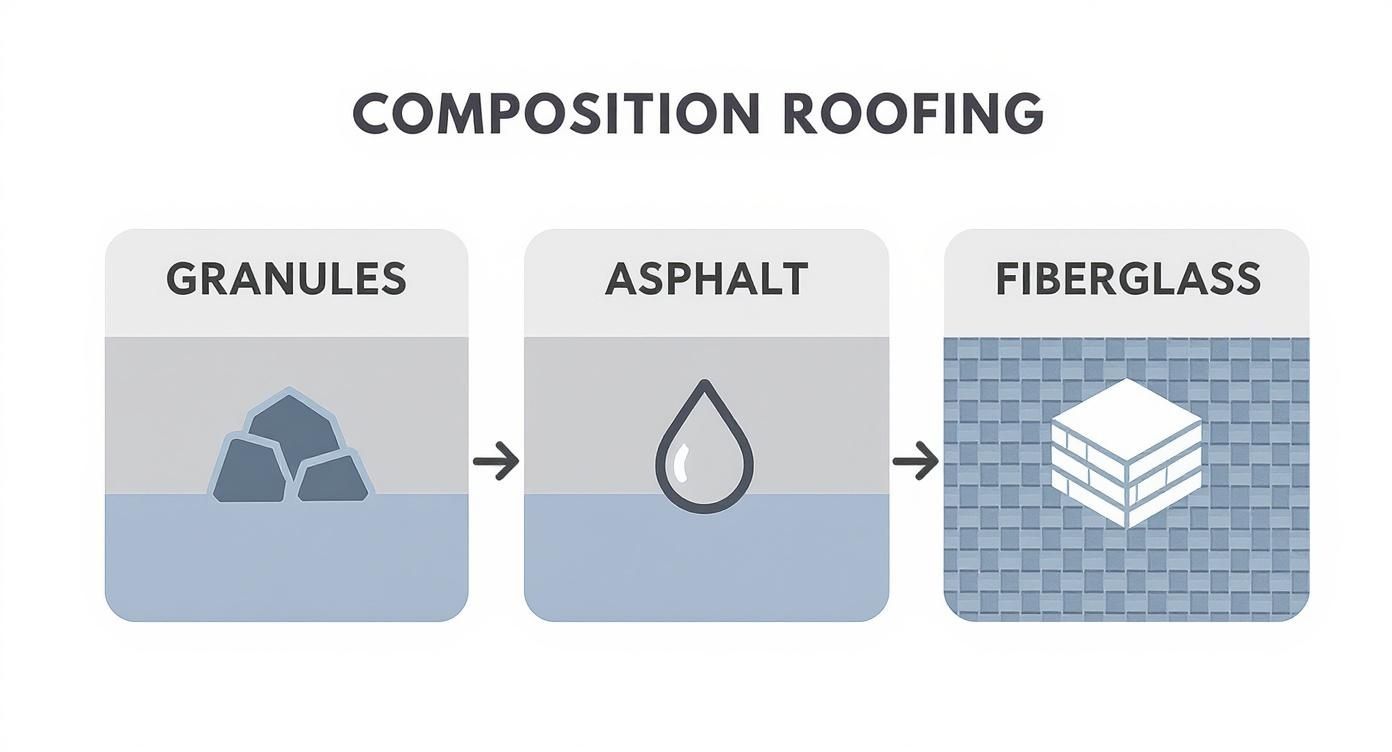
You can see how all these layers are engineered to work together, forming a protective shield for your home.
The Classic 3-Tab Shingle
The 3-tab shingle is the traditional, most budget-friendly option on the market. It gets its name from the three distinct cutouts, or “tabs,” along the bottom edge of each piece, which creates a very uniform, flat pattern when installed.
- Appearance: Clean, simple, and repetitive. It’s a classic look that suits many different home styles.
- Lifespan: Homeowners can generally expect a 3-tab roof to last approximately 15-20 years.
- Performance: While they provide basic protection, 3-tabs are the lightest of the three types. This means they have lower wind resistance, typically rated for winds up to 60 mph. They are a sound choice if the primary goal is to minimize initial project cost.
Architectural Shingles: The Popular Choice
Today, architectural shingles (also called dimensional or laminate shingles) are the most common choice for residential roofing, and for good reason. They’re constructed from two or more layers of shingle material fused together, making them significantly thicker and heavier than 3-tab shingles.
This layered construction creates a rich, three-dimensional look that adds character and depth to a roof. Instead of perfectly uniform tabs, their shapes are varied, which effectively mimics the appearance of natural materials like wood shakes.
The extra thickness in architectural shingles isn’t just for aesthetics. It provides substantially better durability, impact resistance, and a longer lifespan, making them an excellent long-term investment in your home’s protection.
That enhanced durability also translates to better performance. Architectural shingles often come with wind resistance ratings of 110-130 mph and a typical lifespan of 25-30 years. It’s a major upgrade in both curb appeal and resilience.
Premium Designer Shingles
At the top of the range are premium shingles, sometimes referred to as luxury shingles. These are the heaviest, most durable composition roofing materials available, engineered to replicate the high-end look of natural slate or cedar shakes without the associated maintenance or cost. They are available in a wide variety of unique shapes and designs, giving your home a truly custom, sophisticated appearance.
If you want to dive deeper into the specifics of these materials, you can get a closer look at asphalt shingles in our detailed guide.
Premium shingles can last anywhere from 30 to 50 years and deliver the highest level of protection against wind, hail, and other weather events. They represent the ultimate blend of style and strength in the composition shingle family.
Composition Shingle Comparison
To make the decision process clearer, here’s a side-by-side comparison of the three main types of composition shingles. This table should help you quickly see the key differences and determine which option might be the right fit for your home and budget.
| Shingle Type | Typical Lifespan | Wind Resistance | Relative Cost | Best For |
|---|---|---|---|---|
| 3-Tab | 15-20 Years | Up to 60 mph | $ | Budget-conscious projects and rental properties. |
| Architectural | 25-30 Years | Up to 130 mph | $$ | The best balance of cost, performance, and style for most homeowners. |
| Premium | 30-50 Years | 130+ mph | $$$ | Homeowners seeking maximum durability and a high-end, custom look. |
Ultimately, the right shingle depends on your priorities. Whether you’re focused on initial cost, long-term value, or achieving a specific aesthetic, there’s a composition shingle that fits your needs.
The Real Pros and Cons of Composition Roofing
Every roofing material has its trade-offs. To make an informed decision for your home, you need a balanced perspective, not just a sales pitch. Composition roofing offers an incredible combination of value and performance, but it’s just as important to understand its strengths as it is to know its limitations.
By weighing these factors, you can decide with confidence whether composition shingles are the best long-term investment for your property.
The Advantages of Composition Shingles
There’s a clear reason composition roofing is the leading choice in America. It excels in the key areas most homeowners prioritize: affordability, design versatility, and ease of installation.
- Excellent Affordability: The upfront cost is a significant factor in any roofing project. Composition shingles are simply less expensive to manufacture and install than materials like metal, slate, or tile. This makes a full roof replacement a more accessible investment for a wider range of budgets.
- A Style for Every Home: Modern manufacturing has expanded design possibilities exponentially. You can find shingles that beautifully mimic the rustic look of natural wood shake or others that capture the clean, sharp lines of slate. Whatever your home’s architectural style, there’s a color and texture to complement it.
- Straightforward Installation and Repairs: The installation process for composition shingles is well-established and efficient, familiar to nearly every professional roofer. This not only helps control labor costs but also means that if a shingle is damaged in the future, repairs are typically quick and affordable.
The Disadvantages to Consider
While the advantages are compelling, it’s equally important to consider the potential downsides. Understanding these helps set realistic expectations for your roof’s performance and maintenance over its lifespan.
A common question regarding composition roofing is its environmental impact. While the asphalt is inert and generally safe for rainwater collection after an initial curing period, the material is petroleum-based and not as sustainable as greener options like metal.
Here are a few other points to keep in mind:
- Shorter Lifespan: Compared to materials like metal or tile, composition shingles have a shorter service life. A high-quality architectural shingle will provide a solid 25-30 years of protection, but that is less than a metal or tile roof, which can easily last 50 years or more.
- Vulnerability to Damage: Standard shingles can be susceptible to severe weather. Intense summer heat can accelerate aging and cracking over time, and strong winds can lift or tear shingles that aren’t properly installed. In our damp climate, moss can also become a problem if not managed.
Ultimately, choosing a composition roofing material is about balancing these factors. For many homeowners, the outstanding value, design flexibility, and dependable performance make it the clear and logical choice.
How Composition Shingles Perform in Western Washington
A roof in Arizona faces a completely different set of challenges than one here in the Pacific Northwest. Our climate in Western Washington is defined by one thing above all else: moisture. A roof in this region must be an expert at managing relentless rain, resisting moss growth, and holding strong against occasional powerful windstorms.
This is exactly where modern composition roofing material excels. Manufacturers have spent years engineering today’s architectural shingles to thrive in damp environments like ours. They aren’t just a one-size-fits-all product; they are a direct answer to the challenges that have historically affected roofs in our region.
Built to Battle Moisture and Moss
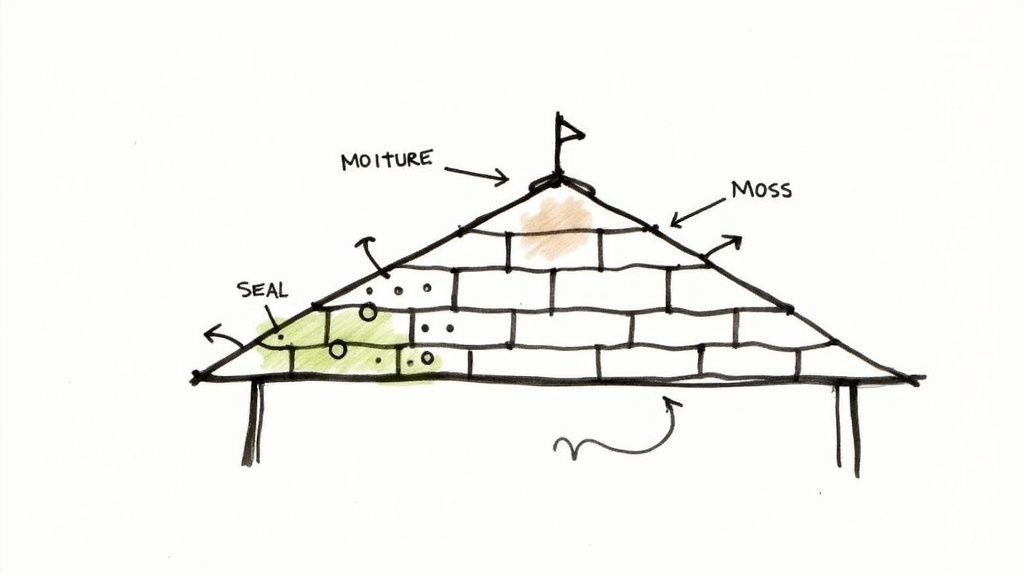
The single biggest threat to any roof in our area is the constant dampness, which creates a perfect breeding ground for moss and algae. Moss is notorious for trapping water against shingles, causing them to break down prematurely. Meanwhile, algae leave behind ugly black streaks that can diminish a home’s curb appeal.
Fortunately, high-quality composition shingles are designed to address this problem head-on.
- Algae-Resistant Granules: Many of the best shingles now come with granules infused with copper. When it rains, trace amounts of copper ions are released, which inhibit algae growth and stop those dark streaks before they can start. This keeps your roof looking clean and new for much longer.
- Robust Sealant Strips: Each shingle has a heat-activated asphalt sealant strip. After installation, the sun’s warmth bonds the shingles together, creating a powerful, watertight seal that prevents wind-driven rain from getting underneath.
This built-in resistance is a significant advantage for homeowners in the Puget Sound. It means less time and money spent on frequent cleaning and maintenance, and more peace of mind knowing your roof is actively defending itself against our climate’s biggest challenges.
Standing Strong Against Wind and Weather
While we may not experience hurricanes, Western Washington is certainly familiar with powerful windstorms that can damage weaker or poorly installed shingles. Modern architectural shingles are significantly heavier and more robust than older 3-tab styles, giving them far superior wind resistance.
Many architectural shingles today are rated to withstand winds of 110 to 130 mph, providing a secure barrier that stays in place when storms roll through. This resilience is also beneficial for other weather conditions. Even though heavy snow isn’t a weekly event, it’s still critical to understand how snow and ice impact your roof when a major storm occurs. The tough, layered construction and strong seal of composition shingles provide reliable protection against winter weather.
Ultimately, the right composition roof isn’t just a generic covering—it’s a complete system engineered to perform year after year in the specific, demanding conditions of Western Washington.
Getting the Most Out of Your Composition Roof
A new roof is a significant investment in your home. And while modern composition roofing material is engineered for durability, its actual lifespan depends on a few key factors: proper installation, adequate attic ventilation, and proactive maintenance.
Think of it like the engine in your car. You wouldn’t skip oil changes and expect it to run for 100,000 miles without issues. Your roof requires similar attention. A little preventative care goes a long way, helping to stop small issues from becoming major, expensive problems.
Your Annual Maintenance Checklist
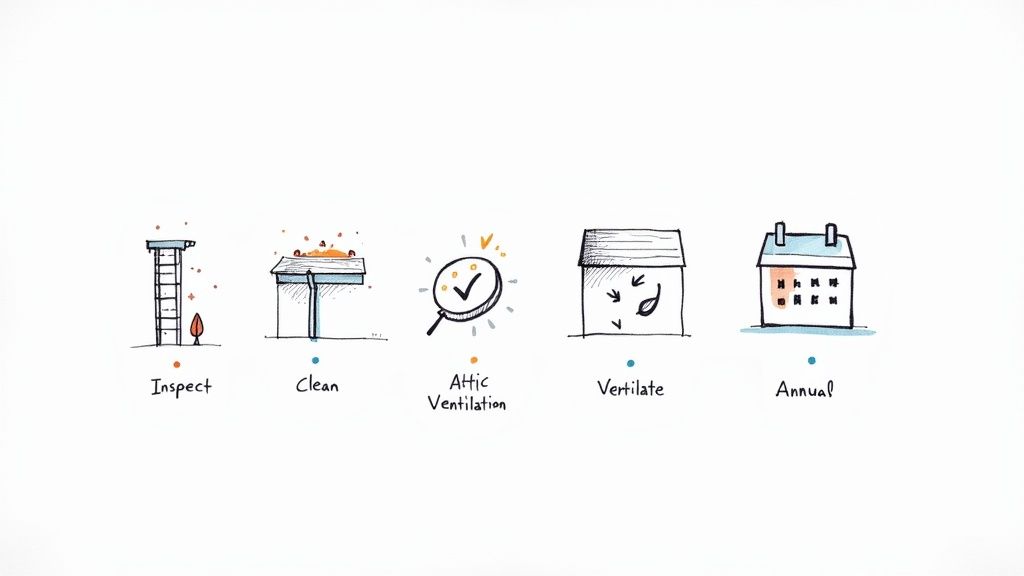
Consistency is key to roof longevity. This simple checklist covers the most important things you can do each year to keep your roof in optimal condition, especially in the damp climate of the Pacific Northwest.
- Perform a Safe Visual Check: Twice a year—spring and fall are ideal—use binoculars to scan your roof from the ground. Look for shingles that are missing, cracked, or curling at the edges. These are early warning signs.
- Keep Your Gutters Clean: Clogged gutters are a primary cause of roof problems. When water cannot drain properly, it backs up and seeps under the shingles, leading to rot. Ensure they are clear of leaves and debris, especially after autumn.
- Trim Overhanging Branches: Do not let tree limbs rest on your shingles. They can scrape off the protective granules in the wind and provide a pathway for pests. A simple trim can prevent significant damage.
- Address Moss Growth Early: Moss acts like a sponge, holding moisture against your shingles, which accelerates wear. If you see small green patches beginning to form, it’s best to address them before they spread.
Proactive maintenance will always be cheaper and less stressful than reactive repairs. Taking 30 minutes to inspect your roof from the ground can save you from an emergency call down the line.
Knowing When to Call a Pro
While a homeowner’s inspection is a great first step, some issues require a professional assessment. If you notice a significant amount of granules (which look like sand) in your gutters, have widespread moss, or see any water stains in your attic, it’s time to get an expert opinion.
Attempting to perform major repairs without the proper training and safety equipment is not only dangerous but can also void your warranty. When you see something that looks like more than just minor debris, your best course of action is to call a professional. Our guide on how to replace and repair composition shingles explains what’s involved, but partnering with a trusted contractor ensures the job is done correctly, protecting your home for years to come.
Finding a Roofing Contractor You Can Trust
Even the highest quality composition roofing material will underperform if it’s installed incorrectly. The contractor you choose is every bit as critical as the shingles themselves—they are the final, and most important, piece of your home’s defense system. A qualified roofer ensures every component, from the underlayment to the final ridge cap shingle, works together as an integrated system.
Choosing the right partner for the job isn’t just about getting a good price. It’s about investing in long-term peace of mind. Your goal should be to find a company that stands behind its work, insists on using high-quality materials, and has a proven track record of protecting homes just like yours in our unique Western Washington climate.
Non-Negotiable Contractor Credentials
Before you begin comparing quotes, there are several essential qualifications to verify. Think of these as the minimum requirements for any roofer you would consider for your home. Overlooking these credentials can expose you to significant and unnecessary risk.
- Proper Licensing and Insurance: A legitimate contractor must be licensed to work in Washington state and carry full liability insurance and workers’ compensation. This is non-negotiable, as it protects you from financial liability in the event of an accident on your property.
- Manufacturer Certifications: Top-tier certifications are a powerful indicator of quality and expertise. For example, being a GAF Master Elite® Contractor isn’t just a title. It signifies that a company has been thoroughly vetted by the manufacturer for proper licensing, adequate insurance, a stellar reputation, and a commitment to ongoing professional training.
- Strong, Verifiable Reviews: Don’t just look at the star rating. Read reviews across multiple platforms. Pay attention to how the company responds to feedback—both positive and negative—and what past customers say about their communication, job site cleanliness, and how they handled any unexpected issues.
A strong warranty is more than just a piece of paper—it’s a direct reflection of a contractor’s confidence in their materials and their workmanship. It shows they are committed to standing behind their work for decades to come.
At Four Seasons Roofing, our Shield of Protection offers up to a 25-year craftsmanship guarantee, which works alongside the manufacturer’s material warranty. This ensures your investment in a new composition roof is completely secure, giving you a partner who will be there long after the final nail is driven. Your roof is far too important to leave to chance.
Common Questions About Composition Roofing
Let’s address some of the most common questions we hear from homeowners about composition roofing. This information should help you feel completely confident in your decision-making process.
Can You Install New Shingles Over An Old Roof?
Technically, yes, this procedure is known as a “roof-over” or “layover.” However, in most situations, it is not the recommended approach.
Installing a new layer of shingles over an old, worn-out one is like putting a fresh coat of paint on a rotting wall. It may look better temporarily, but it fails to address underlying issues. A complete tear-off is the only method that allows a roofer to properly inspect the roof deck for rot or damage. This ensures your new composition roofing material has a solid, healthy foundation. A layover might seem cheaper upfront, but it often shortens the lifespan of the new roof and can trap moisture, leading to much larger, more expensive problems in the future.
What Are The Key Warning Signs My Roof Needs Replacing?
Your roof will usually provide clear signals when it is nearing the end of its service life. Knowing what to look for can help you plan for a replacement before a small issue becomes a major emergency.
Here are the primary signs to watch for:
- Curling or Clawing Shingles: When the edges of your shingles begin to curl up or turn down, it is a classic sign of age and heat exposure.
- Missing Granules: If you notice a significant amount of “sand” in your gutters, these are the protective granules that have worn off your shingles, leaving them exposed to UV degradation.
- Cracked or Missing Shingles: Any obvious physical damage indicates that your roof’s waterproofing integrity has been compromised.
- Dark Streaks or Moss: While some staining is cosmetic, large patches of moss can trap moisture against the shingles and accelerate their deterioration.
If you’re spotting several of these signs across different areas of your roof, it’s a strong indicator that it’s time to call a professional for an inspection. Identifying these problems early puts you in control of the situation.
Is Composition Roofing Safe For Collecting Rainwater?
This is an excellent question, especially for homeowners interested in rainwater harvesting. The general answer is yes—composition roofing material is considered safe for collecting water intended for gardening and irrigation. The asphalt itself is inert and does not leach harmful chemicals into the water.
However, it is wise to be cautious with a brand-new roof. It might release trace amounts of residues from the manufacturing process. Most experts recommend waiting one to two years before using collected water on edible plants. This allows the roof ample time to cure and for any initial off-gassing to be completed.
Ready to get a clear, honest assessment of your roof’s condition? The experts at Four Seasons Roofing provide complimentary inspections to help you understand your options and protect your home for years to come. Get your free estimate today.