
A cedar shake roof is in a class of its own. It’s a premium roofing system built from individual pieces of wood, called “shakes,” that are split directly from cedar logs. If you’ve ever admired a home with a thick, rustic-looking roof that develops a distinguished silvery-gray patina over time, you were likely looking at cedar shake. Our goal is to provide you with a comprehensive, unbiased look at this roofing material so you can make an informed decision for your home.
What Makes a Cedar Shake Roof Unique
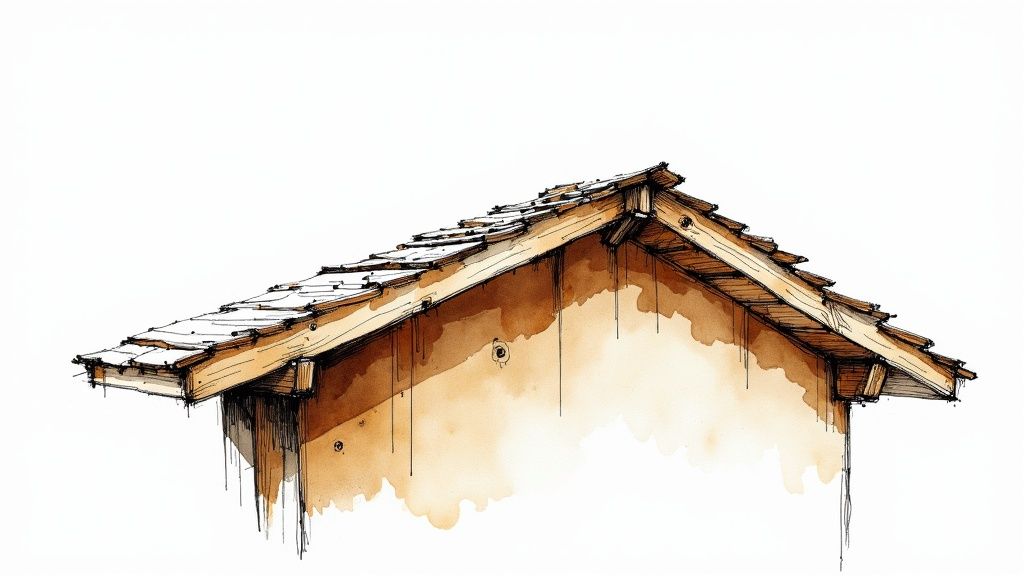
A cedar shake roof is more than just functional protection; it’s a statement of natural elegance and timeless Northwest style. Unlike mass-produced materials where every piece is identical, each cedar shake possesses a unique grain, texture, and character.
Think of the difference between handcrafted solid wood furniture and a mass-produced item from a big-box store. The handcrafted piece has a depth, warmth, and individuality that cannot be replicated in a factory. A cedar roof brings that same organic, one-of-a-kind quality to your home’s exterior, transforming its entire aesthetic.
The Handcrafted Appeal
Each shake is typically hand-split or processed by a machine designed to mimic that natural, rugged look. This method creates a thick, multi-dimensional surface with deep shadow lines, giving the roof a substantial and impressive presence. This is a key distinction from a cedar shingle, which is sawn smooth on both sides for a more uniform, refined appearance. The ruggedness of the shakes is what creates that distinctive, rustic character that synthetic materials attempt—and often fail—to duplicate.
A well-installed cedar shake roof does more than protect your home; it becomes an integral part of its architectural identity, aging gracefully and adding character with each passing year.
This natural variation ensures that no two cedar shake roofs are ever exactly alike. The unique qualities of each piece combine to create a visual appeal that is both harmonious and beautifully complex.
Key Characteristics of a Cedar Shake Roof
The appeal of cedar goes far beyond its appearance on installation day. Several key attributes make it a sought-after material for discerning homeowners, especially here in the Pacific Northwest.
- Natural Durability: Cedar wood is rich in natural oils and tannins that make it inherently resistant to rot, decay, and insect infestation. This is nature’s own preservation method.
- Dimensional Stability: Cedar is less prone to shrinking and swelling with changes in humidity compared to other woods. This stability helps it maintain its shape and integrity through our region’s damp winters and dry summers.
- Insulating Properties: Wood is an excellent natural insulator. This property helps regulate your home’s temperature, keeping it cooler in the summer and warmer in the winter, which can contribute to lower energy bills.
- Aesthetic Evolution: Many homeowners find this to be the most rewarding aspect. As a cedar shake roof ages, it weathers from its initial warm, reddish-brown tones to a beautiful, silvery gray. This natural patina is highly prized and adds a sense of permanence and sophistication.
Understanding these foundational qualities is the first step in deciding if the timeless appeal of a cedar shake roof aligns with your home’s style and your long-term vision.
The Real Pros and Cons of Cedar Roofing
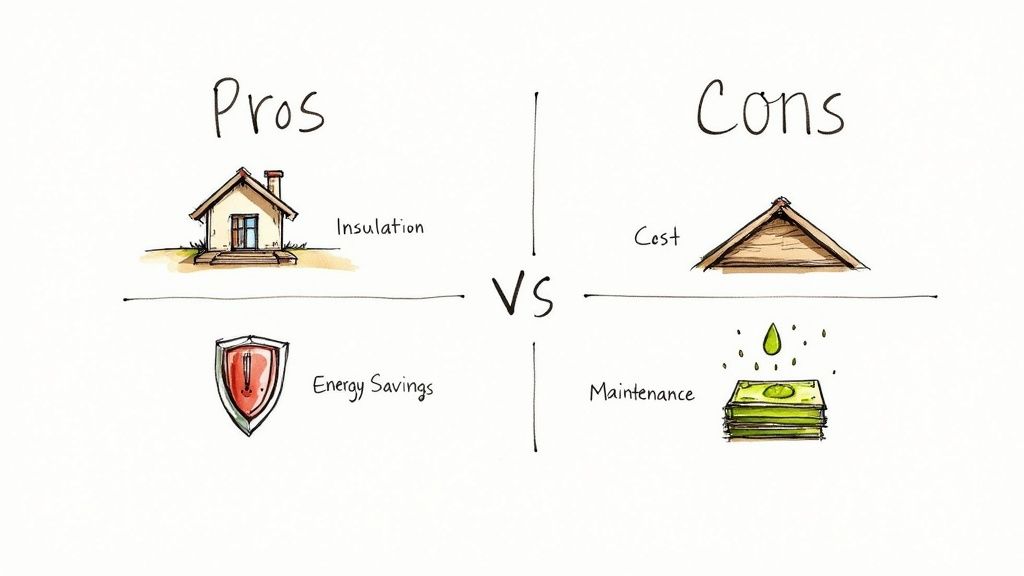
Choosing a new roof is one of the most significant investments you’ll make in your home. A cedar shake roof, in particular, comes with a unique set of remarkable benefits and some very real responsibilities. To make an informed choice, it is crucial to look at the complete picture—the advantages, the drawbacks, and the practical considerations.
This honest, balanced view will help you determine if the stunning beauty of cedar is the right fit for your home, your budget, and your lifestyle. A cedar roof is more than just a cover; it’s a working component of your home’s character and performance. Let’s weigh the options so you can move forward with confidence.
Cedar Shake Roof At a Glance Pros vs Cons
Before we dive deep, here’s a quick summary of the main advantages and disadvantages of choosing a cedar shake roof for your home.
| Benefit | Drawback |
|---|---|
| Unmatched natural beauty and curb appeal | Higher initial cost than asphalt shingles |
| Excellent natural insulator, contributing to energy savings | Requires consistent, professional maintenance |
| Highly durable and resistant to wind and impact | Susceptible to moss and rot if neglected |
| Can significantly increase your home’s resale value | Can have fire rating and code restrictions in some areas |
This table provides a high-level overview, but the real story is in the details. Let’s break down what these points actually mean for you as a homeowner in Western Washington.
The Clear Advantages of a Cedar Shake Roof
The allure of a cedar shake roof extends far beyond its visual appeal. The wood itself provides tangible performance benefits that directly impact your home’s comfort, durability, and long-term value.
- Exceptional Natural Insulation: Wood is a superior natural insulator. A thick cedar shake roof acts as a thermal barrier, helping to keep your home cooler in the summer and warmer during our long, damp winters. This extra insulation can lead to real savings on your energy bills year after year.
- Superior Durability and Wind Resistance: Cedar shakes are thick, dense, and surprisingly tough. When installed correctly by a skilled team, they can withstand high winds, driving rain, and hail better than many common roofing materials. You’re investing in a seriously robust shield against the elements.
- Longevity and Timeless Beauty: This is where cedar truly excels. A properly maintained cedar roof can easily last for 30 years or more. It ages with a unique grace, transitioning from warm amber tones to a distinguished silvery gray. Instead of looking worn out, it develops character and elegance over time.
- Increased Home Value: A cedar shake roof is a premium feature, a fact recognized by the real estate market. It provides an immediate upgrade to your home’s curb appeal and can significantly boost its resale value, making it a wise long-term investment.
The Honest Drawbacks to Consider
While the advantages are substantial, a cedar roof is not the ideal choice for every homeowner. It requires a greater commitment, both in terms of initial cost and the ongoing care needed to maintain its performance and beauty. Understanding these challenges upfront is key to long-term satisfaction.
Choosing a cedar roof is a commitment. The initial investment is higher, and it demands consistent care to deliver on its promise of long-lasting beauty and performance, especially in the damp climate of Western Washington.
This commitment involves both your time and your budget—two of the most critical factors in any major home improvement project.
- Higher Initial Investment: A cedar shake roof costs significantly more upfront than materials like standard asphalt shingles. The price reflects the premium wood, the specialized labor required for proper installation, and the overall craftsmanship involved.
- Mandatory Regular Maintenance: This is a crucial point, especially in the Pacific Northwest. As a natural, organic material, cedar needs to breathe and stay clean to prevent decay. This means committing to a plan to keep it clear of leaves, pine needles, and other debris that trap moisture and encourage moss growth. You can learn more about why it’s so important to have a plan for a professional roofer to help you remove moss from your roof.
- Vulnerability to Moisture Without Care: If left unmaintained, a cedar roof will struggle against our climate, becoming a potential breeding ground for moss, algae, and eventually, rot. Proper attic ventilation is also non-negotiable, as it allows the shakes to dry from the underside. This is not a “set it and forget it” roof; it rewards proactive care.
By carefully weighing these pros and cons, you can decide if a cedar shake roof is truly the right choice. It offers unparalleled natural beauty and performance, but only for the homeowner who is prepared for the required investment and maintenance.
Cedar Roof Lifespan in Western Washington
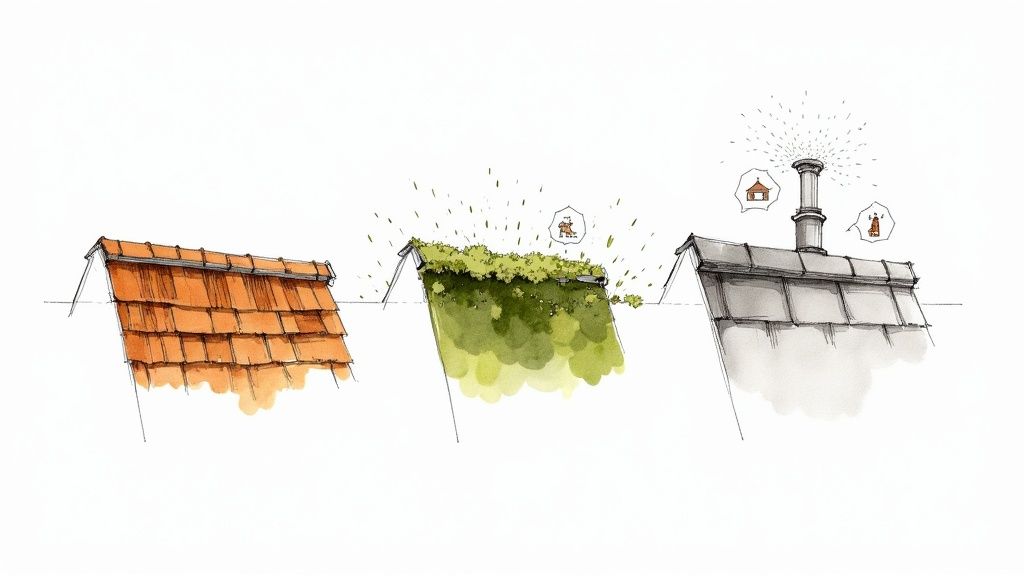
The lush, green landscape of Western Washington is beautiful, but the constant dampness presents a relentless challenge for a cedar shake roof. As an organic material, cedar is in a constant battle with moisture in our climate. Understanding this dynamic is the key to maximizing your roof’s lifespan and protecting your investment.
When a cedar shake roof cannot dry out, it becomes an ideal environment for moss, algae, and eventually, rot. The good news is that with proper care, you can interrupt this natural cycle and keep the wood strong and resilient for decades.
A Tale of Two Timelines
A cedar shake roof doesn’t have a single, fixed lifespan. It has two potential timelines, and the path it follows depends almost entirely on maintenance. The difference is stark and highlights the critical importance of proactive care in our region.
- The Neglected Roof (15-20 years): If left to fend for itself, a cedar roof will not last long against our climate. Debris accumulates, moss takes hold, and the shakes remain damp for months on end. Rot can begin, causing the wood to become brittle and crack, making leaks inevitable. This path leads to premature roof failure and a costly replacement in as little as half its potential lifespan.
- The Well-Maintained Roof (30+ years): A roof that receives consistent, professional care tells a completely different story. With clean gutters, proper ventilation, and periodic gentle cleaning and treatment, the shakes can breathe and dry out. This roof will age gracefully to a beautiful silver-gray, withstand storms, and can easily last 30 years or more.
Your Roof’s Annual Health Plan
Think of roof maintenance less as a chore and more as a proactive health plan for your home’s most important protector. A simple, year-round schedule can make all the difference, preventing small issues from becoming large, expensive problems. We often discuss the unique difficulties of roofing in Seattle and the surrounding areas, and a solid maintenance plan is the number one strategy to overcome them.
A consistent schedule doesn’t just keep your roof in top shape; it allows for early detection of potential problems, saving you significant money and stress in the long run.
A cedar shake roof in Western Washington is a living system that needs to breathe. Trapped moisture from debris, clogged gutters, and poor ventilation is the primary enemy that shortens its life.
Proper care directly combats these threats, ensuring your roof performs as designed for its entire potential lifespan. It’s not just about cleaning—it’s about creating an environment where the cedar can thrive.
Key Maintenance Tasks for Longevity
To achieve that 30+ year lifespan, your maintenance plan should focus on three critical areas. Each is vital for keeping your cedar shakes dry, healthy, and functional.
1. Keep It Clean and Breathing Leaves, pine needles, and branches act like a sponge, holding moisture directly against the wood. This is the primary catalyst for moss and algae growth.
- Action: Have your roof professionally cleared of all debris at least once a year, typically in the late fall after most leaves have fallen.
- Why It Matters: This is your best line of defense. It allows air and sunlight to reach the wood and facilitate drying.
2. Ensure Gutter and Downspout Flow Clogged gutters are a significant threat. They cause water to back up and overflow, soaking the lower edge of your roof and the fascia boards. This constant wetness is a fast track to rot.
- Action: Clean your gutters and downspouts twice a year—once in late spring and again in late fall.
- Why It Matters: Freely flowing gutters direct water away from your roof and foundation, preventing concentrated water damage.
3. Promote Healthy Attic Ventilation The conditions under your roof are just as important as those on top. A stuffy, poorly ventilated attic traps warm, moist air, which rises and condenses on the underside of the roof deck. This prevents the shakes from ever truly drying out from below.
- Action: Ensure you have a balanced system of intake (e.g., soffit vents) and exhaust (e.g., ridge vents). A professional roofer can assess your current ventilation and recommend improvements.
- Why It Matters: Good airflow keeps the attic space cool and dry, allowing the cedar shakes to dry from both sides and dramatically reducing the risk of rot.
By taking a proactive approach, you take control of your investment. A cedar shake roof is a premium choice, and with the right care, it will reward you with decades of incredible performance and timeless style, even in our demanding Pacific Northwest climate.
Understanding Your Cedar Shake Roof Cost
When considering a cedar shake roof, it’s helpful to view the cost not as a simple expense, but as a long-term investment in your home’s character, resilience, and overall value. This isn’t just about purchasing materials; it’s about commissioning a premium, handcrafted system that requires specialized expertise to perform optimally for decades.
So, what should you expect in terms of cost? In the Pacific Northwest, a new cedar shake roof typically falls in the range of $18 to $30 per square foot, installed. For an average-sized home, this often places the total project cost between $35,000 and $60,000+. While this is a larger upfront investment than composition shingles, understanding the components of this cost reveals its true value.
Key Factors That Influence the Price
The final quote for your cedar roof is a detailed calculation based on several key factors. Each one impacts the roof’s final appearance, performance, and longevity. The two most significant drivers are the quality of the wood and the complexity of your roof’s architecture.
- Grade of the Wood: Not all cedar shakes are created equal. They are graded based on the quality of the wood grain. Premium grade shakes, which are 100% edge grain, are the highest quality available. They are far more dimensionally stable, less prone to curling, and will last the longest—but they naturally have a higher material cost.
- Roof Complexity: A simple A-frame roof is straightforward to install. However, a roof with multiple dormers, valleys, skylights, and steep pitches is significantly more complex. Each of these features requires custom cutting, meticulous flashing work, and more time from the installation crew, all of which increases the labor cost.
- Tear-Off and Disposal: We must also account for the labor and costs associated with removing your old roof and disposing of the materials in an environmentally responsible manner.
A cedar shake roof is a handcrafted system installed one piece at a time. The investment reflects the superior natural material and the high level of skill required to create a roof that is both beautiful and resilient against Northwest weather.
This hands-on process is precisely why professional installation is non-negotiable. You need a team with proven experience to ensure the roof performs as beautifully as it looks.
The Value of Professional Craftsmanship
Installing a cedar shake roof is a true craft that demands a skillset far beyond what’s needed for standard roofing. The expertise of the installation crew is arguably the single most important factor in your roof’s long-term health and performance.
An experienced installer understands the nuances of working with a natural wood product. They ensure each shake is properly spaced to allow for natural expansion and contraction, preventing buckling and cracking. They also know how to install the underlayment and interlayment system correctly, allowing the wood to breathe and dry out—a critical detail for preventing rot in our damp climate.
For a more detailed look at all the components that go into a roof replacement, our guide on assessing the cost to replace a roof is a valuable resource.
A Growing Market for a Timeless Material
Despite the availability of modern alternatives, cedar shake roofs remain a top choice for homeowners seeking natural beauty and robust durability. Market data reflects this sustained demand.
Analysis shows the global wood shingles market was valued at approximately $1.2 billion in 2023 and is projected to continue growing. Red cedar is the dominant material, holding a market share of over 47.6% in 2023, with North America being the largest market. You can find more details about the wood shingles market on market.us.
Ultimately, the cost of a cedar shake roof is an investment in outstanding curb appeal, natural energy efficiency, and tough, long-lasting protection. When installed and cared for correctly, it is a feature that adds significant, lasting value to your home.
How Cedar Shakes Compare to Other Roofs
Choosing a new roof requires weighing aesthetics, performance, and your budget. A cedar shake roof offers a natural, timeless beauty that is hard to match, but it’s important to understand how it compares to other popular options in Western Washington. Let’s place it side-by-side with composition shingles and metal roofs to provide a clear comparison.
This isn’t about finding the single “best” roof for everyone. The goal is to identify the best roof for your home, your priorities, and your long-term vision. Each material has distinct strengths, and understanding these differences will empower you to make a decision you’ll feel confident about for years to come.
Cedar Shakes vs. Composition Shingles
This is the classic comparison most homeowners make: the premium, natural character of cedar versus the practical, budget-friendly nature of composition (or asphalt) shingles.
Composition shingles are often the default practical choice, primarily due to their affordability. They have a much lower upfront cost for both materials and installation, which is also simpler and faster. They are available in a wide variety of colors and styles, including “architectural” shingles designed to mimic the appearance of more expensive materials.
The trade-off is longevity; composition shingles typically have a lifespan of 15-25 years. They are also more susceptible to moss and algae in our damp climate and do not offer the same insulating benefits or high-end curb appeal as real wood.
In contrast, cedar shakes represent an aesthetic and performance investment. Their beauty is unmatched, giving a home a rich, three-dimensional texture that synthetics cannot fully replicate, and they age into a distinguished silvery-gray over time. Wood is also a fantastic natural insulator, which can genuinely help lower your heating and cooling costs. With proper maintenance, a well-installed cedar roof can last 30 years or more, significantly outliving a standard composition roof.
The primary considerations, of course, are the higher initial cost and the necessity of a consistent maintenance plan to prevent moss and decay.
Cedar Shakes vs. Metal Roofs
Comparing cedar to metal involves a different set of priorities. Here, you are weighing timeless natural elegance against modern, industrial-strength longevity. Both are premium roofing systems, but they achieve their performance in very different ways.
Metal roofs are the champions of longevity, capable of lasting 50 years or more with very little maintenance. They are resistant to fire, rot, insects, and extreme weather. It is largely a “set it and forget it” system that may only need occasional cleaning. Additionally, many modern metal roofs have reflective coatings that deflect solar heat, which can reduce summer cooling costs.
The main considerations for metal roofs are their high price tag, often comparable to or even exceeding cedar, and their aesthetic. While styles have improved, the modern look may not suit all home architectures. Repairs, though infrequent, can also be more complex and costly.
Each roofing material offers a unique balance of cost, longevity, and style. The right choice depends on whether you prioritize upfront budget (composition), ultimate durability (metal), or timeless natural beauty and insulation (cedar).
This decision is part of a larger trend toward more durable and efficient building materials. The global roofing materials market, valued at USD 129.62 billion in 2023, is projected to grow to USD 168.25 billion by 2030. This growth is driven by demand for energy-efficient and sustainable systems, where both cedar and metal have strong advantages. You can learn more about the growth of the roofing materials market at Grandview Research.
To make the comparison even clearer, here’s a simple breakdown of how the three materials compare on the features that matter most to homeowners.
Roofing Material Comparison: Cedar vs. Composition vs. Metal
| Feature | Cedar Shake | Composition Shingle | Metal Roof |
|---|---|---|---|
| Average Lifespan | 30-40+ years | 15-25 years | 50-70+ years |
| Upfront Cost | High | Low | Very High |
| Aesthetics | Natural, rustic, high-end | Varies, can mimic other styles | Modern, sleek, industrial |
| Maintenance | Regular (moss/rot prevention) | Low (occasional cleaning) | Very Low (inspections) |
| Durability | Good impact resistance | Moderate | Excellent (fire, rot, insect) |
| Insulation | Excellent (natural insulator) | Poor to Fair | Fair (often needs extra insulation) |
| Eco-Friendly | Renewable, biodegradable | Petroleum-based, hard to recycle | Recyclable, long-lasting |
Ultimately, a cedar shake roof occupies a unique position in the market. It doesn’t promise the lowest price or the longest possible lifespan. Instead, it offers a powerful combination of natural insulation, proven durability, and an aesthetic that adds immense character and value to a home—a perfect fit for those who see their roof not just as a utility, but as a defining architectural feature.
Common Questions About Cedar Roofs
Even after exploring the benefits, costs, and comparisons, you may still have some questions. To help, we’ve compiled the most common inquiries we receive from homeowners in Western Washington, providing clear, straightforward answers.
This quick visual guide lines up cedar against its most popular alternatives, so you can see how they stack up at a glance.
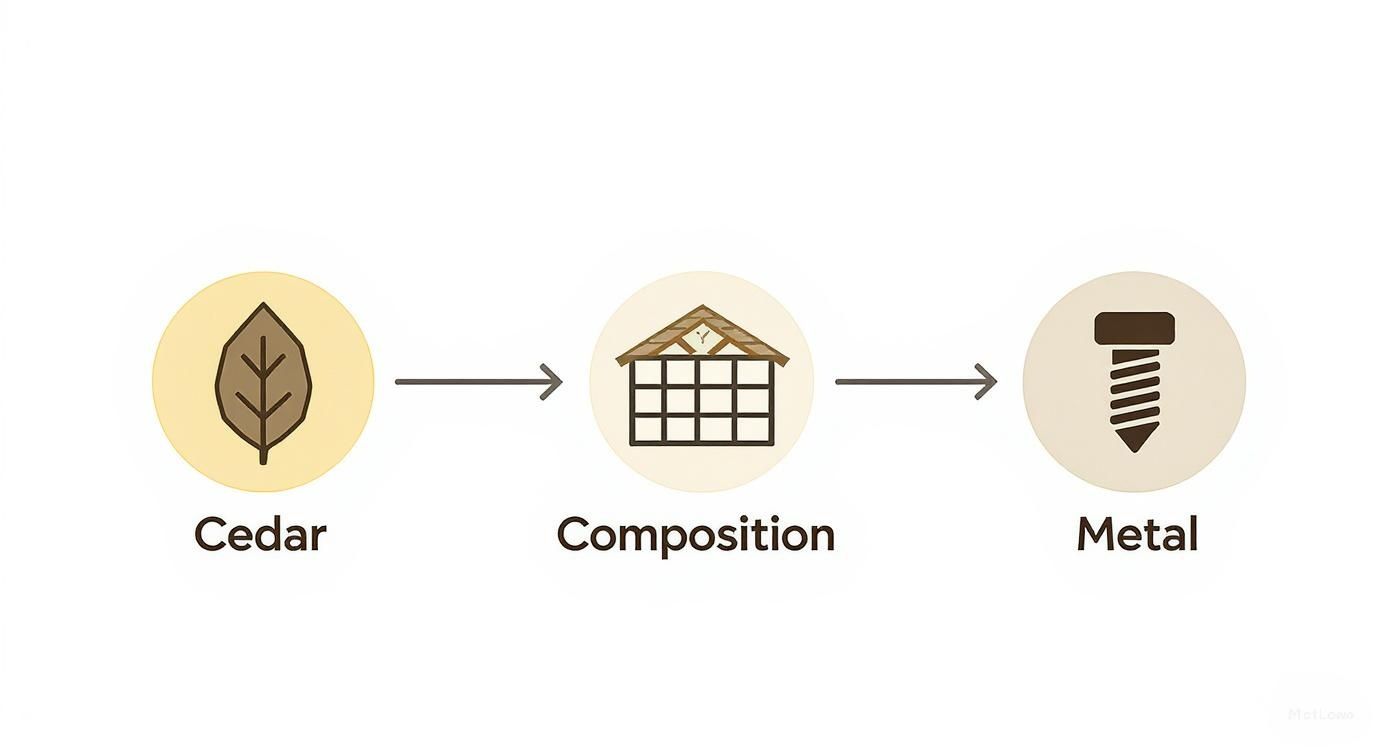
As you can see, cedar occupies a unique niche, offering a blend of natural aesthetics and excellent insulation—a combination not typically found in budget-friendly composition shingles or even ultra-durable metal.
Are Cedar Shake Roofs a Fire Hazard?
This is a valid and important question. While untreated cedar of the past was combustible, modern building codes and treatments have fundamentally changed the safety profile of these roofs.
Today, reputable installers only use cedar shakes that have been pressure-treated with fire retardants. This is not a surface coating; the treatment is forced deep into the wood’s fibers under pressure.
This process allows the shakes to earn a “Class A” fire rating, which is the highest level of fire resistance available for roofing materials, equivalent to that of asphalt or tile. A professionally installed, modern cedar shake roof is a safe and code-compliant choice. We only use treated shakes that meet these rigorous safety standards to ensure your home and family are protected.
Can You Walk on a Cedar Shake Roof?
We strongly advise against it. Cedar shakes can become brittle over time and are particularly vulnerable when damp, which is common in the Pacific Northwest. Walking on the roof can easily cause shakes to crack or split under the concentrated weight.
Even a single wrong step can cause immediate damage leading to a leak or create a weak point that fails later. Any necessary inspections, gutter cleaning, or repairs should always be performed by a trained professional who uses the proper safety equipment and techniques to navigate the roof without causing harm.
Improper foot traffic is one of the quickest ways to compromise a cedar roof’s integrity and shorten its functional lifespan.
Is a Cedar Roof Environmentally Friendly?
Yes, absolutely. Cedar is one of the most sustainable roofing materials available. It is a natural, renewable resource that is completely biodegradable at the end of its service life. This stands in stark contrast to asphalt shingles, which are petroleum-based and contribute millions of tons of waste to landfills annually.
Furthermore, cedar is an excellent natural insulator. By helping to keep your home cooler in the summer and warmer in the winter, it reduces the load on your HVAC system. Over the life of the roof, this translates into lower energy consumption, reduced utility bills, and a smaller carbon footprint for your home.
Ready to explore if the timeless beauty and natural performance of a cedar shake roof is the right choice for your home? The team at Four Seasons Roofing is here to provide a detailed consultation and a transparent, no-pressure proposal.
Protect your investment with a team that has served Western Washington for over 20 years. Visit us online to schedule your free inspection.