
Choosing between a metal roof and an asphalt shingle roof is a significant decision for any homeowner. The central question is whether you are planning for the long-term future of your home or seeking a reliable, cost-effective solution for today. Metal roofing is an investment in exceptional longevity and durability, while shingle roofing offers a proven, budget-friendly option with a traditional aesthetic. Your decision will ultimately depend on your long-term goals, budget, and property-specific needs.
Choosing the Right Roof for Your Puget Sound Home
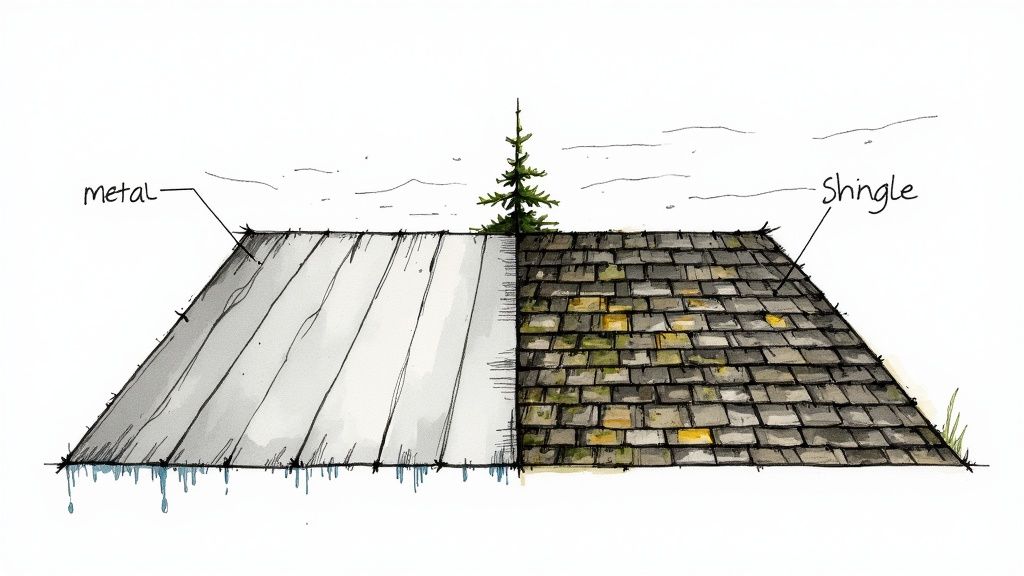
Installing a new roof on your Puget Sound home is a critical investment that will protect your property for decades. In our region, the persistent rain, seasonal windstorms, and pervasive moss growth demand a roofing system that is engineered to perform under specific environmental pressures. This guide is designed to provide an objective, in-depth analysis of the metal vs. shingle debate, tailored to our local climate.
Our goal is to frame this decision around the concept of “total value,” which encompasses not just the initial price but also long-term performance, maintenance, and lifespan. Understanding how each material responds to the unique challenges of the Pacific Northwest is key to making a well-informed decision.
Key Factors for Puget Sound Homeowners
Before delving into the specifics of cost and performance, it’s helpful to establish a framework for evaluation. Both roofing materials have distinct advantages, but the optimal choice for your home depends on your priorities and long-term plans.
Here are the primary considerations for homeowners in our area:
- Lifespan and Durability: How long will the roofing system realistically last? A properly installed metal roof can have a service life of 40 to 70 years. In contrast, architectural shingles typically last 20 to 30 years in our climate.
- Weather Performance: Which material is better suited to our weather patterns? This includes the ability to efficiently shed heavy rainfall, resist wind uplift, and—critically—inhibit the growth of moss and algae common in our region.
- Total Cost of Ownership: This metric looks beyond the initial installation quote to include future maintenance, potential repairs, and eventual replacement costs, providing a more accurate financial picture over the roof’s lifetime.
- Aesthetic and Resale Value: How will the roof complement your home’s architecture? Furthermore, what is the potential impact on your property’s curb appeal and market value?
For many homeowners in the Pacific Northwest, long-term resilience is a primary concern. While shingles are a familiar and effective option, a metal roof’s ability to completely shed water and prevent moss growth makes it a compelling, low-maintenance alternative well-suited to our climate.
To simplify the comparison, here is a side-by-side look at the fundamental differences.
Quick Comparison: Metal vs. Shingle Roofing
This table breaks down the core attributes to help you understand at a glance how these two popular roofing systems compare for a Puget Sound home.
| Feature | Metal Roof | Shingle Roof |
|---|---|---|
| Average Lifespan | 40-70+ years | 20-30 years |
| Initial Cost | Higher | Lower |
| Maintenance Needs | Very Low | Moderate (moss treatment, repairs) |
| Moss/Algae Resistance | Excellent | Prone to growth without treatment |
| Wind Resistance | Very High (up to 120 mph) | Good (but can be vulnerable to uplift) |
| Resale Value Impact | High (often recoups over 85% of cost) | Standard |
As the data shows, the choice involves a trade-off between the upfront savings offered by shingles and the long-term, low-maintenance performance of metal.
Understanding the True Cost of Roof Ownership
When comparing a metal roof vs. a shingle roof, the initial installation quote is only one part of a larger financial equation. To make a truly informed decision, it’s essential to analyze the total cost of ownership—a long-term financial perspective that includes all expenses over the entire service life of the roof. This approach shifts the focus from a simple purchase to a strategic investment in your home’s infrastructure.
The upfront cost is where asphalt shingles present a clear advantage. They are less expensive to manufacture and typically faster to install, resulting in a lower initial expenditure. For homeowners working within a strict budget or those who do not foresee staying in their home for several decades, this can be a primary deciding factor.
However, the complete financial impact of a roofing decision becomes evident when viewed over a 40- to 50-year horizon. It is within this long-term context that the higher initial investment for a standing seam metal roof can yield significant financial benefits.
Factoring in Lifetime Costs
The true cost of a roof encompasses more than the installation. It includes ongoing maintenance, potential repairs, and—most significantly—the eventual cost of replacement. A roof is not a one-time purchase but an asset with a finite service life; understanding this lifecycle is crucial for comparing real value.
- Maintenance Needs: Metal roofs generally require minimal upkeep, typically limited to annual inspections and cleaning. Shingle roofs, particularly in our damp Puget Sound climate, often require periodic moss treatments and monitoring for granule loss to ensure their longevity.
- Repair Frequency: Metal is highly resistant to wind, impact, and rot, which translates to fewer repair costs over its lifespan. Shingles are more susceptible to damage from wind uplift and falling debris, which can lead to more frequent service calls.
- Replacement Cycles: This is the most significant long-term cost variable. A shingle roof will almost certainly require replacement at least once, and possibly twice, during the lifespan of a single metal roof.
By modeling costs over several decades, the economic narrative changes. The question evolves from “Which roof is cheaper today?” to “Which roof provides better financial performance over the time I intend to own my home?”
The Power of Longevity in Numbers
A quantitative analysis of long-term costs reveals a clear pattern. The necessity of removing and replacing an entire shingle roof every 20-30 years introduces a major expense that metal roof owners avoid. This recurring capital outlay dramatically alters the long-term financial comparison.
For example, data shows that while asphalt shingle roofs last an average of 15 to 30 years, metal roofs often perform for 40 to 70 years. Over a 45-year period, a homeowner with a 2,000-square-foot shingle roof might spend an estimated $57,000 when replacement cycles are included. In contrast, the total cost for a metal roof over that same period could be approximately $23,000, which covers the initial installation and minimal maintenance.
This longevity makes the higher upfront cost of metal a calculated investment in future savings. By eliminating the need for one or even two full roof replacements, the initial premium is not only recovered but can also generate substantial long-term value. For a deeper dive into the factors involved, we invite you to read our guide on assessing the cost to replace a roof. Viewing your roof as a long-term asset, rather than an immediate expense, is fundamental to making the most financially sound choice for your property.
Comparing Performance in the Pacific Northwest Climate
A roof in the Puget Sound region is subjected to demanding environmental conditions. Its function extends beyond providing shelter from rain; it must withstand relentless dampness, seasonal windstorms, and the persistent growth of moss. The way a roofing material performs in our specific environment is arguably the most critical factor when comparing metal and shingles.
These performance differences are not minor—they directly influence your roof’s longevity, maintenance requirements, and its ability to protect your home over decades. Let’s examine how each material measures up against our signature Pacific Northwest weather.
The Battle Against Rain and Moisture
Constant moisture is the defining characteristic of our climate, and it highlights a fundamental design difference between metal and shingle roofs. Standing-seam metal roofing is engineered as a nearly impenetrable water-shedding system. The interlocking seams form continuous channels that direct water swiftly off the roof, leaving no place for it to pool or infiltrate.
Asphalt shingles, conversely, function by overlapping a surface of adhesive-backed granules. While this system is effective, it creates numerous small crevices where moisture can linger. Over time, this prolonged saturation can accelerate granule erosion and degrade the shingle’s integrity.
The core difference lies in how each material interacts with water. A metal roof is a non-porous system designed to shed water completely. An asphalt shingle roof is a porous system that resists water absorption. This distinction is paramount in a climate as wet as ours.
Resisting the Puget Sound Windstorms
From autumn through spring, the Puget Sound experiences high winds that test the limits of any roofing system. Wind uplift is a significant concern, particularly for materials with exposed edges that can be caught by strong gusts.
Here is how the two materials compare under wind load:
- Metal Roofs: Standing-seam metal panels are secured to the roof deck with concealed fastening clips. This design creates a unified, interlocking system that is exceptionally resistant to wind. Many metal roofing systems are warrantied to withstand winds of up to 120 mph or more.
- Asphalt Shingles: Although modern architectural shingles have improved wind resistance, they remain more vulnerable. A strong gust can penetrate the edge of a shingle, break the adhesive seal, and cause it to lift or tear away. This risk increases as the shingles age and the sealant becomes less pliable.
The Deciding Factor: Moss and Algae Growth
For anyone who has lived in Washington, the green hue of moss and the dark streaks of algae on roofs are common sights. This is perhaps the single greatest performance differentiator between metal and shingles in our region.
Metal’s smooth, non-porous surface provides no purchase for organic growth. Rainwater effectively washes away debris, and the material itself is inhospitable to moss, algae, and mildew. This inherent resistance means a metal roof stays clean with minimal intervention.
Asphalt shingles present a different scenario. The limestone filler used in their granules serves as a food source for the algae that causes dark staining (Gloeocapsa magma). The textured surface of the shingles also traps moisture and airborne spores, creating an ideal environment for moss. Without regular, and often costly, chemical treatments, moss can proliferate, lifting shingles and creating pathways for water intrusion. For more details on their composition, you can take a closer look at asphalt shingles and the maintenance they require.
Ultimately, the choice depends on your long-term maintenance strategy. A metal roof is engineered to passively resist the moisture and organic growth that define our climate. An asphalt shingle roof is a reliable system, but it requires a more active, hands-on maintenance approach to achieve its full service life in the damp Pacific Northwest.
Analyzing Impact on Curb Appeal and Home Value
As one of the most prominent features of your home’s exterior, your roof plays a significant role in its overall curb appeal. The decision between a metal or shingle roof extends beyond performance; it directly influences your home’s aesthetic and can have a tangible impact on its market value.
This choice affects everything from architectural harmony to how a prospective buyer perceives the property’s long-term maintenance needs. It is a classic comparison: modern durability versus traditional versatility, with each option offering unique design possibilities.
Defining Your Home’s Aesthetic
The visual contrast between metal and shingles is distinct. Each material complements different architectural styles, allowing you to either reinforce a timeless look or create a bold, modern statement. Understanding these aesthetic differences is the first step in selecting a roof that aligns with your home’s character.
Architectural shingles provide a classic, textured appearance that integrates well with a wide range of traditional home styles, from Craftsman to Colonial. They offer a deep, dimensional look that is both familiar and appealing.
Standing-seam metal roofs, by contrast, deliver clean lines and a sleek, contemporary finish. This aesthetic is an excellent match for modern, minimalist, and Pacific Northwest contemporary homes, where it accentuates sharp angles and a sophisticated profile. For homeowners interested in making a design statement, you can learn more about how a durable Seattle metal roof can enhance your home.
The Return on Investment at Resale
While aesthetics are important, the financial return on your roofing investment is another critical consideration. When a prospective buyer or appraiser evaluates your home, the roof’s age, material, and condition are among the first items they assess. A newer, more durable roof is a powerful selling point that signals a well-maintained property.
This is an area where metal roofing often demonstrates a clear financial advantage. Its exceptional longevity, minimal maintenance requirements, and modern appeal are increasingly recognized as a premium feature. Buyers understand that a metal roof means they are unlikely to face a costly replacement for decades, a peace of mind that can translate into a higher perceived value.
When comparing a metal roof vs. a shingle roof from an investment perspective, consider this: a shingle roof meets buyer expectations, whereas a metal roof often exceeds them, creating a tangible increase in perceived value.
This is supported by industry data. Reports consistently show that the high-end appeal and durability of metal roofing correlate with a strong return on investment. According to Remodeling Magazine’s Cost vs. Value report, homeowners who install a metal roof may recoup an average of 85% to 95% of the cost at resale. This impressive ROI can increase a home’s value by 1% to 6% compared to similar homes with standard asphalt shingles.
Matching Material to Architectural Style
Ultimately, the best choice for your home’s curb appeal is one that creates a harmonious relationship between the roofing material and the architectural design.
- For Traditional and Historic Homes: Architectural shingles are often the most appropriate choice. They help preserve the home’s original character and are available in a vast array of colors to complement existing siding and trim.
- For Modern and Contemporary Homes: A standing-seam metal roof is an ideal fit. Its clean, vertical lines are a natural complement to modern architecture, creating a polished and intentional look.
- For Rustic or Farmhouse Styles: Both materials can be effective. A dark metal roof can create the popular modern farmhouse aesthetic, while textured architectural shingles can offer a more traditional, rustic charm.
By weighing both the immediate visual impact and the long-term financial returns, you can select a roof that not only protects your home but also maximizes its value and street-side presence.
Evaluating Energy Efficiency and Environmental Impact
Beyond aesthetics and durability, your choice of roofing material has a direct impact on your home’s energy consumption and its overall environmental footprint. For Puget Sound homeowners who prioritize sustainability, understanding the lifecycle of metal versus shingles is a crucial part of the decision-making process. Let’s examine how each material affects energy bills and contributes to environmental stewardship.
The discussion around “green” building materials typically focuses on two key areas: the roof’s performance during its service life and its end-of-life disposal. Both metal and asphalt shingles have different profiles in these areas, making the “metal roof vs shingle roof” debate an important one for eco-conscious homeowners.
How Your Roof Affects Your Energy Bills
A roof’s ability to manage solar heat can significantly affect your home’s interior temperature, especially during our increasingly warm summers. This is where the two materials diverge significantly.
Modern metal roofing systems are often referred to as “cool roofs” due to their material properties. They are manufactured with special reflective pigments that reflect solar radiation away from the home, reducing heat transfer into the attic and living spaces. This high solar reflectivity is a major advantage for energy efficiency.
In contrast, standard asphalt shingles, particularly in darker colors, are designed to absorb solar heat. This absorption can increase attic temperatures, forcing air conditioning systems to work harder and consume more energy to maintain a comfortable interior.
The key takeaway is this: a metal roof can actively help keep your home cooler in the summer, while a standard shingle roof can passively contribute to heat gain. This difference can be reflected in your monthly utility bills.
Some studies indicate that metal roofing can lead to significant energy savings, potentially reducing cooling costs by up to 25%. While this is a substantial benefit in the summer, it is worth noting that in the winter, the same reflective properties (and the fact that snow slides off more quickly) might result in slightly higher heating costs compared to heat-absorbing shingles. You can review comprehensive findings on roofing energy performance for more detailed data.
Lifecycle and Recyclability: A Clear Winner
When evaluating the full environmental impact, one must consider a product’s entire lifecycle—from manufacturing to disposal. In this context, metal roofing holds a decisive long-term advantage.
Here’s a breakdown of their sustainability profiles:
- Metal Roofing: The panels are typically manufactured with a significant percentage of recycled material, often 25% or more. More importantly, at the end of their extremely long 50+ year service life, they are 100% recyclable. This means the material can be repurposed into new products instead of being landfilled.
- Asphalt Shingles: Shingles are a petroleum-based product. While some recycling programs exist, the vast majority of used shingles—an estimated 11 million tons annually in the U.S.—end up in landfills, where they take centuries to decompose.
The environmental cost of shingle disposal is substantial. A shingle roof may require replacement two or even three times during the lifespan of a single metal roof, multiplying its contribution to landfill waste. Opting for a fully recyclable material like metal drastically reduces this long-term environmental burden, making it a powerful choice for homeowners focused on waste reduction.
Making the Right Choice for Your Home
Selecting between a metal roof and shingles is a major decision that impacts your home’s protection, budget, and appearance for years to come. The optimal choice is not about which material is universally “better,” but which one is the best fit for your specific home, financial situation, and long-term plans.
The metal roof vs. shingle debate ultimately comes down to your priorities. Are you establishing long-term roots and seeking a permanent roofing solution? Or is managing the upfront project cost your most immediate concern? Clarifying this will help guide you toward a confident decision.
Key Questions to Guide Your Decision
To synthesize this information, let’s focus on a few pivotal questions. Your answers will help illuminate the best path forward for your specific circumstances.
- How long do you plan to live in your home? If this is your long-term residence, the 50+ year lifespan of a metal roof offers exceptional value, as you will likely never face a roof replacement again. However, if you anticipate moving within the next 10-15 years, the lower initial investment of a high-quality architectural shingle roof is often the more pragmatic financial choice.
- What is your tolerance for maintenance? This is a significant practical consideration. Metal roofs are a very low-maintenance system. Beyond an occasional inspection, they naturally resist the moss and algae that are so common in the Puget Sound. Shingles, conversely, require more proactive care, such as regular moss treatments, to achieve their maximum service life in our damp climate.
- Which aesthetic best suits your home and personal style? Are you drawn to the clean, modern lines of a standing-seam metal roof, which is a perfect match for contemporary and Northwest-style homes? Or do you prefer the classic, textured appearance of architectural shingles that complements a more traditional home design?
The best roofing decision is one where your financial plan, long-term goals, and personal taste all align. It is about finding the right balance between practical performance and what makes you feel best about your home.
A Visual Guide to Your Priorities
A decision tree can help visualize how different priorities—especially regarding cost and environmental impact—can lead to different roofing choices.
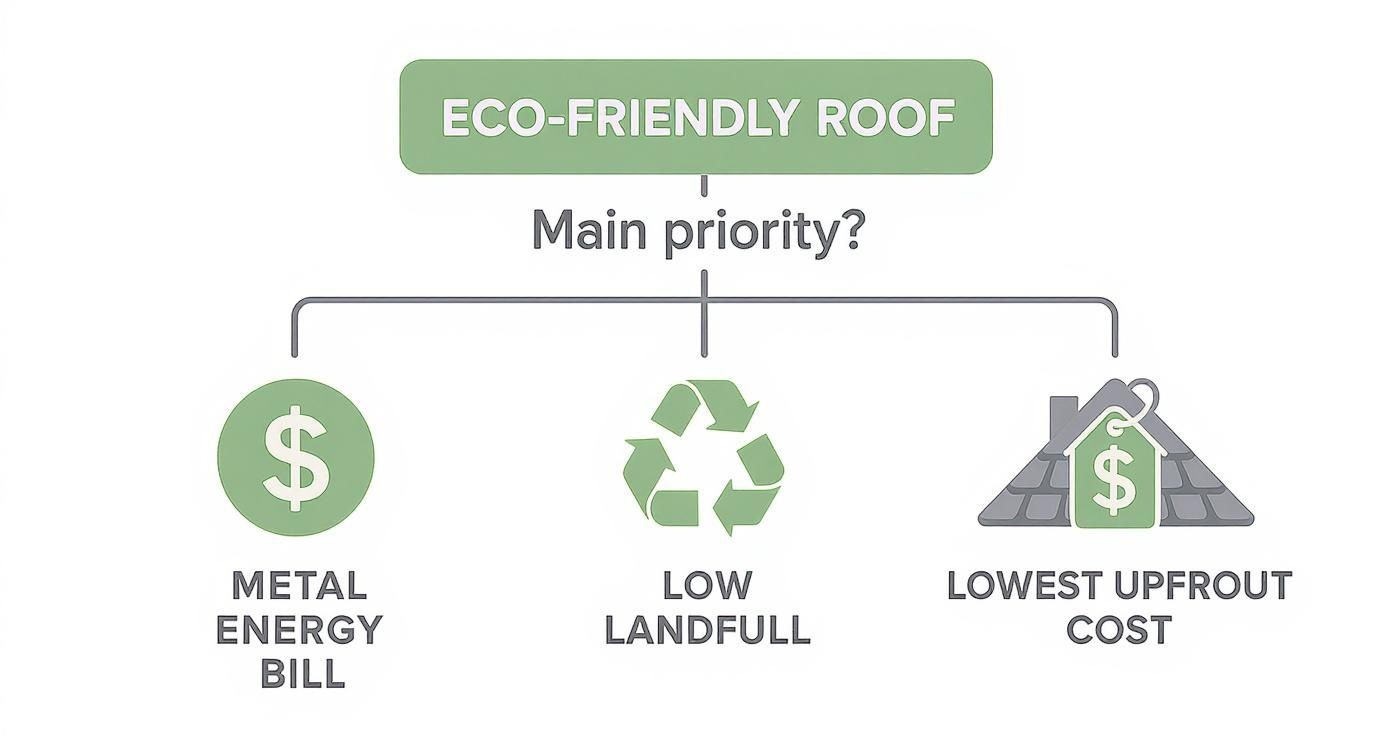
As the chart illustrates, if long-term savings from energy efficiency or environmental goals like recyclability are top priorities, a metal roof is the clear frontrunner. If the primary goal is to minimize the initial project cost, asphalt shingles provide reliable protection without the larger upfront investment.
Ultimately, you are selecting a complete system to protect your most valuable asset. The logical next step is to seek professional, on-site advice. At Four Seasons Roofing, we provide detailed, no-pressure inspections to help you evaluate these options with precise measurements and expert insights. Our role is to ensure the final choice you make is one you will be satisfied with for years to come.
Common Questions About Roofing Choices
Choosing between a metal and a composition shingle roof often raises practical questions. As Puget Sound homeowners evaluate their options, a few concerns consistently emerge. Here are clear, straightforward answers to help you navigate the final details of your decision.
We will address some of the most common myths and practicalities, ensuring you have factual information.
Are Metal Roofs Louder Than Shingles During Rainstorms?
This is one of the most persistent myths associated with metal roofing, likely stemming from the image of rain on an old barn roof with an open-rafter system. The reality of modern residential metal roofing is entirely different.
Today’s metal roofing systems are installed over a solid substrate, such as plywood decking, and always include a sound-dampening underlayment. When installed correctly by a professional, the sound level during a rainstorm is virtually indistinguishable from that of a shingle roof. The combination of solid sheathing, underlayment, and your home’s attic insulation works as a system to absorb sound, maintaining a quiet interior.
The concern over a noisy roof is a relic of outdated installation methods. Professional standards ensure a modern metal roof is just as quiet as its shingle counterpart, allowing you to enjoy the sound of rain without disruptive noise.
How Do Warranties for Metal and Shingle Roofs Compare?
Warranties are a key indicator of a product’s expected durability and performance, and this is an area where the two materials differ significantly. It is important to understand both the material warranty provided by the manufacturer and the workmanship warranty offered by your contractor.
- Asphalt Shingle Warranties: These frequently come with “prorated” coverage, which means the warranty’s financial value diminishes over time. A defect discovered in year 15 may only cover a small fraction of the replacement cost.
- Metal Roof Warranties: These are typically far more robust. Many offer non-prorated coverage for 30 to 50 years, protecting not only against material failure but also against specific finish issues like fading, chalking, or peeling.
We always advise clients to read the warranty documentation carefully. A strong, non-prorated warranty reflects the manufacturer’s confidence in the long-term durability of their product.
Can a New Metal Roof Be Installed Over Old Shingles?
In many jurisdictions, yes. Building codes in Washington often permit the installation of a new metal roof directly over a single, existing layer of asphalt shingles. This procedure, known as an overlay or “roof-over,” can reduce project costs by eliminating the labor and disposal fees associated with a full tear-off.
However, this is only a viable option if the underlying roof deck is structurally sound and free of moisture, rot, or damage. Any soft spots or hidden issues must be repaired first. A professional inspection is non-negotiable to determine if an overlay is a safe and appropriate solution for your home. A reputable roofer will never recommend this approach without first conducting a thorough assessment of the deck’s condition.
Making an informed choice for your Puget Sound home is a significant undertaking, and you don’t have to do it alone. If you’re ready for a professional, on-site evaluation and a clear, detailed proposal, the team at Four Seasons Roofing is here to assist you. Schedule your complimentary inspection today and allow us to provide the information you need to protect your home for years to come.