
Hail damage roof inspection starts with a safe ground-level check for dents, cracks, and missing shingle granules, plus photos of anything unusual on the roof, gutters, or siding. If damage is suspected, a roofing professional should inspect it before an insurance claim moves forward, especially since wind and hail made up 34.3% of property damage claims in one recent year and wind and hail deductibles commonly range from 1% to 10% of dwelling coverage limits (Policygenius).
A lot of homeowners in Western Washington don’t get many hail storms that feel severe enough to worry about. Then one rolls through Bellevue, Sammamish, or Everett, and suddenly there are dents on the downspouts, bits of granules in the gutter, and a real question hanging over the house. Is this actual storm damage, or just a roof that already had some age and moss wear?
That’s where a calm, practical approach helps. A proper hail damage roof inspection isn’t about guessing from the driveway or climbing onto a wet roof. It’s about knowing what signs matter, what can wait, and when it’s time to bring in trained help.
Practical rule: If a storm leaves marks on metal, siding, or gutters, the roof deserves a closer look too.
Hail Damage Roof Inspection for Western Washington Homeowners
What to Do After a Hail Storm in Western Washington
If a hail storm just passed through the neighborhood, the first reaction is usually to look up and worry. That’s normal. In places like Bellevue or Sammamish, storms can hit hard and then disappear into a long stretch of damp, gray weather that makes roof problems harder to read from the ground.
Hail isn’t a rare edge case. Roofing industry reporting that cites NOAA says there were 6,962 severe hail storms in the United States in 2023 (InterNACHI). For homeowners, that means a measured response works better than a rushed one.
The first goal is simple. Don’t decide right away that the roof needs full replacement, and don’t assume everything’s fine just because there isn’t an immediate leak.
Start with a calm first look
A homeowner can do a lot from the ground:
- Check the yard first. Look for broken branches, scattered shingle pieces, or fresh debris.
- Scan the metal around the home. Gutters, downspouts, roof vents, and metal flashing often show impact before shingles do.
- Look for indoor clues. Ceiling stains, attic dampness, or a new drip after the storm can point to roof damage.
- Take photos early. The sooner the condition is documented, the easier it is to compare later.
If water starts showing up inside, a homeowner might also find this roof leak repair guide helpful for short-term next steps while waiting for a roofing inspection.
What this means for Western Washington homes
Our local roofs already deal with wet weather, moss, and slow wear. That makes hail harder to judge than it would be in a drier climate. A dark patch on a shingle might be fresh granule loss, or it might be older wear that only became noticeable after the storm washed the roof clean.
That uncertainty is exactly why a structured hail damage roof inspection matters.
Your Post-Storm Safety Checklist
Before any roof concerns get addressed, safety comes first. Western Washington roofs are often slick even on a normal day. After hail and rain, they can be dangerous.

What to do right away
Use this simple checklist before inspecting anything:
- Wait until the storm has fully passed. Don’t go outside while hail, wind, or lightning is still active.
- Walk the property slowly. Look for broken glass, fallen limbs, loose fence pieces, or anything sharp on paths and driveways.
- Stay clear of electrical hazards. If a line is down or a mast looks damaged, keep distance and call the utility provider.
- Keep children and pets inside. Fresh storm debris often ends up where people don’t expect it.
- Do not climb the roof. Wet shingles, moss, and soft spots make slips much more likely.
Wet roofs in Seattle-area neighborhoods can stay slick long after the storm ends, especially where tree cover keeps sunlight off the shingles.
What not to do
Some homeowners make the situation worse by trying to verify damage up close right away.
- Don’t use a ladder alone. Even a quick peek can become a fall risk.
- Don’t pressure wash debris off the roof. That can strip granules and confuse the damage picture.
- Don’t knock dents flat on metal parts. Insurance documentation is stronger when the evidence stays untouched.
For homeowners who like a structured property walk-around, this PA shed foundation inspection checklist is for a different part of the home, but it shows the same useful habit of checking conditions methodically instead of rushing.
How to Spot Hail Damage From the Ground
A ground-level check won’t replace a professional roof inspection, but it can tell a homeowner whether the roof needs prompt attention. The safest method is to step back, use binoculars if available, and look for patterns rather than one isolated mark.
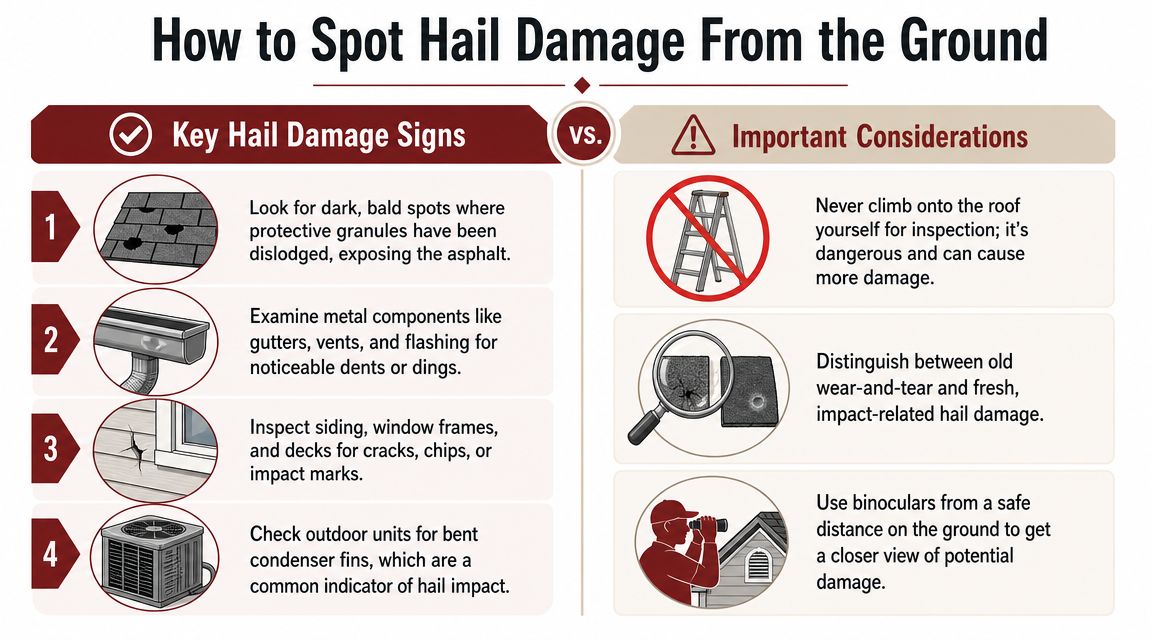
Signs that often point to hail
On many homes, the clearest clues aren’t the shingles first. They’re the softer or more exposed materials around them.
- Dented gutters and downspouts. Fresh impact marks on metal are one of the easiest things to spot from eye level.
- Marks on vents, flashing, or chimney caps. If soft metal is dented, the roof surface may also have taken hits.
- Spots of missing granules. On composition shingles, hail can knock off the protective top layer and leave darker areas behind.
- Cracks or chips on siding and trim. Impact around the exterior can support what the roof is showing.
- Granules in gutters. Some granule loss happens with age, but a fresh storm can leave a noticeable new deposit.
Homeowners who want a closer look at common examples can review these signs of hail damage on roof.
Hail damage versus normal Western Washington roof wear
Many find this aspect confusing. A roof in Redmond, Snohomish County, or Shoreline may already have discoloration, moss staining, and age-related wear before the hail ever arrives.
Hail damage usually looks more random and impact-based.
It may appear as scattered dark spots, fresh dents on nearby metal, or damage that lines up with the storm direction.
Normal aging usually looks more even and gradual.
Granule loss from age often spreads broadly. Moss-related wear tends to follow damp, shaded sections of the roof, especially under trees.
Neutral insurance guidance recommends checking more than just the shingles because true storm damage often leaves collateral clues on gutters, downspouts, and attic spaces too (American Family Insurance).
A simple this-versus-that guide
| What you see | More likely hail | More likely age or moss |
|---|---|---|
| Dents on metal gutters and vents | Yes | No |
| Random dark shingle spots after one storm | Yes | Sometimes |
| Broad, even granule wear across many areas | No | Yes |
| Moss concentrated in shaded sections | No | Yes |
| Damage only on one slope facing the storm | Often | Less likely |
If the roof shows one suspicious area but the metal, siding, and gutters show nothing at all, a homeowner should be careful about assuming hail caused it.
Documenting Damage for Your Insurance Claim
The morning after a hail storm, a lot of Western Washington homeowners see a few dark spots, some debris in the gutters, and maybe a dent on a downspout, then wonder whether they are looking at real storm damage or the same damp-climate wear the roof already had. Good documentation helps sort that out before memories fade and conditions change.
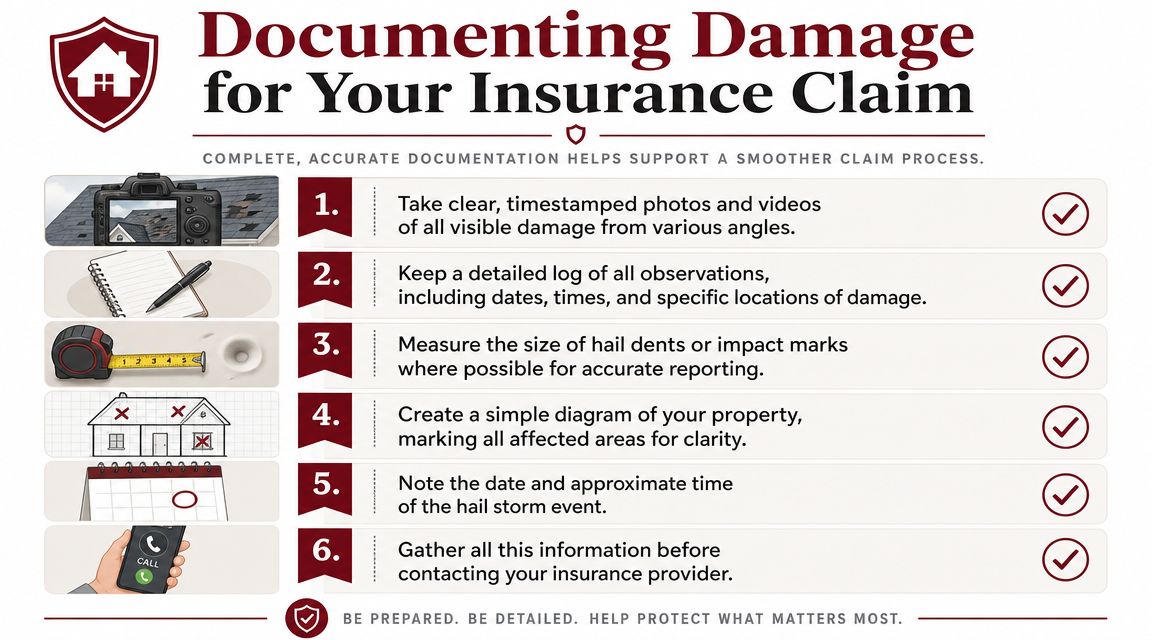
A clean record matters because a claim usually turns on proof, not suspicion. On Western Washington roofs, that is especially important. Moss staining, old granule loss, and wet-weather wear can look storm-related in photos if you do not capture the full picture.
Build your evidence file while the signs are fresh
Start from the ground and work methodically around the house. Take wide photos of each elevation first, then move in closer to any dents, displaced shingles, damaged vents, or marked gutters. If you can safely photograph the same area from two angles, do it. Small impacts often show up better with a change in light and angle.
Keep a short written log with the storm date, approximate time, and what you noticed first. Include details like hail size, which side of the house took the worst weather, and whether you saw fresh debris, clogged gutters, or water marks indoors after the storm.
It also helps to photograph the areas that are often confused with hail in our region. If one slope has long-term moss buildup under overhanging trees, document that too. That kind of context can help separate older roof wear from newer impact damage.
What to photograph
- Overview shots of the whole home. Get each side of the house and every visible roof slope.
- Close-ups with scale. Use a coin, ruler, or tape measure next to dents on metal components.
- Collateral damage. Screens, window trim, gutters, downspouts, siding, deck covers, and mailbox flags can support the timeline of the storm.
- Interior signs. Photograph fresh ceiling stains, attic drips, or wet insulation if they appeared after the storm.
- Debris patterns. Downed branches, granules in gutters, and displaced rooftop debris can help show where the weather hit hardest.
A dedicated roof inspection for insurance claims page can help you understand the kind of documentation insurers usually ask for.
A few practical tips that make claims easier
Name your photos in a simple way, such as "front-slope-wide" or "north-gutter-dent-close." Keep everything in one folder on your phone or computer so nothing gets lost. If you use aerial images to document hard-to-see areas, some homeowners now streamline property assessments using drones, but the goal stays the same. Clear images, clear notes, and a clear timeline.
Do not wash the roof, scrape off marks, or let a handyman patch random spots before the damage is documented. Once those surfaces are disturbed, it gets harder to show what the storm did.
You do not need to prove the whole claim by yourself. You need a solid record of what changed after the storm and what parts of the roof already showed normal Western Washington wear.
Why You Need a Professional Hail Damage Roof Inspection
A homeowner's ground check is useful, but it has limits. Some hail damage is subtle. Some damage looks serious and turns out to be old wear. The difference matters because repair decisions and insurance decisions both depend on evidence, not guesswork.
A professional hail damage roof inspection uses a repeatable method. Haag guidance describes using 100-square-foot test squares on each roof slope, typically 10 feet by 10 feet, with at least one test area per roof direction. Inspectors count damaged shingles in those test areas and extrapolate from the sample, while also checking vulnerable spots like ridges, valleys, and edges (Haag).
What a trained inspection catches
A proper inspection looks beyond the most obvious marks.
- Shingle bruising versus surface scuffing. Some marks break the shingle surface in a way that shortens service life. Others are only cosmetic.
- Damage patterns by slope. One roof face may take the main impact while another shows almost nothing.
- Soft metal confirmation. Dented flashing, vents, and caps help confirm storm direction and severity.
- Problem areas near roof edges. Ridges, valleys, and edges are often more vulnerable than the middle field of the roof.
Why this matters in Western Washington
A damp roof can hide things. Moss, old debris, and weathering can make a casual look misleading, especially on homes under tree cover in places like Kenmore or Bothell.
Some inspection teams also use newer methods to reduce guesswork and improve documentation. Homeowners who are curious about that side of the process may find it useful to read how some inspectors streamline property assessments using drones, especially when access is limited or slopes are steep.
A more detailed explanation of that value is outlined in the advantages of pro roof inspection for storm damage.
Professional inspection isn't just a second opinion. It's the step that separates suspicion from documented roof condition.
Get Peace of Mind with Four Seasons Roofing
For a homeowner, the hardest part is often the uncertainty. The storm is over, but the questions stick around. Is the roof damaged? Is it repairable? Is this a claim situation, or just normal wear that happened to become noticeable after bad weather?

At Four Seasons Roofing, the certified team handles this kind of roof concern across the Seattle area, including homes in North King and Snohomish counties. The company offers complimentary inspections, works on composition, metal, and low-slope roofs, and gives homeowners a clear explanation of whether the roof shows storm-related damage, age-related wear, or a mix of both.
That local context matters. In Western Washington, moss, long rainy stretches, and tree debris can make hail damage harder to read. A straightforward inspection helps a homeowner move from worry to a practical next step. For anyone trying to plan ahead, the site also includes a Roof Cost Calculator that can help frame future repair or replacement decisions.
Frequently Asked Questions About Hail Damage
A lot of Western Washington homeowners ask the same question after a rough storm. Was that hail damage, or am I just seeing the moss, age, and granule wear that already comes with our wet climate?
Can hail damage a roof even if there isn't a leak yet
Yes. Hail can bruise shingles, loosen granules, crack older materials, or dent metal components without causing an immediate interior leak. On many roofs, the first signs show up outside on gutters, downspouts, flashing, or roof vents before water ever reaches the ceiling.
How can a homeowner tell hail damage from moss damage
Pattern matters. Moss usually builds up in damp, shaded sections and causes slow, uneven wear over time. Hail damage is more scattered and storm-related, often paired with fresh dents on soft metal, impact marks on vents, or sudden shingle changes that were not there before the storm.
This distinction matters more in Western Washington than it does in drier areas. On our roofs, old granule loss, algae staining, fir needles, and moss can make a hail hit look less obvious from the ground.
Should a homeowner call insurance first or a roofer first
If the damage is still uncertain, call a roofer first. A professional inspection helps you find out whether you are looking at likely storm damage, long-term wear, or both. That makes it easier to decide whether an insurance claim makes sense.
Does hail always mean roof replacement
No. Some roofs need a targeted repair. Others need partial replacement. In more serious cases, a full replacement is the right call.
The answer depends on the roofing material, the age of the roof, how widespread the impacts are, and whether matching materials are still available. A newer composition roof with a few damaged slopes is a very different situation from an older roof that already had weathering and moss-related wear before the storm.
Is it safe to inspect the roof with a ladder
In most cases, no. Wet shingles, slick metal, and hidden soft spots make post-storm roofs risky for homeowners. Photos from the ground, a quick check around the yard for fallen roofing material, and a professional inspection are the safer choice.
What if the roof looks normal from the street
That is common. Hail damage can be subtle, especially on darker shingles or roofs that already show normal aging. I have seen roofs look fine from the driveway and still have clear impact damage on vents, ridge caps, flashing, or upper slopes that are impossible to read from the curb.
If you are seeing dents on gutters, unusual shingle wear after a storm, or signs that do not match the normal moss and moisture issues we see around Western Washington, a hail damage roof inspection is the next practical step. Four Seasons Roofing helps homeowners sort out what is storm damage, what is ordinary roof aging, and what to do next.