
Understanding how much a new roof will cost in Western Washington can feel like a guessing game. For a typical home in our region, you can expect the final price to land somewhere between $8,500 and $14,300. The average cost is approximately $11,400.
Think of these numbers as a solid starting point for your budget.
Your Guide to Roof Replacement Costs in Western Washington
Replacing your roof is a significant undertaking—it is one of the most important investments you will make in your home. We are not just talking about shingles; this is the primary shield that protects your family and everything you own from the relentless Puget Sound weather.
Because the final cost can vary significantly, our goal is to provide a clear, trustworthy guide to help you make an informed decision. This breakdown is designed specifically for homeowners in Western Washington, so you will understand exactly what you are paying for.
Key Cost Factors We Will Explore
To establish an accurate budget, you must look beyond the materials. The total cost is a combination of several key elements that every contractor must factor into their estimate. Here is what we will examine:
- Roofing Materials: This is the largest variable. Costs range from affordable architectural asphalt shingles to premium standing seam metal.
- Roof Size and Complexity: It is simple math. A straightforward, single-story gable roof will cost much less than a complex, multi-level roof with steep pitches, dormers, and multiple valleys.
- Labor and Installation: You are paying for the skill and experience of a professional crew. In our damp climate, proper installation is absolutely critical for a roof that is built to last. A dedicated [Seattle roofing company](https://fourseasonsroofing.com/seattle-wa- roofing-company/) will always prioritize quality craftsmanship.
- Permits and Local Codes: Navigating the specific regulations in cities like Seattle, Bellevue, or Everett adds a necessary administrative cost to the project.
This chart provides a quick visual of the typical cost ranges you can expect for a full roof replacement.
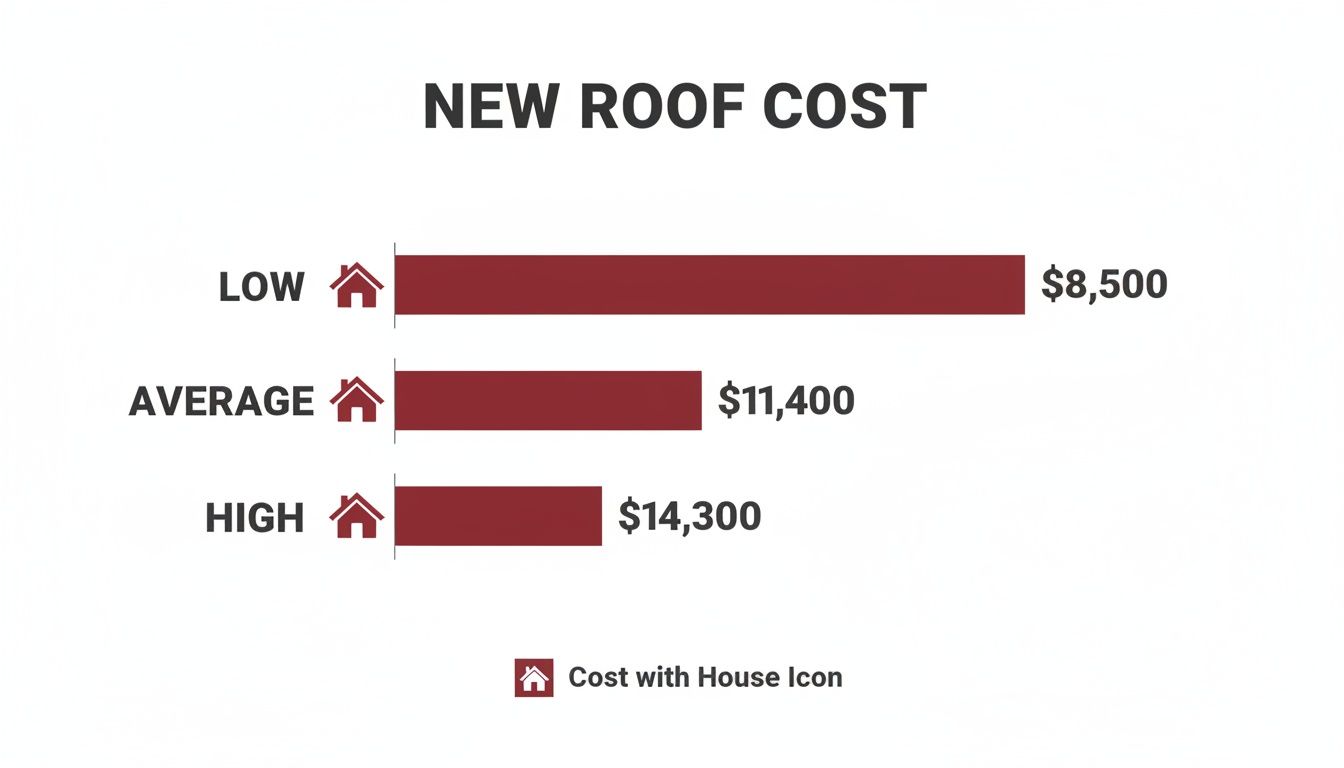
As you can see, while the average is around $11,400, your project could easily end up higher or lower depending on your choices and the specifics of your home.
It is helpful to see how our local costs compare nationally. Across the country, homeowners in 2024 are paying between $8,500 and $14,300 for a standard asphalt shingle roof on a 2,000-square-foot home. Here in major metro areas like the Puget Sound, costs are often 15-30% higher than in more rural areas, mainly due to higher demand and labor rates.
Once you understand these components, you can approach your roofing project with confidence.
Decoding Material Prices Per Roofing Square
Have you ever wondered why a new roof on one house costs $8,000, while a similar-looking home down the street receives a bill for $25,000? Most of the time, the answer is simple: the materials. Your choice between asphalt, metal, or cedar is the single biggest factor driving the final price, so understanding these differences is the first step toward building a realistic budget.
To make sense of contractor quotes, you first need to understand how the industry measures a roof. We speak in terms of the roofing square. It is not a physical object, but a standard unit of measurement that creates a level playing field.
What is a Roofing Square?
One roofing square is simply 100 square feet of roof area. If your roof measures 2,400 square feet, your contractor will refer to it as a 24-square roof. This standardization makes it much easier to compare material and labor costs from one estimate to the next.
With that in mind, let’s break down the most popular roofing materials here in Western Washington and see how their per-square costs compare.
Architectural Asphalt Shingles
Architectural asphalt shingles are, without a doubt, the most popular choice for residential roofing. You will find them on roughly 80% of homes in the U.S. They achieve an ideal balance of affordability, long-term durability, and aesthetic appeal, making them the preferred option for many Puget Sound homeowners.
These are not the old, flat “3-tab” shingles of the past. Modern architectural shingles have a laminated, dimensional appearance that effectively mimics more expensive materials like wood shake. More importantly for our climate, they offer excellent resistance to wind and our persistent rain.
- Cost Per Square (Installed): Typically $450 to $825
- Lifespan: 25 to 30 years
- Best For: Homeowners who want a reliable, attractive, and budget-friendly roof that is proven to perform well in the Pacific Northwest.
Since they are so common, it is worth taking a closer look at asphalt shingles to understand the different levels of quality and style available.
Standing Seam Metal Roofing
For homeowners who value long-term performance and a clean, modern aesthetic, standing seam metal is an incredibly popular choice. These roofs are easily identified by their crisp, vertical lines. The fasteners are completely hidden, which not only looks sharp but also eliminates thousands of potential leak points from exposed screws.
While the upfront cost is higher than asphalt, a metal roof can easily last two to three times as long, making it a true “lifetime” roof for many people. They are also highly effective at shedding our constant rain and even heavy snow.
- Cost Per Square (Installed): Generally $1,000 to $1,700
- Lifespan: 40 to 70+ years
- Best For: Anyone looking for a long-term investment that offers superior durability, energy efficiency, and a sleek, contemporary look.
Cedar Shakes and Shingles
Nothing says “classic Pacific Northwest” quite like a natural cedar shake roof. This is a premium material that offers a rustic, timeless beauty that cannot be replicated. It perfectly complements many of the architectural styles found throughout our region.
When installed and maintained correctly, cedar is an excellent insulator and holds its own against the elements. However, that beauty comes at a price. Cedar is one of the more expensive options and requires specialized installation and periodic maintenance to prevent moss and rot in our damp climate.
- Cost Per Square (Installed): Ranging from $800 to $1,430
- Lifespan: 20 to 40 years, depending heavily on maintenance
- Best For: Homeowners with historic or high-end homes who desire an authentic, natural aesthetic and are prepared for the necessary upkeep.
Modern Composite Shingles
Composite shingles represent an exciting development in the market, engineered to provide the best features of other materials. Made from a blend of synthetic polymers, these shingles convincingly replicate the beautiful look of natural slate or cedar shakes—without the excessive weight, high cost, or maintenance challenges.
They are incredibly tough, often carrying a Class 4 impact resistance rating, the highest available. This makes them a smart choice for anyone who wants top-tier performance and high-end aesthetics without compromise.
- Cost Per Square (Installed): Approximately $900 to $1,500
- Lifespan: 40 to 50 years
- Best For: Homeowners who love the look of slate or wood but want a lower-maintenance, highly durable, and often more cost-effective alternative.
Ultimately, selecting the right material is about balancing your budget, your desired style, and your long-term goals. Each of these options offers a different value, and the best one for your home depends entirely on your priorities.
Uncovering the Hidden Factors in Your Roofing Quote
Choosing your roofing material is a major decision, but it is only one piece of the puzzle when it comes to the final cost of a new roof. A professional roofer’s quote is like a detailed recipe; the final price includes much more than just the shingles or metal panels you see from the street.
Several “hidden” factors—most of them tied to your home’s unique structure and the specific demands of the job—play a significant role in that final number.
Understanding these elements is the key to interpreting your estimate. It helps you see exactly where your money is going and allows you to have a more productive conversation with your roofer. Let’s pull back the curtain on these crucial cost drivers.
Roof Pitch and Complexity
Think of your roof’s shape as a roadmap for the installation crew. A simple, straight path is always faster and easier to travel than one with numerous twists, turns, and obstacles. That same logic applies directly to roofing labor costs.
Two of the biggest structural factors are pitch (its steepness) and complexity.
- Roof Pitch: This is simply a term for your roof’s steepness. A low-pitch roof that is easy to walk on requires less safety equipment and allows the crew to move faster. Conversely, a very steep roof—like one on an A-frame or a classic Victorian home—demands extensive safety harnesses, scaffolding, and much more careful, time-consuming work. All of that adds to the cost.
- Roof Complexity: Does your roof have dormers, skylights, chimneys, or numerous valleys (where two roof planes meet)? Each of these features requires custom cutting, flashing, and sealing to create a perfect, watertight fit. The more complex the geometry, the more labor hours it takes to do the job right.
A simple, low-pitch gable roof on a rambler might take a crew two days to finish. However, a complex roof of the exact same square footage with multiple dormers and a steep pitch could easily extend to four or five days. That extra labor is a primary reason for a higher quote.
Site Accessibility
Here is a factor that surprises many homeowners: how easy is it for the crew to access your roof? A contractor must plan the logistics of getting heavy materials onto the roof and hauling away all the old debris.
If you have a wide, flat driveway right next to the house, it is simple to position a dump truck and load materials. But if your home is on a steep hill, has delicate landscaping that cannot be disturbed, or is a townhome with no side access, the crew has to spend significantly more time and effort manually carrying everything. That extra work is factored into the labor cost.
Tear-Off and Disposal of the Old Roof
Before a beautiful new roof can be installed, the old one almost always has to be removed. This process, called the tear-off, is a non-negotiable step in nearly every professional roof replacement. It involves stripping off all the old shingles and underlayment down to the bare wood sheathing.
This step is critical for a couple of key reasons:
- Inspection: It is the only way for the contractor to properly inspect the underlying roof deck for any rot, water damage, or weak spots that need repair before the new materials are installed.
- A Clean Slate: A clean deck ensures the new underlayment and shingles can be fastened correctly and lie perfectly flat, which is essential for performance and keeping your warranty valid.
- Weight: Simply adding a new layer of shingles on top of an old one (sometimes called a “layover”) adds an incredible amount of weight that your home’s structure was likely never designed to handle.
The cost for the tear-off and disposal is usually calculated per square foot and will appear as its own line item on your estimate. This expense can add anywhere from $1 to $5 per square foot to the total project cost.
Underlayment and Ventilation Systems
Here in Western Washington, a roof is not just shingles—it is a complete system designed to handle our relentless rain and moisture. Two of the most important, behind-the-scenes components of this system are the underlayment and ventilation.
Underlayment is the waterproof barrier installed directly on your roof decking, right underneath the shingles. For our climate, a high-quality synthetic underlayment is an absolute must. It acts as a critical second line of defense against wind-driven rain.
Ventilation is just as vital. A properly ventilated attic space allows air to circulate, which helps regulate temperature and—most importantly—provides an escape route for moisture. Without good airflow, condensation builds up, leading to mold, mildew, and rot in your attic and roof structure. This system typically involves soffit vents, ridge vents, and baffles. Skimping on these components is a recipe for future problems.
Navigating Local Permit Costs
Finally, any legitimate roofing project requires a permit from your local city or county, whether you are in Seattle, Tacoma, or Bellevue. This is not just bureaucratic red tape; it is a process that ensures the work is done to current building codes, which exist for your safety.
Permit fees vary by municipality but often add several hundred dollars to the final bill. Any reputable contractor will handle the entire permitting process for you, from filing the paperwork to scheduling the required inspections. This is a clear sign that you are working with a licensed, professional company that follows regulations.
As you begin to get quotes, it helps to know what you are looking at. Understanding how to properly engage in comparing roofing estimates will help you see how each contractor breaks down these important costs.
Seeing the Numbers in Action with Real-World Scenarios
Abstract ideas like “cost per square” and “complexity factors” are a good start, but nothing makes the numbers clearer than seeing them applied to real-world homes. To truly understand what a new roof costs, let’s walk through three realistic scenarios for common Western Washington houses.
Each example breaks down the project scope and provides a clear, estimated cost breakdown. This should help connect all the concepts we’ve discussed, showing how material choices, labor, and your home’s unique characteristics come together to form a final quote.
Scenario 1: The Tacoma Rambler with Architectural Shingles
Our first home is a classic single-story rambler in Tacoma. It has a simple, low-pitch gable roof with a total area of 1,800 square feet (18 roofing squares). The homeowners are looking for a durable, attractive, and budget-friendly option, making high-quality architectural asphalt shingles the perfect choice.
The project is quite straightforward. There are no skylights or dormers to work around, and access is excellent, with an easy-to-reach driveway for getting materials in and debris out.
Here is a rough idea of how the costs would break down:
- Materials: 18 squares of architectural shingles, synthetic underlayment, ridge caps, and starter strips.
- Labor: A skilled crew can work quickly and safely on a low-pitch, walkable roof like this.
- Tear-Off & Disposal: Removal of one layer of old, worn-out shingles.
- Permits: A standard residential roofing permit from the City of Tacoma.
Total Estimated Project Cost: $11,500 – $14,500
This price range is typical for one of the most common roofing projects in the Puget Sound. It delivers a reliable, long-lasting roof system that boosts curb appeal without breaking the bank.
Scenario 2: The Two-Story Bellevue Home with Standing Seam Metal
Next, let’s imagine a two-story home in Bellevue with a more complex, steeper roof measuring 2,500 square feet (25 squares). This roof has multiple valleys, a dormer over the garage, and a chimney that needs all-new flashing.
The homeowners decided to invest in a long-term solution and appreciate the modern look of a standing seam metal roof. This choice increases the material cost significantly, but it offers a lifespan that is two to three times longer than asphalt shingles.
The extra complexity and safety requirements also add to the labor estimate:
- Materials: 25 squares of standing seam metal panels, high-temperature underlayment, and custom-fabricated trim pieces.
- Labor: The steep pitch demands advanced safety gear and protocols. The dormer and valleys also require precision cutting and fitting, which takes more time.
- Tear-Off & Disposal: Removal of the existing layer of asphalt shingles.
- Permits: A standard residential permit from the City of Bellevue.
Total Estimated Project Cost: $30,000 – $37,000
While the upfront cost is much higher, this is what many call a “lifetime” roof. The price reflects the premium materials and the expert craftsmanship needed for a complex, watertight installation that will last for 50 years or more.
Scenario 3: The Historic Seattle Home with Cedar Shakes
Our final example is a gorgeous historic home in a Seattle neighborhood like Queen Anne. The roof is very steep and complex, with a total area of 3,000 square feet (30 squares). Preserving the home’s classic architectural character is the top priority, making natural cedar shakes the only viable option.
Projects like this require a very specialized skill set. Installing cedar shakes correctly—especially on a historic structure with unique features—is an art form. The material itself is a premium product, and the labor is incredibly intensive.
- Materials: 30 squares of premium-grade cedar shakes, specialized underlayment, and classic copper flashing.
- Labor: This is the largest cost driver by far. The crew must be experienced with historical renovations and cedar shake installation, which is a meticulous, time-consuming process.
- Tear-Off & Disposal: Careful removal of two old layers of roofing material.
- Permits & Historic District Compliance: Securing permits in Seattle can be complex, and there might be extra requirements for a historic home.
Total Estimated Project Cost: $34,000 – $45,000
This estimate reflects a high-end, specialized project. The cost is driven by premium, natural materials and the master-level craftsmanship required to protect and enhance a valuable historic property.
Sample Project Cost Breakdown Comparison
To see these differences side-by-side, the table below shows how the final price can shift dramatically based on the home’s size, the roof’s complexity, and the chosen materials.
| Cost Component | Example 1 (Rambler, Asphalt) | Example 2 (Two-Story, Metal) | Example 3 (Historic, Cedar Shake) |
|---|---|---|---|
| Roof Size | 1,800 sq. ft. | 2,500 sq. ft. | 3,000 sq. ft. |
| Complexity | Low (simple gable) | Medium (steep, dormer, valleys) | High (very steep, historic details) |
| Material Costs | $ (Standard) | $$$ (Premium) | $$$$ (Specialty) |
| Labor Costs | $ (Straightforward) | $$$ (Complex & Safety) | $$$$ (Artisan-level skill) |
| Permits | Standard Residential | Standard Residential | Historic Compliance |
| Estimated Total | $11,500 – $14,500 | $30,000 – $37,000 | $34,000 – $45,000 |
As you can see, two homes in the same city can have vastly different replacement costs. It all comes back to the unique combination of materials, labor, and the specific challenges your roof presents.
These examples show just how much the final price can vary based on your home and what you put on top of it. For a more personalized look at your potential costs, you can get a quick, tailored estimate by using an online roof cost calculator designed for our local market. It is a great way to get a baseline budget for your specific project.
How to Responsibly Manage Your Roofing Budget
Let’s be honest—seeing the price tag for a new roof can be a shock. But the good news is that with a smart approach, you can make this essential home investment far more manageable.
A few strategic moves can put you in control of the budget, ensuring you get outstanding value without sacrificing the quality your home deserves. It’s all about shifting your mindset from looking only at the cost to understanding the long-term return on your investment.
Strategic Planning and Smart Timing
One of the best ways to manage your budget is to be flexible with your timing. Here in the Pacific Northwest, roofers are extremely busy during the dry summer months. If you can schedule your roof replacement during the slower “off-season”—such as late fall or early spring—you can sometimes find better pricing and more open schedules.
Another non-negotiable step is getting multiple, detailed quotes from reputable local contractors. This is not just about finding the lowest number; it is about making a true apples-to-apples comparison. A quality quote will break down every line item—materials, labor, tear-off, and permits—so you know exactly where your money is going.
Red Flag Warning: Be extremely wary of any bid that is dramatically lower than the others. A suspiciously cheap estimate is often a sign that a contractor is cutting corners on materials, hiring uninsured labor, or skipping critical steps like proper underlayment.
Understanding Your Financial and Warranty Options
A new roof is a significant expense, and any good contractor understands that. Most reputable companies offer flexible financing options to help homeowners spread the cost over time. This makes it much easier to afford the high-quality roof your home needs without draining your savings.
Just as important are the warranties that protect your investment. A professional roofing job should always come with two distinct warranties:
- Material Warranty: This comes directly from the manufacturer and covers any defects in the shingles or panels themselves.
- Workmanship Warranty: This is the contractor’s guarantee. It covers any issues that arise due to the quality of the installation.
Never settle for a project without a strong workmanship warranty. It is your single best protection, proving that the contractor stands behind their work and will be there to fix any problems that may arise.
Protecting Your Investment for the Long Haul
Once your beautiful new roof is installed, the work is not quite over. The easiest way to protect your investment and maximize its lifespan is with simple, proactive maintenance.
Tasks like keeping your gutters clean, trimming back overhanging tree branches, and addressing small issues before they become large, expensive problems can save you a fortune. Our guide on top roofing repair tips is packed with actionable advice to help you avoid future headaches.
Ultimately, managing your roofing budget comes down to smart planning, careful vetting of contractors, and a commitment to long-term care. Taking these steps ensures your investment not only protects your home but also provides peace of mind for decades.
Making the Right Choice for Your Puget Sound Home
Determining the cost of a new roof is about much more than a price tag. It is a major investment in your home’s long-term health and your peace of mind.
From the rugged durability of architectural shingles to the impressive lifespan of standing seam metal, your choice of material sets the stage. It dictates not only your budget but also how well your home will withstand our relentless Pacific Northwest weather.
Remember, a legitimate quote is a complete package. Factors like the complexity of your roofline, the cost of a full tear-off, and the installation of proper ventilation are not just extra line items—they are what make a roof system truly last. A lowball bid that cuts those corners is rarely a good deal in the long run.
The most important decision you will make is not the material you choose, but the contractor you trust to install it. Quality workmanship is the single greatest factor in a roof’s performance and lifespan.
Ultimately, the goal is to get the best possible value, not just the lowest price. When you choose a reputable, licensed local contractor who backs their work with a strong workmanship warranty, you are ensuring your investment is protected for decades.
Armed with this knowledge, you can navigate the process confidently and choose a roof that will keep your Puget Sound home safe, dry, and secure for years to come.
Got Questions? We’ve Got Answers.
Even with all the numbers and details, you likely have a few more questions. That is completely normal. To help you feel confident about your project, here are some straightforward answers to the questions we hear most often from homeowners.
Full Replacement or Just a Repair?
This is a major question. Knowing whether to patch a problem or start fresh can be tricky.
Think of it this way: a repair makes sense for isolated issues. Did a recent windstorm tear off a few shingles? Is there a small, specific leak around a chimney flashing? If the rest of your roof is in good health with plenty of life left, a targeted repair is the smart, cost-effective move.
A full replacement, however, is the only real solution when the problems are widespread or your roof is simply at the end of its functional life (often 15-20 years for older asphalt shingle roofs). If you are seeing shingles curling all over, widespread bald spots where the protective granules have worn off, or you are dealing with leaks in different rooms, it is time. The only way to know for sure is to have a professional inspect the roof.
Does Homeowner’s Insurance Cover a New Roof?
The short answer is: sometimes. Most standard policies will cover a replacement if the damage was caused by a sudden and accidental event, often called an “act of God.” This typically includes major wind damage, a tree falling on your house, or a severe hailstorm.
What insurance will not cover is old age and general wear and tear. If your roof is failing simply because it is 25 years old, that is considered a maintenance issue. The key is to document any sudden damage immediately (photos are invaluable) and call your insurance agent to begin the claims process.
How Long Does a Roof Replacement Take?
For an average-sized home here in the Puget Sound, most roof replacements are completed in 1 to 3 days.
Of course, a few factors can change that timeline:
- Weather: Unsurprisingly, our classic Northwest rain can cause delays. Safety is always the top priority.
- Roof Size and Complexity: A sprawling, steep roof with many dormers and valleys will naturally take more time than a simple, small rambler.
- The Tear-Off: If we have to remove multiple layers of old shingles, that adds a significant amount of labor and time to the job.
Your contractor will provide a much more specific timeframe after they have seen your home.
What Is the Difference Between Warranties?
Understanding your warranties is crucial for protecting such a major investment. There are two you need to know about:
- Material Warranty: This warranty comes directly from the manufacturer of the shingles (like GAF or CertainTeed). It covers defects in the actual product. Many of today’s top-tier shingles come with 30 to 50-year material warranties.
- Workmanship Warranty: This is the warranty from your roofing contractor, and it covers the installation itself. This is often the more important of the two. The vast majority of roof failures are not due to defective shingles, but from mistakes made during the installation.
Navigating a roof replacement can feel overwhelming, but you do not have to do it alone. The team at Four Seasons Roofing is here to provide clear answers and guide you through a transparent, stress-free process.
Ready to get started? Get your free, no-obligation estimate today.