
If a leak keeps showing up on the ceiling, moss is creeping across the shingles, or the roof just looks tired, it’s normal to start searching for how to build a roof. Most homeowners in Western Washington aren’t trying to become roofers. They’re trying to protect the house, avoid a bad contractor decision, and understand what should happen before the next long stretch of rain.
That matters here. In places like Redmond and Sammamish, trees hold moisture on the roof longer than homeowners expect. Near Shoreline or Burien, damp air and weather exposure can wear exterior materials faster. A roof problem often starts small, then shows up indoors when the timing is worst.
A homeowner doesn’t need to learn every trade secret to make a smart roofing decision. It helps to know the order of the job, the key details that prevent leaks, and the warning signs that mean a shortcut could cost more later.
Your Guide to Building a Safe and Lasting Roof in Western Washington
Building a roof starts with a plan, not with shingles. The layout has to be checked, the structure has to be framed correctly, and the roof needs underlayment before the final covering goes on. For homeowners, the practical takeaway is simple. Understand the process, know what details matter, and hire a crew that treats flashing, fastening, ventilation, and cleanup as part of the essential work.
For many people, the stress isn’t the roof itself. It’s the uncertainty. They don’t know if they need a repair or a full replacement. They don’t know what a fair process looks like. They don’t know whether the roof they’re paying for will hold up through another Western Washington winter.
That’s why a homeowner guide matters. It turns a noisy, messy project into something understandable.
Practical rule: A new roof should never feel mysterious. A homeowner should know what’s being removed, what’s being inspected, what’s being replaced, and why.
The phrase how to build a roof usually brings up builder-focused instructions. That’s not what most homeowners need. What helps is knowing what to watch for:
- Signs the project is planned well include clear measurements, permit awareness, and a defined installation sequence.
- Signs of trouble include vague answers about flashing, rushed material choices, or no discussion of attic airflow.
- Signs it applies to a home now include recurring leaks, visible wear, moss buildup, storm concerns, or an older roof that’s had several patch jobs.
A roof is one of the biggest protective layers on the house. If it’s built or replaced correctly, it helps keep water out, supports resale value, and gives the family one less thing to worry about when the forecast turns rough.
Planning Your Roof Project The Right Way
A good roof project is won before the first shingle comes off. Most problems that frustrate homeowners start in planning. The wrong scope gets approved. The material doesn’t match the roof shape. Hidden damage gets ignored until the crew is already on-site.

Repair or replacement
Some homes need a focused repair. Others are past that point.
A repair may make sense if the problem appears limited to one area, such as damage around flashing, a small section affected by wind, or a localized leak with a clear cause. A replacement is usually the better route when the roof has widespread wear, recurring leaks, multiple old repairs, or visible signs that the surface is aging across the whole house.
For homeowners, the difference comes down to value. A cheap repair isn’t a bargain if another section fails next season.
Safety comes first
Roof work is dangerous. That’s especially true on steep roofs, tall homes, wet surfaces, or anything with moss. Western Washington roofs often stay slick longer after rain, and that makes DIY climbing a bad bet.
Safe homeowner steps include:
- Look from the ground: Use binoculars to check for missing pieces, sagging areas, debris, or dark streaks.
- Watch indoors: Ceiling stains, attic dampness, and musty smells can point back to a roof issue.
- Document changes: Take photos from the yard after storms so it’s easier to compare later.
Anything involving walking the roof, pulling materials, or checking steep valleys belongs to a professional.
Permits and planning details
In many areas, including parts of King and Snohomish County, permits can be part of a roof project. Homeowners sometimes see permits as a hassle, but they serve a purpose. They help confirm the work follows code and that structural or safety issues aren’t skipped.
Some homeowners also like to review broader planning habits before a major home project starts. A practical example is Aureli Construction project planning, which shows how much smoother construction goes when the prep work is handled carefully from the start.
How roof size gets estimated
Roofers don’t just guess how much material a house needs. A standard estimating method is to measure the roof area in square feet and convert it into roofing squares, where 1 square equals 100 square feet, and contractors often add a 10% to 15% waste factor on a simple gable roof for cuts and overlaps, as explained in this roof measurement guide.
That matters for homeowners because it affects material orders, labor planning, and the final scope of work.
The cleanest roofing jobs usually start with the clearest paperwork. If the measurements and material counts are sloppy, the installation often is too.
Choosing the Right Materials for Our Rainy Climate
Material choice changes how a roof looks, how it sheds water, and how much maintenance a homeowner might deal with over time. In Western Washington, that choice also affects how the roof handles long damp stretches, moss, and debris from nearby trees.

Composition shingles
Composition shingles are the material many homeowners know best. They’re common because they work with many home styles and usually fit a more budget-conscious replacement.
They can be a practical choice for families who want a familiar look and straightforward installation. The trade-off is that damp, shaded conditions can be harder on them if the roof stays wet or collects moss.
Standing seam metal and other metal options
Metal roofing has a different feel. It’s often chosen by homeowners who want strong water-shedding performance and a more durable long-term option. In wooded neighborhoods, it can also help rain and pine needles move off the roof more cleanly.
Some homes use standing seam metal for a modern look. Others use metal shake or tile profiles when the homeowner wants a more traditional appearance with metal performance.
A roof’s slope matters here. Industry references note that asphalt shingles are common on pitches from 4/12 to 20/12, while standing-seam metal can be used from 0.25/12 to 19/12, which is why roof pitch should be assessed before choosing materials, as outlined in this roof pitch guide.
Flat and low-slope roofs
Low-slope roofs are common on some additions, porches, and modern home designs. They need special attention because they don’t shed water the same way steeper roofs do.
For homeowners, the main takeaway is simple. A low-slope roof isn’t a place to force a material that belongs on a steeper roof. The design, drainage, and waterproofing approach need to match the roof shape.
On a rainy Western Washington home, the right material isn’t just about appearance. It has to match the roof pitch, the tree cover, and how long moisture sits on the surface.
What works for different homeowner priorities
Here’s a simple way to think about roofing materials:
| Homeowner priority | Often a practical fit | Watch for |
|---|---|---|
| Lower upfront cost | Composition shingles | More maintenance in damp shade |
| Long-term durability | Standing seam metal | Higher initial investment |
| Distinctive appearance | Metal shake or tile profiles | Needs careful installation details |
| Low-slope sections | Specialty low-slope roofing systems | Requires the right crew and methods |
Homeowners comparing options in more detail can review this roofing materials comparison.
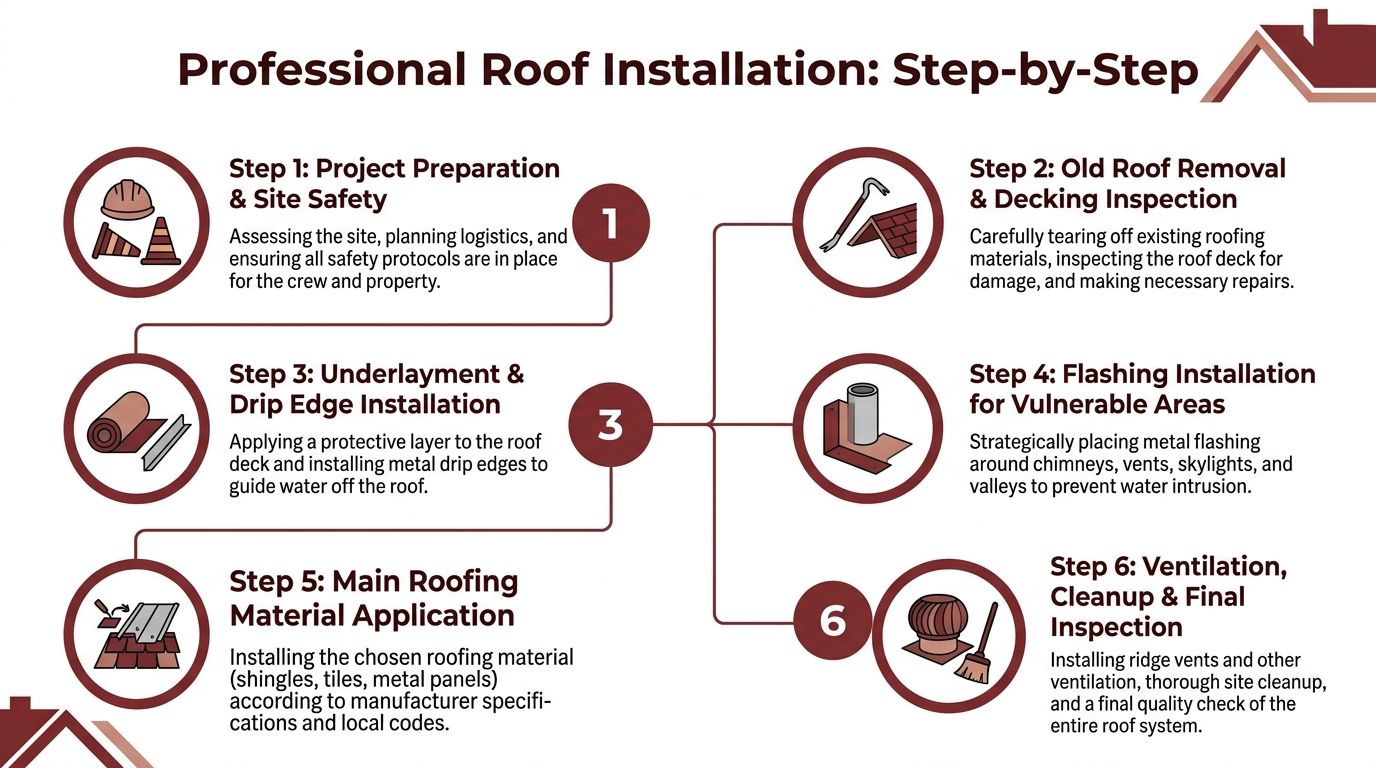
How to Build a Roof A Professional's Step-by-Step Overview
When homeowners ask how to build a roof, what they usually want to know is what should happen on their property and in what order. A professional roof installation follows a sequence for a reason. If steps get skipped or rushed, leaks often show up later around the details.
Site prep and tear-off
Before removal begins, a careful crew protects the home and yard. That can include covering landscaping, staging debris handling, and keeping paths clear around windows, entryways, and driveways.
Then the old roof comes off. This is loud, messy, and necessary. A new roof installed over hidden trouble rarely stays trouble-free for long.
Deck inspection and repairs
Once the old material is gone, the roof deck gets inspected. The deck is the wood surface under the finished roofing. If water has been getting in for a while, rot or soft spots may be discovered.
That inspection matters because the finished roof is only as solid as the layer beneath it. Covering damaged decking doesn't solve the problem. It hides it.
Framing and layout accuracy
On projects involving new construction or structural roof rebuilding, geometry matters early. A practical professional sequence is to verify layout and load requirements, frame the roof structure, and then install underlayment before the final covering. One framing guide also shows that rafter length should be adjusted for half the ridge thickness and for a level cut based on wall or sheathing thickness, rather than guessed on-site, as demonstrated in this roof framing video.
For homeowners, that means a roof shouldn't depend on improvising at the last minute. The cut list and layout should already make sense before the crew starts fastening pieces together.
Underlayment and edge protection
Underlayment is the protective layer between the deck and the visible roof covering. The easiest way to think about it is as a backup water barrier. If wind-driven rain gets under the outer material, underlayment helps protect the home underneath.
Metal drip edges and other perimeter details also help guide water off the roof and away from the structure. These aren't cosmetic extras. They're part of what helps the roof perform in wet weather.
Installing the finish roof
This is the part most homeowners picture first. Shingles, metal panels, or another finished surface gets installed in a set pattern. The visible roof matters, but the hidden fastening details matter just as much.
One professional installation reference specifies fastening sheathing at about 6-inch intervals along the perimeter and roughly 16-inch spacing elsewhere, while perimeter tile guidance calls for two fixings per tile at eaves, ridges, verges, chimneys, windows, and other vulnerable edges to help resist wind uplift, as shown in this installation detail video.
That kind of detail is why a roof can look fine from the street and still be poorly built. Homeowners usually won't see every fastener, but they should expect the crew to follow a disciplined pattern instead of rushing through exposed areas.
Ridge, vents, and final cleanup
The top of the roof gets finished at the ridge, and ventilation components are installed where needed. Cleanup should be part of the professional process, not an afterthought. A homeowner shouldn't be left with a yard full of scraps and nails.
For anyone trying to understand the structural side better before signing a contract, this guide on how do you frame a roof adds useful background in plain language.
A well-run roofing day has a rhythm. Protect the property, remove the old roof, inspect the deck, install the waterproof layers, finish the surface, then clean up thoroughly.
Critical Finishing Touches Flashing and Ventilation
A roof isn't just shingles or metal panels. The details around edges, joints, and airflow often decide whether the roof stays dry inside.

Flashing keeps water out of the weak spots
Flashing is usually metal. It seals and redirects water in the places where roofs are most vulnerable, such as around chimneys, skylights, vents, walls, and valleys.
A simple way to picture flashing is to think about trim around a window. The window itself matters, but the trim and waterproofing around it are what keep water from sneaking behind the opening. Roof flashing works the same way.
If flashing is old, reused, bent, or installed carelessly, leaks often show up there first. Homeowners who want a clearer picture of these problem areas can review common flashing types for roofing.
Ventilation helps the roof dry out
Ventilation lets the attic breathe. In a damp climate, that matters more than many homeowners realize. When moist air gets trapped, it can contribute to condensation, wood damage, and insulation problems.
Good ventilation also helps manage temperature swings in the roof assembly. The result is a roof that dries more effectively and is less likely to struggle with moisture-related wear.
What homeowners should watch for
Some warning signs point back to flashing or ventilation trouble:
- Stains near chimneys or skylights often suggest water is getting in at a transition point.
- Musty attic smells can mean moisture is lingering where airflow is poor.
- Premature wear in isolated areas may point to trapped dampness rather than a whole-roof failure.
- Repeat repairs in the same spot often mean the underlying flashing detail was never corrected.
These parts of the roof don't always stand out from the ground, but they play a huge role in how long the whole system lasts.
Why Smart Roofing Decisions Protect Your Investment
Homeowners usually notice the finished surface first. Contractors notice the decisions underneath it. That difference matters.
The most expensive roof problems often come from ordinary shortcuts. Old flashing gets reused when it should be replaced. Fastening is inconsistent. Ventilation gets ignored because it's not as visible as new shingles. The roof may look fine for a while, then leaks begin around a chimney, valley, or wall connection.
Where simple roofs and real roofs differ
A lot of online advice assumes every home has a simple gable roof. Many Western Washington homes don't. Additions, remodels, dormers, and intersecting rooflines create more complicated shapes.
Technical framing sources note that mainstream beginner content under-explains irregular roof geometry. Intersecting gables, offset ridges, valleys, and other non-standard layouts need more advanced methods for watertight results, as discussed in this article on complicated roof framing.
That's one reason hiring wisely matters so much. A crew that handles straightforward surfaces well may still struggle on a roof with tricky transitions.
What a homeowner can do and what belongs to a pro
There are a few useful homeowner actions that are safe and smart:
- Clear communication: Ask what happens if damaged decking is found after tear-off.
- Visual checks from the ground: Look for sagging lines, debris buildup, and repeated trouble spots.
- Attic observations: Note damp insulation, stains, or smells after storms.
A full roof build or replacement is different. It combines fall risk, structural judgment, waterproofing details, and weather exposure. That makes it professional work.
Some homeowners also think about roofing choices in terms of resale. A broader example of that mindset appears in this piece on improving Wellington homes for sale, which reflects a point that applies anywhere. Buyers pay attention when major exterior improvements look well planned and properly maintained.
A roof protects daily life, not just property value. The right decision keeps water out, avoids repeat disruptions, and reduces the odds of hidden damage spreading inside the house.
How Four Seasons Roofing Delivers Peace of Mind
A roof project goes better when the contractor explains what they found, what needs attention now, and what can wait. That matters a lot in Western Washington, where hidden moisture, soft decking, and worn flashing often do not show up until tear-off starts.
Four Seasons Roofing has worked in Western Washington since 1996, and that long local track record matters for homeowners trying to judge whether a company understands our weather patterns and common failure points. The company works on composition shingles, standing seam metal, metal shake and tile, plus flat and low-slope systems, so the conversation can stay focused on what fits the house instead of forcing one material onto every job.
Homeowners usually want a few simple things from a roofing company. Clear answers. A realistic scope of work. Good cleanup. A crew leader who stays involved and does not disappear once the contract is signed.
That kind of process reduces surprises.
It also helps when the contractor is licensed and insured, explains how they handle damaged decking if it turns up, and backs the work with a workmanship warranty alongside manufacturer coverage. Four Seasons Roofing offers its Shield of Protection workmanship warranty for up to 25 years, which gives homeowners another layer of protection after the installation is done.
For a homeowner reading up on how to build a roof, the value here is not learning to do the job alone. It is learning how a professional should inspect, explain, schedule, protect the property, and finish the work. That is what gives you confidence before the first shingle comes off.
Frequently Asked Questions About Building a New Roof
Can a homeowner build a roof without hiring a roofer
For a full residential roof, that usually isn't the safest choice. The work involves fall risks, structural judgment, waterproofing details, and code-related requirements. A homeowner can inspect from the ground and gather information, but the actual build should be handled by trained professionals.
How does a homeowner know if a roof needs replacement instead of repair
If the issue is isolated, a repair may be possible. If the roof has widespread wear, repeated leaks, or multiple failing areas, replacement is often the smarter long-term decision. A professional roof inspection can help confirm which situation applies.
What roofing material is often a good fit for Western Washington
That depends on the roof design, the home's setting, and the owner's priorities. Composition shingles are common, while metal roofing is often chosen for durability and water shedding. Homes under heavy tree cover or with low-slope sections usually need more careful material selection.
Why do flashing and ventilation matter so much
Flashing protects the weak spots where water tends to enter, such as around chimneys, valleys, and roof penetrations. Ventilation helps the attic dry out and reduces moisture buildup. If either one is wrong, leaks and rot can follow even when the main roof surface looks fine.
Are permits part of a roof project
They can be, depending on the location and scope of work. Many homeowners in King County, Snohomish County, and nearby areas should expect permit questions to come up during planning. A qualified roofing contractor should help explain what applies to that specific project.
What should a homeowner ask before signing a roofing contract
Ask how the deck will be inspected after tear-off, how flashing will be handled, what ventilation changes are recommended, and who will manage the site each day. It also helps to ask how cleanup works and how change orders are communicated if hidden damage is found.
Final Call to Action
A roof project goes better when the homeowner knows what questions to ask before the first bundle shows up in the driveway. If you are dealing with leaks, an aging roof, or mixed advice about repair versus replacement, get a clear inspection and a straight answer about what your home needs.
That matters in Western Washington, where a roof can look serviceable from the yard and still have trouble at the flashing, decking, or ventilation once it is opened up. The goal is not just to hear a sales pitch. The goal is to understand the condition of the roof, the likely scope of work, and the risks that could affect cost and timing.
If you want that kind of clarity, Four Seasons Roofing offers a no-pressure inspection process focused on what is happening now, what to watch for next, and what a sensible next step looks like for your home.