
If you’re noticing shingles on the roof that look lifted, bent, or uneven, it’s normal to worry. Most homeowners in the Seattle area first spot this from the driveway, while cleaning gutters, or after a long stretch of rain when the roof suddenly looks rougher than it did last season.
Here’s the good news. Roof shingle curling is common, and it doesn’t always mean immediate panic. It does mean the roof needs a closer look. In Western Washington, where damp weather, moss, and attic moisture can all team up against a roof, curled shingles are often a clue that something bigger may be going on.
Roof shingle curling means asphalt shingles are no longer lying flat. That can happen because the roof is aging, or because heat, trapped moisture, poor ventilation, or installation problems are stressing the shingles. A few curled shingles may be repairable, but widespread curling usually means the roof needs a professional inspection to decide whether repair or replacement makes more sense.
What Is Roof Shingle Curling?
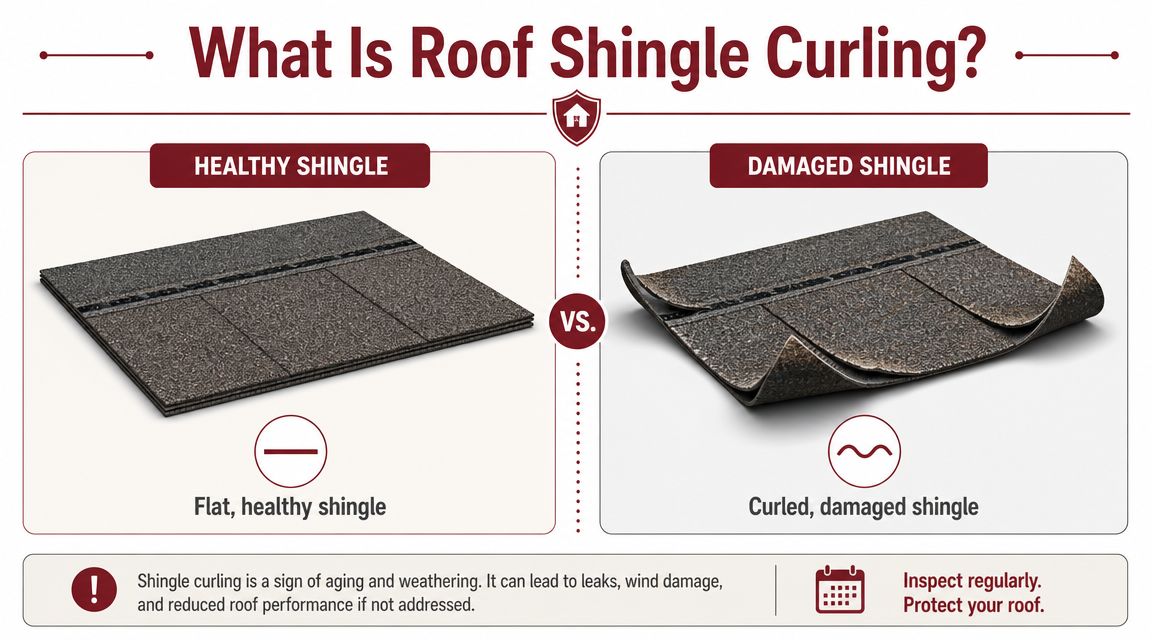
Roof shingle curling is exactly what it sounds like. A shingle that should sit flat starts to bend out of shape. The easiest way to picture it is a piece of paper that dries out and lifts at the edges.
That matters because shingles are supposed to overlap tightly and shed water. Once they start changing shape, rain can work its way where it shouldn’t.
Curling and clawing are not the same
Homeowners often use one word for both, but there are two common patterns:
- Curling at the edges means the sides or corners lift upward.
- Clawing or cupping means the middle area rises or changes shape while the shingle no longer sits flat.
Both are signs that the shingle has lost its proper shape. From the ground, either one can make a roof look wavy, patchy, or tired.
Practical rule: If the roofline looks uneven in a way it didn’t before, the shape change matters even if there isn’t an active leak yet.
Why the shape matters for your home
A flat shingle protects the layers below it. A curled one gives wind and water more places to get underneath. That doesn’t guarantee a leak tomorrow, but it does increase the chance of trouble, especially during Western Washington’s long wet stretches.
Homes under heavy tree cover in places like Redmond and Sammamish often make this harder to spot. Moss and shade can hide shingle distortion until the problem has spread. Near the water, in areas like Shoreline or Burien, constant moisture exposure can make exterior wear easier to miss because the whole roof stays damp-looking for much of the year.
For a homeowner, the main takeaway is simple. Roof shingle curling is a symptom, not a final diagnosis. A key question isn’t just “Are the shingles bent?” It’s “Why are they bent, and how widespread is it?”
Why Shingles Curl Top Causes for Western Washington Homes
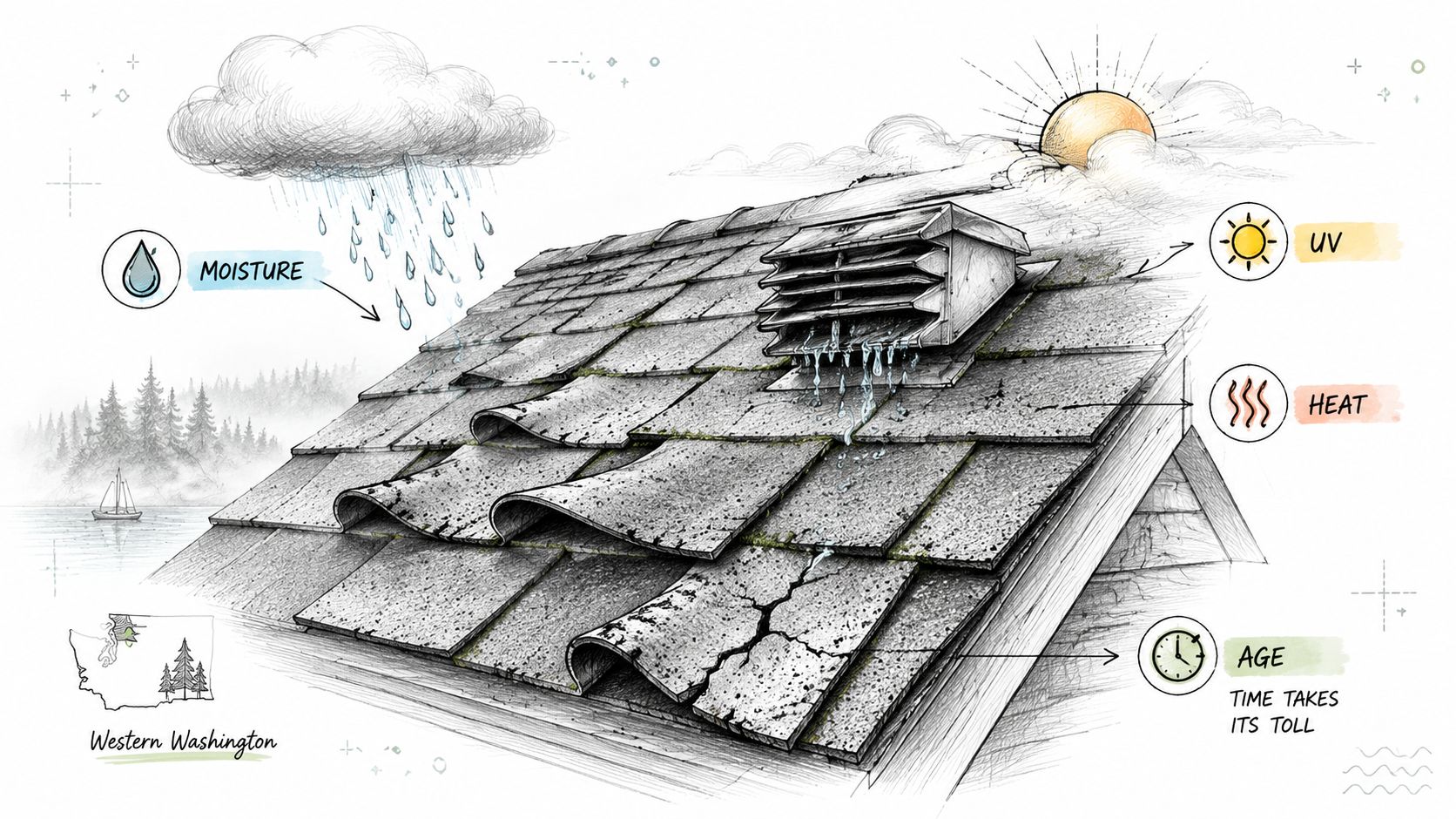
On a Western Washington roof, curling usually comes from a combination of age, moisture, heat buildup, and the way the roof was put together in the first place. On plenty of homes around Seattle, I see more than one cause at work at the same time.
Aging shingles lose flexibility
Older asphalt shingles gradually dry out, shrink, and get brittle. Once that happens, the tabs stop lying flat the way they should. You may see corners lifting first, then cracking, then a rough, tired-looking surface that no longer sheds water as cleanly.
That kind of curling is usually part of normal roof aging, not a surprise failure. The trade-off is that small repairs on brittle shingles often do not hold as well as they would on a newer roof, because the material can crack during handling.
Attic heat and trapped moisture can speed it up
In our climate, roof problems often start both above and below the shingles. Long damp seasons keep materials wet from the outside, and poor attic airflow can trap humidity and heat underneath the roof deck.
That combination shortens shingle life. A roof can look older than it is when warm, moist air is stuck in the attic for years. If the upper floor feels stuffy in summer or the attic smells damp, it is worth looking at the ventilation side of the system too. Homeowners can get a clearer sense of that connection in this guide on attic ventilation and roof health.
On younger roofs, this is one of the first things I want checked.
Installation details can show up later
Curling does not always mean the shingles themselves were the original problem. Sometimes the issue starts with what is underneath them or how they were fastened.
Common examples include:
- nails driven too high, too low, or not flush
- shingles installed over an uneven or worn-out layer below
- roof decking that took on moisture and changed shape
- ventilation details that were skipped or undersized
These problems can stay hidden for years. Then a homeowner starts noticing one slope looks rippled, or a patch near a valley never seems to sit flat again after a wet winter.
Moss and shade add stress in Western Washington
Moss is a frequent side issue here, especially on north-facing slopes and roofs under fir, cedar, and maple trees. Moss does not cause every curled shingle, but it keeps the surface wetter longer and hides the early warning signs homeowners would otherwise spot from the yard.
That is why cleaning and monitoring go together. Some homeowners use professional roof cleaning services to clear buildup and get a better look at the actual roof condition. Cleaning will not flatten old shingles again, but it can expose whether you are dealing with a few weathered areas or a roof-wide problem.
The practical question is not just what caused the curling. It is whether you are seeing ordinary late-stage wear, one repairable section, or signs that the whole roofing system is wearing out.
A Quick Inspection Checklist You Can Do from the Ground
You spot a few shingle edges that look a little raised after a long wet stretch, and the first thought is usually, “Is this roof shot?” From the ground, you can often sort that concern into one of three buckets. Normal aging, a small trouble spot, or a roof-wide problem.
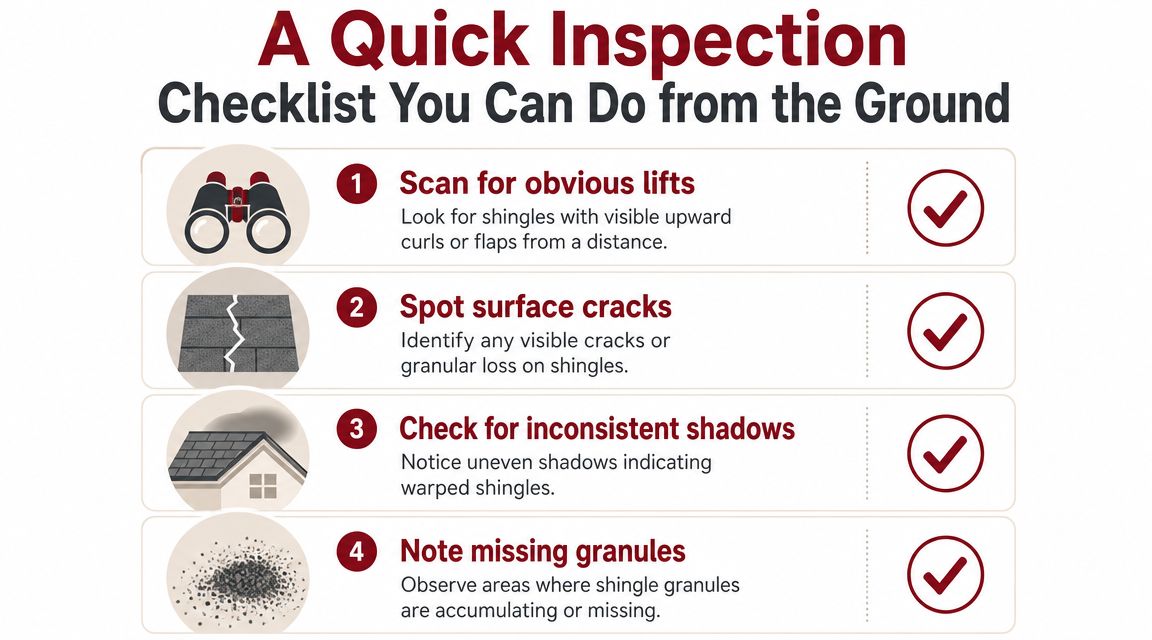
A slow walk around the house with binoculars gives you plenty to work with. Stay off the roof. On damp Western Washington roofs, the safe view is the better view anyway.
What to look for
Check the roof from a few angles in the yard or driveway, then look for patterns instead of fixating on one shingle.
- Lifted corners or edges: A few tabs lifting in one spot can mean localized wear. Repeated curling across several rows usually means more than a minor patch issue.
- One slope versus the whole roof: If the north side under trees looks rough but the sunnier side still lies flat, that points to uneven aging. If multiple slopes show the same curling, the roof may be wearing out as a system.
- Cracks, splits, or brittle-looking tabs: Curling with cracking is a stronger warning sign than curling alone.
- Bare or rough-looking patches: When the surface starts looking thin or patchy, the shingle is losing the material that protects it from weather.
- Gutters and downspouts: Excess granules collecting there often show up before the roof looks obviously tired from the street.
- Lines that look wavy or uneven: A ripple running through a section can mean more is going on than simple age, especially if the pattern follows a deck line or a past repair.
Roof age matters here, but it is not the whole story. On an older roof, a few curled tabs may just be late-stage wear. On a newer roof, the same pattern deserves a closer look because it can point to a larger issue with how that section is performing.
The biggest mistake homeowners make is treating every curl the same. A small patch near a chimney or valley is one conversation. Curling scattered across broad areas of the roof is a different one. If you want a good side-by-side framework, these signs you need roof repair or replacement line up well with what we see in the field.
What to write down before calling a roofer
A few notes on your phone can make an inspection much more useful:
- Which roof sections show curling
- Whether it is a small area or several slopes
- Whether you see granules in gutters or on the ground
- Any indoor stains, attic dampness, or musty smell
- Approximate roof age, if you know it
Photos help too. Take one wide shot from the yard and one closer zoomed-in photo from the same spot. That makes it easier to tell whether the issue is stable or spreading if you check again after the next wet season.
For a safe seasonal routine, this spring roof inspection checklist is a good way to keep track of changes without climbing up there yourself.
Repair or Replace Deciding What’s Right for Your Roof
This is the question most homeowners really want answered. Can the problem be fixed, or is the roof at the point where replacement makes more sense?
The answer depends on extent, age, and cause. Curling itself doesn’t choose for you. The pattern of curling does.

When a repair may still make sense
A repair is usually more reasonable when the problem is small and specific.
- Localized damage: Only a few shingles are affected in one section.
- The roof is relatively young: The rest of the roof still appears flat and in good shape.
- The cause appears limited: A small repair after wind exposure or a specific install issue can sometimes buy useful time.
Some guidance for homeowners notes that small, localized areas can sometimes be resealed or individually replaced, while widespread curling usually points to a bigger issue that makes replacement the more cost-effective long-term path, as explained in this guide to curling shingles and next steps.
When replacement is usually the smarter choice
Replacement becomes more likely when the roof is failing as a whole, not just in one corner.
A simple comparison helps:
| Situation | What it usually means |
|---|---|
| One small area with mild curling | Repair may be possible |
| Multiple slopes with visible curling | The problem may be system-wide |
| Curling plus cracking, wear, or moisture concerns | The roof may be losing reliable protection |
| Older roof with broad distortion | Replacement is often the more stable long-term option |
In Western Washington, this decision matters because patching a tired roof through months of rain can turn into repeat service calls. A repair can help if the roof still has life left. It won't fix a roof that's aging out everywhere at once.
What doesn't work well
Quick patching has limits. Pressing shingles down, trying to glue brittle tabs, or replacing a few pieces without checking the cause can leave the problem untouched.
Homeowners comparing the bigger picture may find it helpful to review these signs you need roof repair or replacement along with a local breakdown of roof repair versus replacement.
Widespread roof shingle curling is rarely just a shingle problem. It usually means the roof needs a decision, not just a patch.
How Four Seasons Roofing Helps Homeowners in Western Washington
When curled shingles show up, most homeowners don't want a sales pitch. They want someone to confirm what's happening, show what matters, and explain the choices in plain English.
At Four Seasons Roofing, the team handles this type of issue across the Seattle area by looking beyond the surface. That includes the visible shingles, but also the patterns that can point to moisture, ventilation trouble, aging materials, or installation concerns.
What the inspection process should do
A useful roof inspection should answer a few basic questions:
- Is the curling isolated or widespread
- Does the roof still have dependable service life left
- Are there signs the attic or roof deck may be part of the problem
- Is a repair likely to hold, or would that only delay a larger fix
A homeowner should expect photos, clear notes, and a simple explanation of what the roofer is seeing. That matters because many roofs with curling don't fail all at once. They decline in stages.
What helps homeowners make a calm decision
In this region, a calm decision usually comes from seeing the roof condition clearly. If the issue is limited, a straightforward repair plan may be enough. If the curling is broad and tied to age or moisture problems, replacement may protect the home better over the long run.
The right approach isn't about pushing one answer. It's about matching the response to the roof that is there, especially on homes dealing with tree shade, moss, salt air, and long rainy stretches around Puget Sound.
Frequently Asked Questions About Curling Shingles
Can curled shingles be glued back down?
Sometimes homeowners ask about adhesive as a quick fix. On an older or brittle roof, that usually isn't a reliable long-term answer because the shingle has already changed shape. If the curling is minor and very limited, a roofer may be able to address a small section, but broad curling needs a real diagnosis.
Why is only one side of the roof curling?
That usually points to uneven exposure or an underlying condition affecting one roof face more than another. One side may get more sun, more weather, or more shade and moss retention. It can also mean ventilation or installation issues are showing up more clearly in one area first.
Does roof shingle curling always mean the roof is leaking?
No. A curled roof can still be dry inside for the moment. The issue is that curled shingles are more vulnerable to wind-driven rain and water intrusion, so the risk goes up even before a visible leak appears.
What if the roof is still fairly new?
If curling appears on a roof that's only 5 to 10 years old, it's rarely due to normal aging. Guidance on premature curling says it's often a forensic clue pointing to an upstream problem such as improper nailing, missing starter strips, or inadequate attic ventilation, as explained in this discussion of why newer roofs can develop curling shingles.
Is moss causing the curling?
Moss may not be the only cause, but it can make things worse by holding moisture on the roof and hiding damage. That's a common issue on Western Washington homes with lots of tree cover. If a roof has both moss and curling, both conditions deserve attention.
Should a homeowner wait until there are interior stains?
That's risky. In this climate, once water shows up on a ceiling, the roof problem has already moved past the early stage. It's better to schedule an inspection when the shingles first start looking uneven, lifted, or worn.
If roof shingle curling has shown up on a home in Western Washington, the next step is a calm, professional inspection. Four Seasons Roofing can help determine whether the issue looks like normal roof aging, a repairable area, or a bigger problem that needs replacement before leaks and moisture damage get worse.
Suggested internal link opportunities: