
Typical installed price for chimney caps lands between $300 and $700 for many homeowners, but the full range can run from under $200 to over $1,000 depending on material, size, and how difficult the installation is. In real life, that means a simple cap on an easy-to-reach chimney usually costs far less than a custom cap on a steep roof in Western Washington rain.
If a homeowner has started hearing scratching in the chimney, smelling damp fireplace odor after days of rain, or seeing water marks near the chimney, the cap often becomes more than a small metal add-on. It becomes part of the roof's water defense.
In Western Washington, that matters. Long wet stretches in places like Seattle, Shoreline, and Everett can turn a minor chimney opening problem into hidden moisture trouble. The right cap helps keep rain out, helps block animals from moving in, and lowers the chance that water starts working its way into the roof area around the chimney.
Price for Chimney Caps A WA Homeowner's Guide
Primary keyword: price for chimney caps
Secondary keywords: chimney cap cost, chimney cap installation cost, stainless steel chimney cap, chimney leak repair, roof inspection, chimney cap replacement, chimney cap materials
Search intent: Informational / Local service
Meta description: Learn the price for chimney caps in Western Washington, what affects cost, and how the right cap helps prevent chimney leaks and roof damage.
Protecting Your Home from Pests and Rain
A lot of Western Washington homeowners first notice the problem on a wet morning. The fireplace smells damp, a little debris shows up in the firebox, or something scratches above the damper at night. In many cases, the cap at the top of the chimney is missing, loose, rusted through, or never fit well to begin with.
A chimney cap keeps rain out of the flue, blocks birds and small animals from getting inside, and helps protect the chimney opening during long stretches of wet weather. Around here, that is not a small detail. If water keeps getting in from the top, repairs can spread beyond the chimney itself and into flashing, roof decking, and interior finishes. Homeowners dealing with active moisture around the chimney can see how those problems connect in this guide to chimney leak repair.
The upfront price gets the attention. The bigger cost is what happens if the wrong cap lets water in year after year.
For families hearing birds, squirrels, or raccoons around the chimney, a screened cap is often part of the solution. If an animal has already moved in, removal should be handled safely and legally. This humane wildlife removal guide gives a useful overview of that process.
The Impact of Western Washington's Climate
Western Washington chimneys stay wet longer than many homeowners expect. It is often not one hard storm. It is days of light rain, mist, and damp air that never really lets the masonry dry out.
That changes the true value of a chimney cap. A cheaper cap may save money at installation, but if it rusts early or fits poorly, water can keep working into the chimney chase and the roof area around it. A better material usually costs more up front, but it can help avoid leak repairs, rotten wood, and repeat service calls later.
Common problems from a missing or failing cap include:
- Rain entry: Water drops straight into the flue and can reach nearby roof materials over time.
- Pest access: Open flues attract nesting animals, leaves, and other debris.
- Hidden moisture damage: Dampness around the chimney can weaken flashing, stain ceilings, and shorten the life of nearby roofing materials.
That is why cap selection in our area should be based on total cost of ownership, not just the lowest estimate. In Western Washington, the right cap material and a proper fit usually cost less in the long run than fixing water damage after another rainy season.
What Drives the Price for Chimney Caps
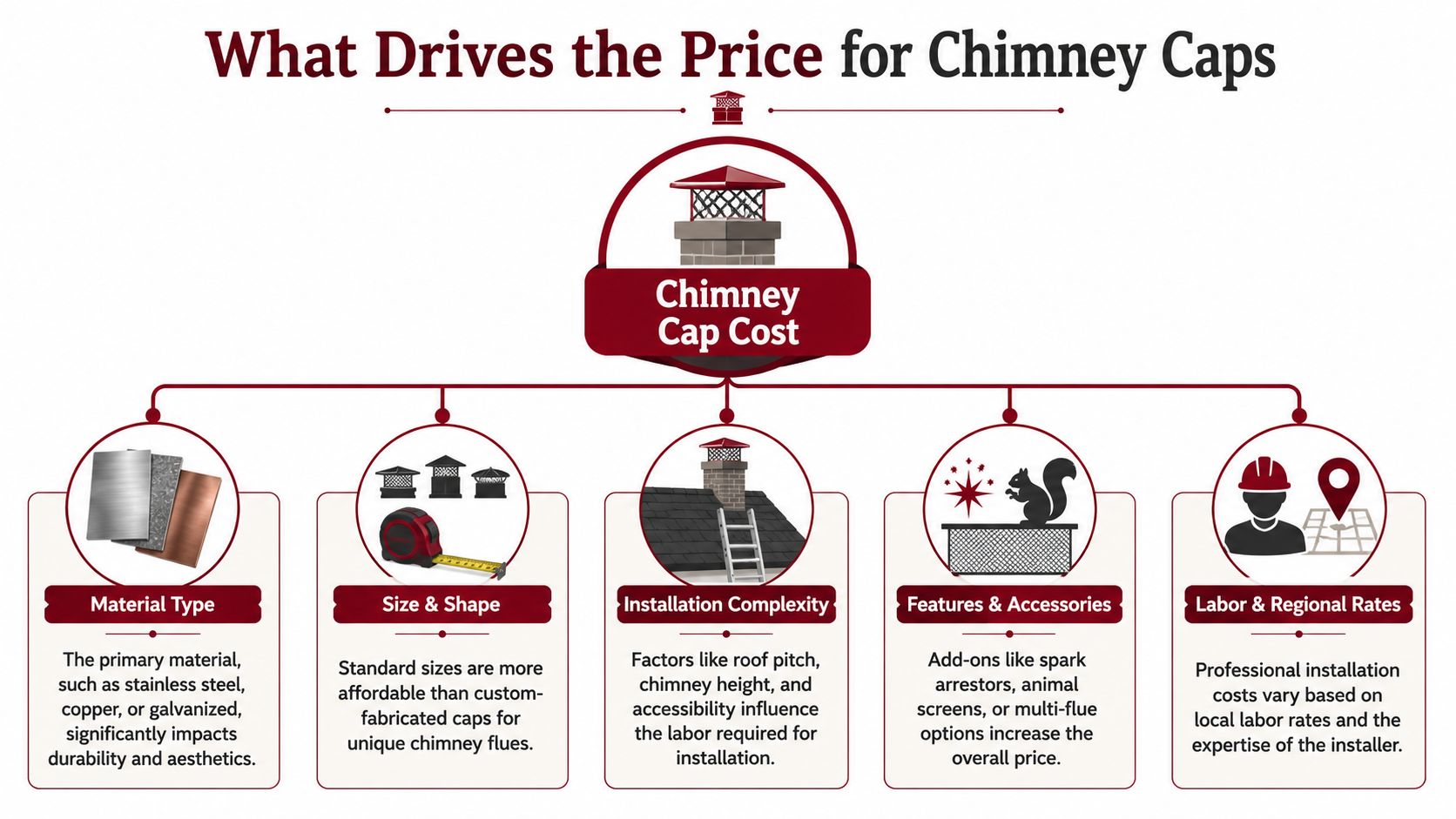
A chimney cap estimate usually comes down to four things. Material, size, roof access, and the condition of the chimney top all affect the final price.
Material has the biggest effect on long-term cost
The cap itself can be relatively affordable, but the wrong metal for a wet climate often costs more over time. Around Western Washington, I usually tell homeowners to look past the lowest number on the estimate. A cheaper cap that rusts early or loosens after a few seasons can lead to another service call, water entry, and repairs around the chimney.
Galvanized steel usually starts lower. Stainless steel costs more upfront but tends to make better sense in our damp weather because it resists corrosion better. Copper is usually the premium choice, and some homeowners choose it for both longevity and appearance.
Size and chimney design change the fabrication work
A standard single-flue chimney is usually the simplest job. Once you get into multi-flue caps, wider chimney tops, or unusual crown shapes, the work often shifts from ordering a common size to building or modifying a cap for that chimney.
Custom fabrication raises cost for a simple reason. It takes more measuring, more shop work, and more care during installation. If the cap does not match the chimney correctly, water can still find its way in around the top, which defeats the purpose of the work.
Labor depends on roof access and weather conditions
Labor can make up a large share of the total bill, especially on taller homes or steeper roofs. A low chimney on a walkable roof is a very different job than a cap replacement on a slick roof in November.
In Western Washington, weather affects scheduling and safety more than homeowners expect. Wet shingles, moss, limited ladder placement, and chimney height all add time. That does not just change the installation price. It also affects the total cost of ownership, because a careful installation is what helps the cap stay secure through storm season.
The chimney top and flashing condition matter
Sometimes the cap is not the only issue. If the crown is cracked, the top course of brick is deteriorating, or the metal around the chimney is failing, those problems need attention at the same time or the new cap will only solve part of the water problem.
The area where the chimney meets the roof deserves a close look too. If you want a clearer picture of how water is managed there, these common flashing types for roofing show why chimney work and roof waterproofing often go hand in hand.
For many homeowners here, the smart buy is the cap that lasts in a rainy climate and protects the roof system around it, not the one with the smallest upfront price.
Comparing Chimney Cap Materials and Their Costs
A chimney cap that looks affordable on paper can turn into the expensive option after a few Western Washington winters. Around here, steady rain, damp air, fir needles, and long stretches of shade put metal through a tougher test than homeowners expect.
Material choice decides how often you deal with rust, loose screens, staining, or early replacement. It also affects whether water stays out of the chimney and away from the roofing materials around it. That is the part many people miss when they only compare the price tag.
Galvanized steel
Galvanized steel usually has the lowest upfront cost. It can work for homeowners who need a basic replacement and are trying to keep spending down right now.
The trade-off is service life in a wet climate. Once the protective coating starts to wear, rust becomes the concern. In Western Washington, that often means galvanized caps make more sense as a shorter-term fix than a long-term one.
Best fit: Budget-focused replacement on a chimney that is otherwise in good shape, especially if the homeowner may plan a broader chimney or roof update later.
Stainless steel
Stainless steel is the material I recommend most often for homes in our area. It costs more up front than galvanized, but it usually holds up better through constant moisture, wind-driven rain, and debris from nearby trees.
For many homeowners, such an investment proves most cost-effective over time. You spend more once, then avoid replacing a rusted cap early or dealing with water trouble that spreads to the chimney chase, masonry, or roof area nearby.
Best fit: Homeowners who want a strong balance of price, durability, and low maintenance.
Copper
Copper sits at the high end of the price range. Homeowners usually choose it for appearance, long life, or to match other visible metal details on the house.
It resists corrosion well, which matters in our climate. The question is whether the added cost matches your priorities. On a higher-end home or a house you plan to keep for many years, copper can make sense. On a simple replacement where function matters more than appearance, stainless steel is often the better value.
Best fit: Long-term owners, custom homes, and homes where curb appeal carries real value.
Chimney Cap Material Cost Comparison
| Material | Typical Cost Level | Best For |
|---|---|---|
| Galvanized steel | Lower | Lower upfront cost |
| Stainless steel | Mid-range | Long-term value in wet climates |
| Copper | Higher | Premium appearance and long service life |
Which material usually saves the most money over time?
In Western Washington, stainless steel is often the safest bet for total cost of ownership. It is usually affordable enough for most replacement projects, and it stands up well to the moisture that causes cheaper caps to fail early.
Galvanized steel can still be the right call in a tight-budget situation. Homeowners use the same approach on smaller exterior projects too, including simple upgrades like DIY fence post cap ideas. The difference is that a failed chimney cap can lead to water getting into parts of the home that cost far more to repair.
If you are already comparing how different metals perform in wet weather, this page on metal roofing materials for rainy Western Washington homes is worth a look. The same rule applies in both places. Paying for the right metal once is usually cheaper than repairing moisture damage later.
DIY vs Professional Chimney Cap Installation
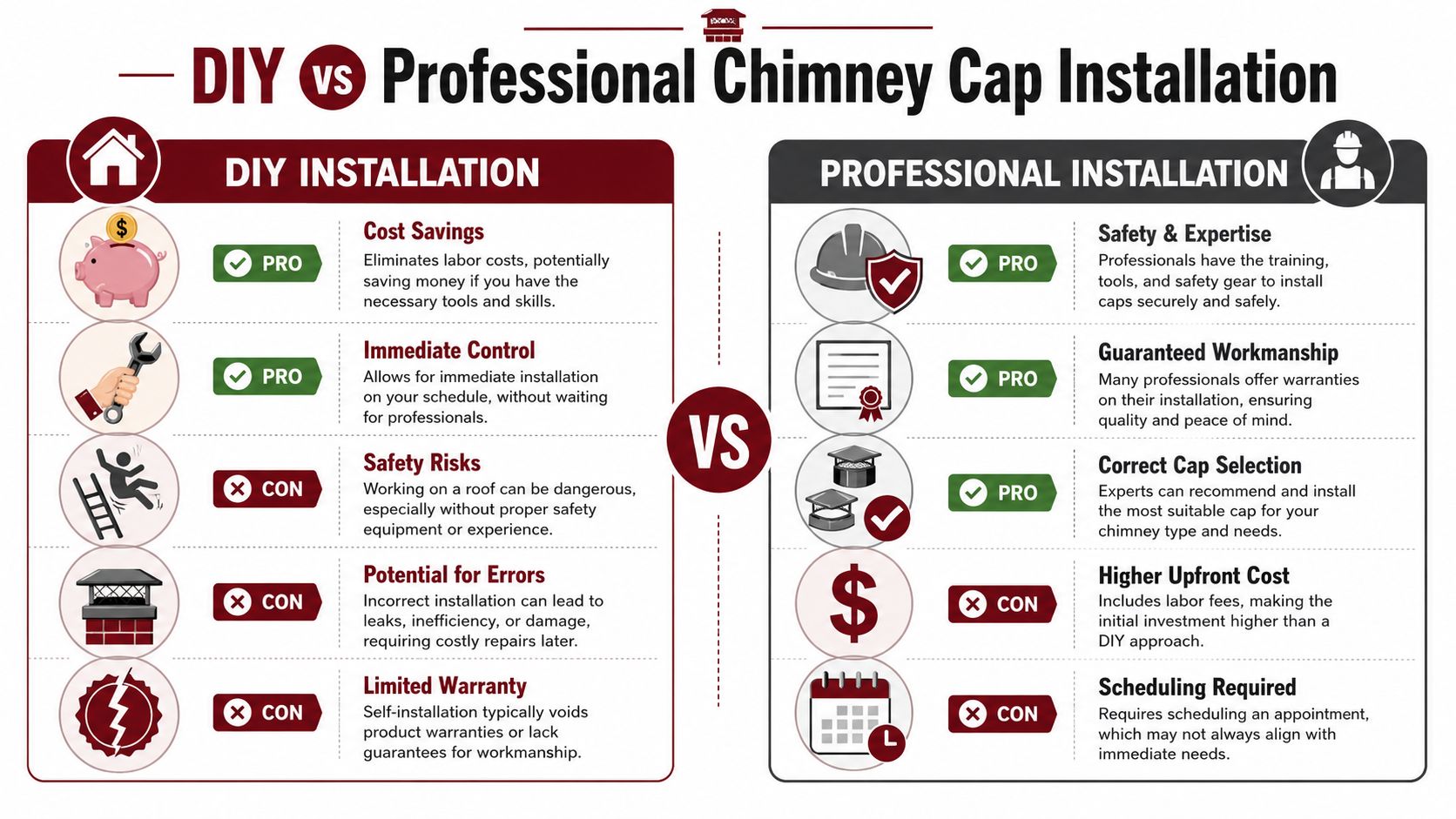
Many homeowners are handy. That doesn't make chimney cap installation a good weekend project.
The issue isn't just attaching metal to the top of a chimney. The issue is roof safety, proper sizing, secure fastening, and making sure the cap helps prevent leaks instead of becoming the next problem.
Why homeowners consider DIY
The biggest reason is cost. Labor can make up about 50% of the total chimney cap cost, and labor alone may run $100 to $200 for a simple single-story installation or $500 to $1,500 for more complex work on steep roofs, according to Chimcare's chimney cap installation cost guide.
On paper, skipping labor sounds appealing.
For decorative cap projects at ground level, homeowners often enjoy simple ideas like these DIY fence post cap ideas. A chimney is different because the work happens high above the ground and directly affects weather protection.
What goes wrong with DIY chimney cap installs
The most common problems are easy to understand:
- Wrong size: A cap that doesn't match the flue or chimney top won't protect well.
- Weak attachment: In windy weather, a poorly secured cap can loosen or come off.
- Unsafe roof access: Wet roofs in Western Washington are slippery even for trained crews.
- Missed leak issues: A homeowner may replace the cap but overlook flashing or masonry problems nearby.
A missing or loose cap can also send mixed signals. The homeowner thinks the cap solved the issue, but rain may still be entering around the chimney base.
If a homeowner has to ask whether the roof is safe to get on, it usually isn't.
Safe homeowner steps
There are still useful things a homeowner can do without climbing up:
- Look from the ground: Use binoculars to check whether the cap looks tilted, rusted, or missing.
- Watch for indoor clues: Damp smells, stains, and debris in the fireplace all matter.
- Take photos from safe areas: Upper windows sometimes offer a better view.
- Write down roof conditions: Steep slope, moss, and tall chimney height all affect quote accuracy.
Professional installation usually makes the most sense when the goal is long-term leak prevention, not just getting a cap in place.
Your Local Chimney Protection Experts in Western Washington
For homeowners who don't want to guess, a roof-focused inspection is usually the most practical next step. Chimney cap issues often overlap with flashing wear, roof aging, or water entry paths that aren't visible from the ground.
At Four Seasons Roofing, the certified team handles this type of roof and chimney issue across the Seattle area as part of broader leak prevention and roof protection work. The process starts with a close look at the chimney area, the surrounding roofing, and the signs the homeowner is already seeing inside or outside the home.
What homeowners usually need from the process
Customers aren't looking for a lesson in metal fabrication. They want clear answers.
That usually means:
- A real diagnosis: Is the problem the cap, the flashing, or both?
- A material recommendation: What suits the home's budget and exposure to rain?
- A safe installation plan: Especially for steep roofs or hard-to-access chimneys
- Confidence in the work: So the homeowner isn't worrying through the next storm
In neighborhoods near the water, like Burien or Shoreline, exterior metal can take a beating from damp air over time. In wooded areas farther inland, moss and shade keep surfaces wet longer. Those local conditions can change what material makes the most sense.
Frequently Asked Questions About Chimney Caps
How does a homeowner know what size chimney cap is needed
The right size depends on the flue opening or the full chimney top, depending on the style of cap. A professional usually confirms measurements on site because small sizing mistakes can lead to poor fit, weak attachment, or gaps that still let water in.
Can a chimney cap really keep animals out
Yes, a properly fitted cap with screening can help keep out birds, squirrels, raccoons, and nesting debris. It won't solve an active animal problem by itself if something is already inside, but it's an important step in preventing repeat entry.
Will a chimney cap stop leaks
It can help stop leaks caused by water entering through the top of the chimney. It won't fix every chimney leak, though. Water can also get in through worn flashing, damaged masonry, or failed seal points where the chimney meets the roof.
Is stainless steel worth the extra cost
For many homeowners in Western Washington, yes. Stainless steel usually makes sense when the goal is dependable rain protection without stepping up to copper pricing. It's often the most balanced choice for long-term value in a damp climate.
Does a more expensive chimney cap save money over time
Often, yes, if the higher-priced cap lasts longer and helps avoid water damage. The cheapest option can become expensive if it rusts early, loosens, or allows moisture into roofing materials around the chimney.
What can a homeowner do before asking for a quote
A few simple steps make the quote more useful:
- Note the symptoms: Water stains, fireplace odor, debris, or animal sounds
- Take safe photos: Ground-level and window views can help
- Describe the roof: Mention whether it's steep, mossy, or hard to access
- Ask about materials: Especially if the home gets a lot of shade or wind-driven rain
- Bring up past leak history: Even if the leak seemed minor
When should a homeowner call a roofing professional instead of waiting
A call makes sense when there's visible rust, a missing cap, signs of water near the chimney, or any concern about roof safety. In Western Washington, waiting through another rainy stretch can give water more time to move into surrounding roof materials.
Is chimney cap work really a roofing issue
It often is. The cap protects the chimney opening, but roofers also look at the parts around it that handle water shedding. If the area where the chimney meets the roof is vulnerable, the homeowner may need more than a simple cap swap.
If a homeowner is worried about the price for chimney caps and wants to avoid bigger water problems later, the smartest next step is a professional roof and chimney assessment. A visit from Four Seasons Roofing can help confirm what's going on, what kind of cap fits the home, and whether the surrounding roof area also needs attention before Western Washington rain makes the damage worse.