
A full roof replacement usually starts around $4 to $11 per square foot nationally, but in Washington many homeowners will see real installed pricing land anywhere from about $5 to over $25 per square foot depending on material and project details. That’s the honest starting point.
When a homeowner in Western Washington spots a ceiling stain after a long rainy stretch, or looks up at a moss-covered roof and wonders how much longer it has, the first question is almost always the same. What’s this going to cost?
That’s where roof cost per square foot comes in. It’s useful, but it’s not the whole story. A simple number on a website won’t tell a homeowner whether the quote includes tear-off, disposal, underlayment, ventilation work, or repairs hidden under old roofing.
Homes in places like Redmond, Sammamish, Shoreline, and Burien deal with the same wet pattern over and over. Long damp seasons, tree cover, moss, and older roofing layers can all push a quote up. That doesn’t mean a bid is padded. It usually means the roof needs more than just new shingles on top.
Your Guide to Understanding Roof Replacement Costs
A lot of roof replacements in Washington start the same way. You hear steady rain for a week, notice a stain spreading on the ceiling, and realize the old roof you meant to deal with last summer is now a budget decision.
Roof cost per square foot is a useful starting number. It helps you ballpark the job before you call for estimates. But homeowners get in trouble when they treat that number like a final price, because a roof quote in Western Washington is shaped by much more than the shingle you pick.
Practical rule: Use cost per square foot to set a rough budget. Use the full estimate to understand what your home actually needs.
Around here, the hidden costs are rarely random. They come from wet-climate problems that show up again and again. Moss holds moisture against the roof. Older homes may have cedar shake under later roofing layers. Attics often need better airflow so the new roof can dry properly between storms. If a bid includes tear-off, disposal, new underlayment, flashing work, ventilation upgrades, and repairs to damaged decking, that is not fluff. That is the work that protects the house.
A simple way to stay grounded is to learn how roofers measure the job in the first place. This quick guide to the dimensions of a roofing square makes the estimate language much easier to follow.
A simple answer homeowners can use
For a Western Washington home, treat any online roof price as a range. The low end usually reflects a straightforward asphalt job on a simple roof. The high end usually reflects real-world complications, especially on older homes or roofs that have spent years under trees and constant moisture.
If two quotes are far apart, do not assume one contractor is overcharging. First, check what each bid includes. One may be pricing a basic reroof. The other may be pricing the tear-off, cleanup, ventilation, and waterproofing details your home needs.
What this means for a Washington home
In the Pacific Northwest, a roof is not just a surface layer. It is a rain management system.
If your home has heavy shade, signs of moss, an old cedar shake tear-off, or moisture trouble in the attic, expect the price to rise. That extra work usually buys you better protection, a longer service life, and fewer ugly surprises after the next long stretch of rain.
What Roof Cost Per Square Foot Actually Means
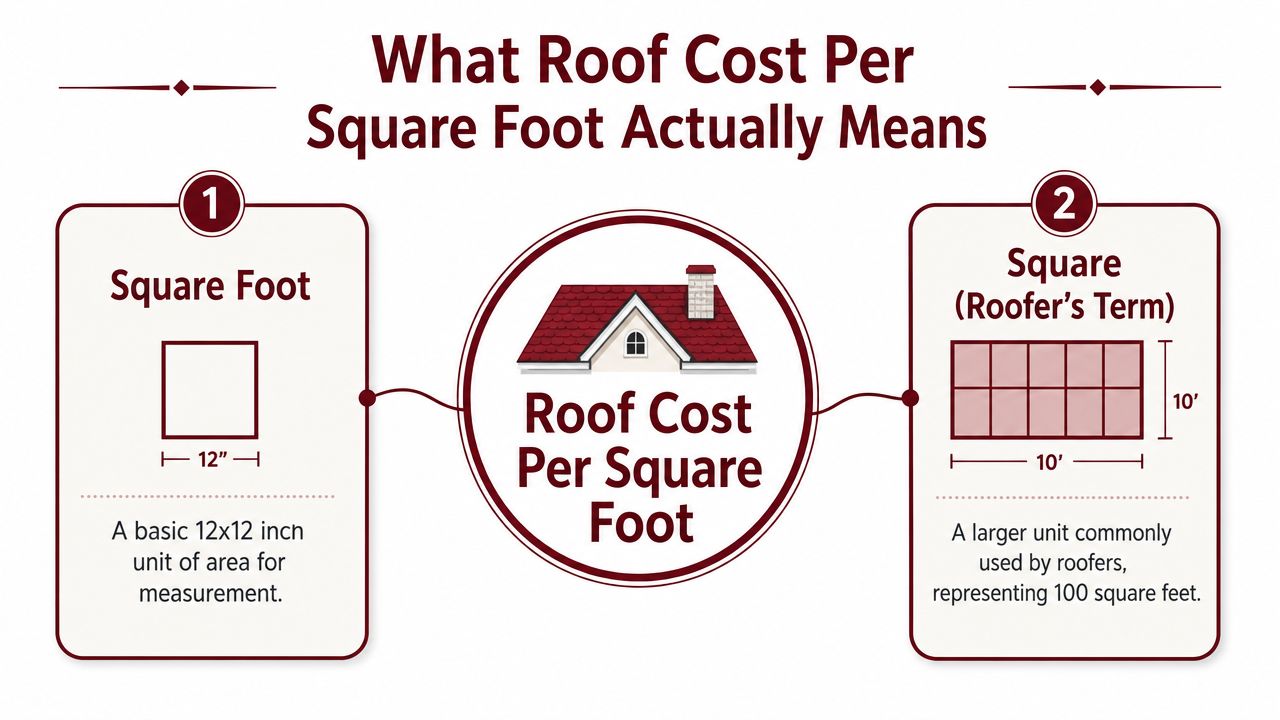
A square foot is simple. It’s just a 12-by-12-inch area. But roofers often use a different term that confuses homeowners. They talk in squares.
A roofing square means 100 square feet. Roofing has been sold that way for a long time, and many estimates still use that language. A homeowner might hear “20 squares” and think it sounds huge, when it really just means 2,000 square feet of roof area.
Why roofers still use squares
Roof materials are commonly ordered and priced by the square because it matches how roofing crews estimate labor and material quantities. Homeowners who want a cleaner explanation can review this plain-English guide to dimensions of a roofing square.
That old unit still matters today because labor and disposal are often tied to the square, not just to loose square-foot math. Roofing is historically sold per square, and labor alone can run $150 to $300 per square, as explained in Polyglass guidance on roof replacement costs.
Why the same price can mean different things
Homeowners often get tripped up at this point.
One contractor may say the roof costs a certain amount per square foot, but that number might include tear-off and disposal. Another may quote a similar number and leave those items out until later. Both numbers sound close. The final bills won’t be.
A roof estimate is more like buying carpet for an oddly shaped room than buying paint off a shelf. The unit price matters, but so do:
- Labor scope: Is the crew removing old roofing first, or installing over existing layers?
- Prep work: Does the estimate include new underlayment, flashing, and cleanup?
- Access: Is the roof easy to reach, or is it steep and difficult to work on?
A low teaser price doesn’t protect a home. A complete installed price does.
For a homeowner, the smart move is to compare the whole installed system, not just the top-line square-foot number. That’s what reveals whether two quotes are comparable.
Typical Washington Roof Costs by Material Type
Material choice changes everything. It affects the price on installation day, how the roof handles wet weather, and how soon the homeowner may be dealing with replacement again.
Installed asphalt shingles average about $3.40 to $5.95 per square foot, while metal roofing ranges from about $6.00 to $24.50 per square foot, based on Roofing Calculator’s material cost benchmarks. That spread is wide for a reason. Different materials require different installation methods, details, and labor.
For broader comparisons between common roof types, this homeowner-friendly look at Home Project Services’ roof cost guide can help frame the tradeoffs in simple terms.
Washington State roof cost per square foot by material
Homeowners comparing options may also want a side-by-side look at roofing materials comparison for how common systems differ in appearance, upkeep, and fit for local weather.
| Roofing Material | Average Installed Cost / Sq. Ft. | Typical Lifespan (WA Climate) |
|---|---|---|
| Asphalt shingles | $3.40 to $5.95 | 20 to 25 years |
| Metal roofing | $6.00 to $24.50 | 40 to 75 years |
| Tile roofing | $6.30 to $12.30 | qualitative only, long-lasting |
| Wood shakes or shingles | $6.00 to $9.15 | qualitative only |
| Slate roofing | $23.49 to $31.77 | 50 to 100+ years |
Asphalt shingles
Asphalt is the practical choice for many Washington homeowners. It has the lowest installed range of the most common materials, and it fits a lot of homes from Seattle neighborhoods to Snohomish County subdivisions.
For someone trying to control upfront cost, asphalt usually makes the most sense. But it's still important to ask what's included in the bid. Cheap asphalt isn't a bargain if the contractor cuts corners on the layers underneath.
Metal roofing
Metal costs more up front. There's no way around that. But for a homeowner planning to stay put, metal can make a lot of financial sense because it typically lasts much longer than asphalt.
In Western Washington, that durability matters. Constant rain exposure, debris, and moss-prone conditions can make a long-lasting roof appealing, especially on homes that are hard to reroof or expensive to access.
Tile, wood, and slate
These materials aren't right for every house. They can look beautiful, but they bring very different costs and structural demands.
A homeowner should treat them as specialty choices, not default options. The more premium the material, the more important it becomes to price the whole job carefully, including all the hidden details that protect the home in wet weather.
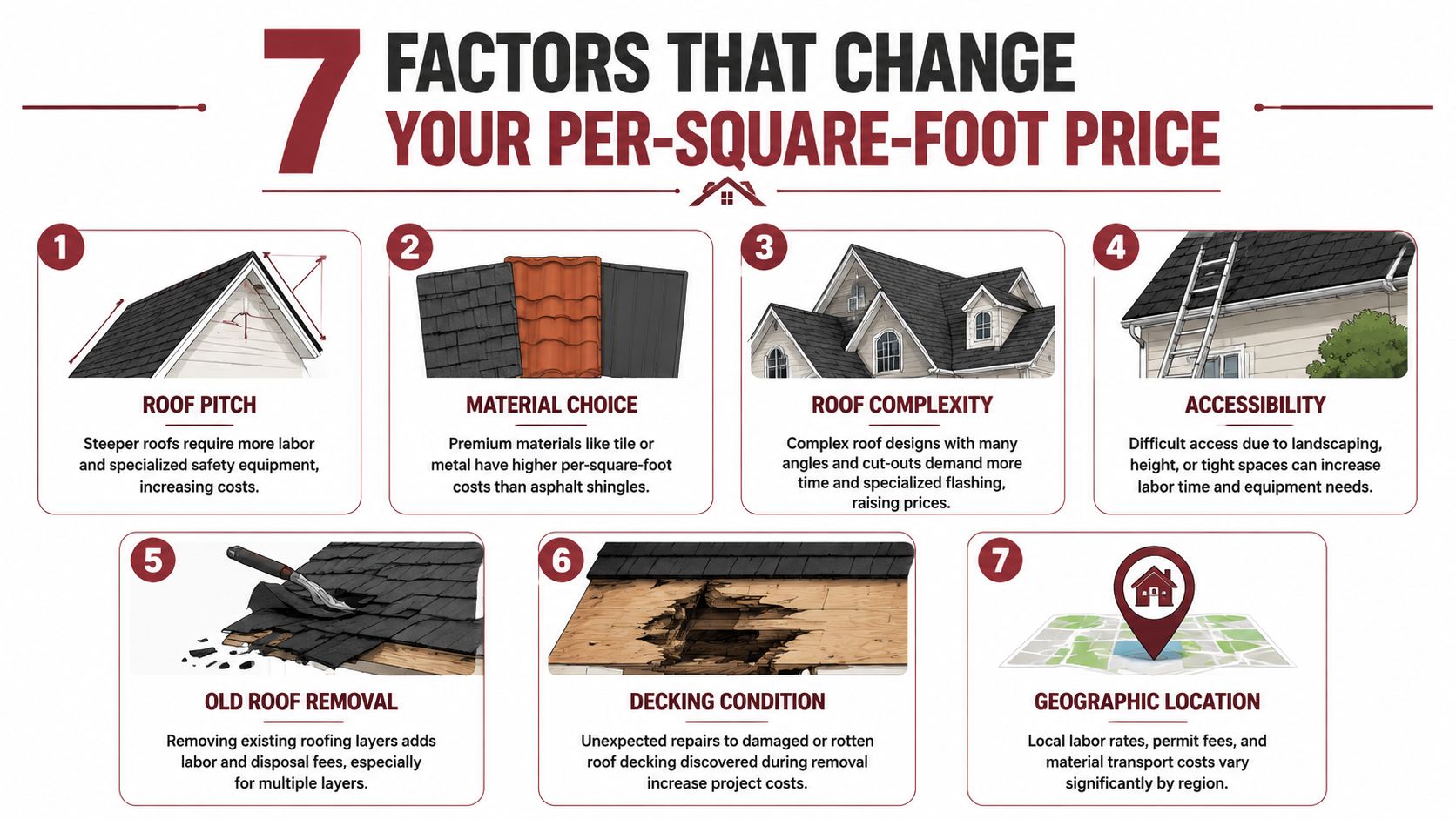
7 Factors That Change Your Per-Square-Foot Price
The national average is only the opening number. Real bids move up or down based on what the crew finds and what the roof needs.
That's especially true in Western Washington. Older homes, wet seasons, and roofs under heavy tree cover often need more prep than homeowners expect.
Roof pitch and roof shape
A steep roof costs more to replace because the crew needs more time, more safety setup, and more careful movement on the surface. Complex roofs with valleys, skylights, chimneys, or lots of ridges also take longer.
For the homeowner, this means a bigger house isn't always the most expensive house. A smaller roof with lots of angles can cost more per square foot than a simple rambler.
Tear-off of old roofing
A full tear-off adds labor, hauling, and disposal. In older Washington neighborhoods, some homes still have previous layers or old cedar-based roofing systems underneath newer materials. That adds effort before the new roof even starts.
A low quote that skips clear tear-off details should raise questions. Hidden old material often becomes visible only after work begins, and that's when change orders show up.
Underlayment and water barrier layers
Underlayment is the protective layer under the visible roofing. It matters a lot in a wet climate.
Replacing underlayment can add about $1 to $3 per square foot, according to Roof Maxx guidance on replacement cost components. That's why homeowners shouldn't compare bids based only on the visible roof covering.
The part of the roof a homeowner can't see often decides how well the home stays dry.
Decking repairs
Once old roofing comes off, damaged wood may appear underneath. If the decking is soft, rotted, or water-stained, it has to be repaired before the new roof goes on.
This isn't a “nice to have” item. It's basic protection. Installing a new roof over weak decking just hides the problem for a little while.
Ventilation
Ventilation sounds technical, but the homeowner impact is simple. Moist air needs a way out. If it gets trapped, it can contribute to moisture trouble and shorten the life of the roof.
In the Pacific Northwest, proper ventilation is tied directly to keeping the roof assembly drier over time. That's why a thorough estimate should account for whether the roof and attic are venting correctly.
Access to the home
Some homes are easy to work on. Others aren't. Tight driveways, landscaping, limited staging space, multi-story layouts, and delicate surroundings can all affect labor time.
Homes near the water in places like Shoreline or Burien can also have more exterior wear from damp, salty air, which sometimes means more careful prep and replacement work.
Permits and code-related work
Permits, flashing details, and code-driven improvements can change the total. These aren't glamorous parts of the quote, but they matter.
A roof isn't just there to look neat from the street. It has to shed water properly and protect the house for years. In Western Washington, skipping the boring parts is what creates the expensive problems later.
Sample Roof Cost Calculations for Seattle-Area Homes
You are standing in your driveway in Seattle, looking up at a roof that has handled years of rain, moss, and wet winters. The question is simple. What will it cost to replace? The honest answer starts with the house in front of you, not a national average pulled from somewhere else.
A rough online price can help with budgeting, but Washington roofs often run differently because our climate exposes problems that stay hidden until the old roof comes off. Old cedar shake tear-offs, moisture wear around penetrations, and ventilation corrections can change the number fast. That is why homeowners should start by learning how to measure roof square footage and then compare that size against real local conditions.
Example one, single-story rambler in Burien
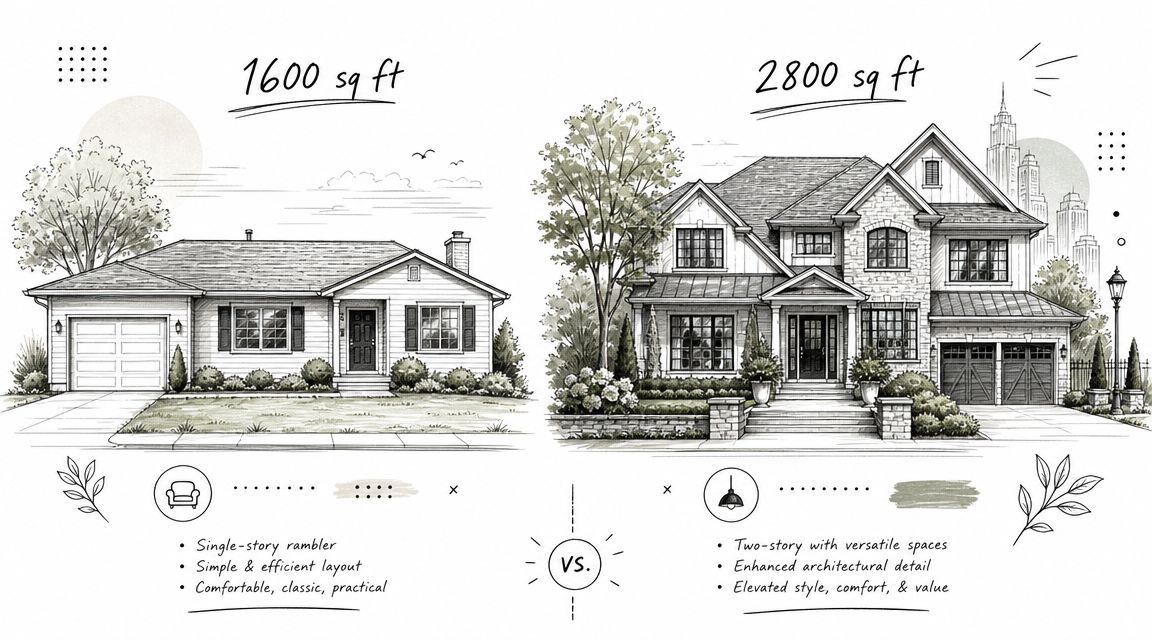
A basic rambler is usually the easiest place to start. One story means simpler setup, faster material movement, and less labor pressure than a tall, steep house. If the roof layout is straightforward and the existing system comes off cleanly, the per-square-foot cost often stays closer to the lower end of local ranges.
Western Washington roofs rarely stay that simple for long.
If that Burien home has thick moss at the shaded edges, old layers that need a full tear-off, or leftover cedar shake beneath newer roofing, the price moves up for good reason. Those are common local surprises, and they affect labor, disposal, and the amount of prep needed before the new roof goes on. A solid quote should account for that instead of pretending every rambler is a clean, quick job.
Example two, two-story home in Bellevue
Now take a larger two-story home in Bellevue with a steeper pitch, valleys, dormers, and a few skylights. The footprint might not look outrageous from the street, but the roof can still cost much more per square foot because the crew needs more time, more staging, and more careful installation on every detail that handles water.
That matters even more in the Pacific Northwest. Complex rooflines create more places for water to test the workmanship. On homes like this, the cheaper bid often leaves out the very things that keep the house dry year after year.
Homeowners should also slow down and verify who they hire before signing anything. A large roofing job means workers, materials, and payment schedules all hitting your property at once, so take basic steps to protect your property from risky contractors.
The takeaway is simple. A roof quote is never just square footage times a flat rate. In Seattle-area neighborhoods, the final cost comes from roof shape, height, tear-off conditions, and how much wet-climate correction the house needs to stay protected.
Beyond the Initial Price The Value of a Long-Lasting Roof
The cheapest roof on bid day isn't always the cheapest roof over time. That's the mistake many homeowners make.
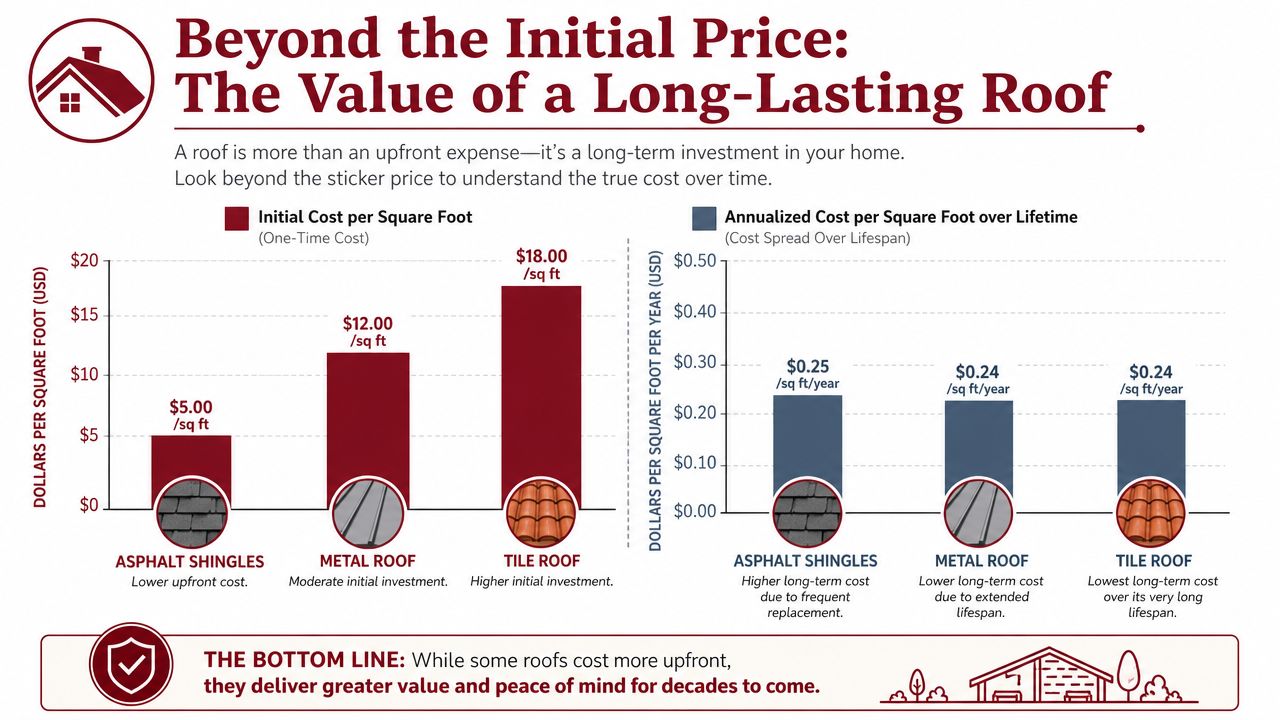
Asphalt shingles usually last about 20 to 25 years, while metal can last about 40 to 75 years and slate about 50 to 100+ years, based on Rabbit Roofing's lifespan and cost comparison. For a homeowner planning to stay in the house, lifespan matters just as much as installation price.
Looking past the lowest bid
If a homeowner may need to replace asphalt once and a longer-lasting roof only once over a much longer window, the more expensive roof can be financially reasonable. That's especially true when repeated tear-offs, disposal, and disruption are part of the long-term picture.
This is also where contractor screening matters. Before signing a major agreement, homeowners should protect your property from risky contractors by doing basic due diligence and checking who they're hiring.
A good roof is a protection decision
At Four Seasons Roofing, the certified team handles roof replacement, repairs, inspections, and planning support for homeowners across the Seattle area, including help with complimentary inspections and a roof cost calculator for early budgeting.
For a homeowner in the Pacific Northwest, the goal isn't chasing the lowest square-foot number. It's getting a roof that holds up through long rainy stretches without creating new problems underneath.
Your Roofing Cost Questions Answered
How can a homeowner get an accurate roof estimate without pressure?
The easiest first step is a professional inspection and a written estimate that spells out what's included. Homeowners should ask whether the bid includes tear-off, disposal, underlayment, flashing, and any possible wood repair allowances. That keeps surprises down.
Is it cheaper to repair a roof or replace it?
It depends on the roof's condition. If the issue is isolated, a repair may make sense. If the roof is aging, leaking in multiple areas, or showing widespread wear, replacement is usually the smarter long-term decision.
Does insurance help pay for roof replacement?
Sometimes. Insurance may help when damage comes from a covered event, such as a storm-related problem. It usually won't cover normal aging or deferred maintenance, so a homeowner should review their policy and have the damage inspected promptly.
How long does a typical roof replacement take?
Timing depends on size, material, weather, and complexity. A straightforward residential project can move quickly, while a steep or complicated roof may take longer. In Western Washington, weather timing also matters more than many homeowners expect.
What can a homeowner safely do before calling a roofer?
They can look from the ground for missing shingles, moss buildup, sagging areas, or debris in gutters. Inside the home, they can note ceiling stains, musty smells, or damp attic spots. They should not climb on the roof.
How does a homeowner know if a quote is missing important items?
If the estimate looks unusually low, the homeowner should ask direct questions. Does it include tear-off? Underlayment? Disposal? Flashing? Ventilation review? A vague quote is where most roofing cost problems start.
If a homeowner is trying to make sense of roof cost per square foot and wants a quote that matches real conditions on the roof, Four Seasons Roofing is a practical next step. A clear inspection and a detailed estimate can show what's happening, what it means for the home, and what it will take to protect it through another Western Washington rainy season.
Suggested internal link opportunities: