
Your roof does much more than just keep the rain out. It is the first and most important line of defense for your entire home. When it is time for a replacement, you will encounter options like classic asphalt shingles, durable metal roofing, timeless clay or slate tiles, and a host of modern composite alternatives. Selecting the right one is a significant decision, affecting everything from your home’s curb appeal to its long-term structural health.
Choosing the Right Shield for Your Home
Consider this less a simple purchase and more a long-term investment in your home’s safety, value, and your own peace of mind. The material you choose will be what stands between your family and whatever the Pacific Northwest weather decides to throw at it for decades. With the average roof replacement cost around $9,526, getting it right the first time saves a great deal of stress and money down the road.
This guide is designed to help you understand the most common roofing options available today. We will walk through the key factors you need to weigh for each one.
Key Factors in Your Decision
First is durability. Some materials, like standard asphalt shingles, might provide about 20 years of service. Others, such as slate or copper, can literally last a century or more. Your choice here directly impacts how soon you will be thinking about this major project all over again.
Next is the balance between upfront cost and lifetime value. A cheaper roof might seem like a win today, but it could lead to more repairs or a full replacement much sooner than you would like. This is especially true here in the Puget Sound, where our relentless rain and tendency to grow moss will put any roof to the test.
Finally, it’s about finding a material that complements your home’s architectural style and aligns with what matters most to you.
Your roof is one of the most significant architectural features of your home. The right material not only provides protection but also completes your home’s aesthetic, potentially increasing its resale value significantly.
Let’s break down the most popular roofing materials so you can choose with confidence, knowing you are making a sound, lasting investment.
Asphalt Shingles: The Versatile Standard
When you picture a typical American home, you are likely envisioning a roof covered in asphalt shingles. There is a good reason for that—they are by far the most common roofing material, used in an estimated 80% of residential projects. Their popularity is not an accident; it is built on a solid foundation of affordability, a wide array of styles, and a straightforward installation process that roofers know well.
The secret to an asphalt shingle’s effectiveness is its simple construction. It begins with a fiberglass mat that provides strength and structure. That mat is then saturated with waterproof asphalt. To finish, a layer of mineral granules is pressed into the surface, which gives the shingle its color and, more importantly, protects it from the sun’s harsh UV rays. This basic formula has been protecting homes for decades, and it works.
Understanding the Tiers of Asphalt Shingles
Not all asphalt shingles are created equal. You will generally find them broken down into three distinct categories, creating a “good, better, best” lineup for homeowners to choose from.
- 3-Tab Shingles: These are the entry-level option. They are made from a single, flat layer, giving them a very uniform, clean look. While they get the job done, they have the shortest lifespan of the bunch, typically around 15-20 years.
- Dimensional (Architectural) Shingles: This is what you see on most new roofs today, and for good reason. These are thicker shingles made from multiple laminated layers. This construction gives them a wonderful, textured look that can mimic natural wood shakes, which is a huge boost for curb appeal. They also offer much better durability, higher wind resistance, and a longer lifespan of 30-50 years.
- Luxury Shingles: Sitting at the top of the pyramid, luxury shingles are the heaviest and most durable of the asphalt family. Their primary purpose is to replicate the high-end appearance of natural slate or cedar shakes without the hefty price tag and structural weight requirements.
The Pros and Cons of Asphalt Roofing
Choosing the right material always means looking at both sides of the coin. If you want to dive deeper, you might be interested in our closer look at asphalt shingles.
Asphalt shingles are the baseline in the roofing industry. Because they are so common and their performance is so well-understood, they have become the standard against which all other materials are measured for cost, longevity, and style.
Their market dominance is no fluke. The global roofing market, estimated at around USD 145 billion in the mid-2020s, is heavily driven by asphalt products. This is largely due to their low upfront cost and the regular replacement cycle they create in residential construction.
However, they are not perfect. Their shorter lifespan compared to materials like metal or tile means you will likely be looking at a replacement sooner. And here in the damp Puget Sound climate, they can be prone to moss and algae growth if you do not stay on top of maintenance. That green growth is not just an eyesore; it can erode the protective granules and shorten your roof’s life.
Metal Roofing: The Durable and Modern Choice
Not too long ago, metal roofing was something you would only see on barns or commercial buildings. That has all changed. Today, metal has become a sleek, modern, and incredibly durable choice for homes across the Puget Sound, blending high-performance engineering with a surprisingly sophisticated look.
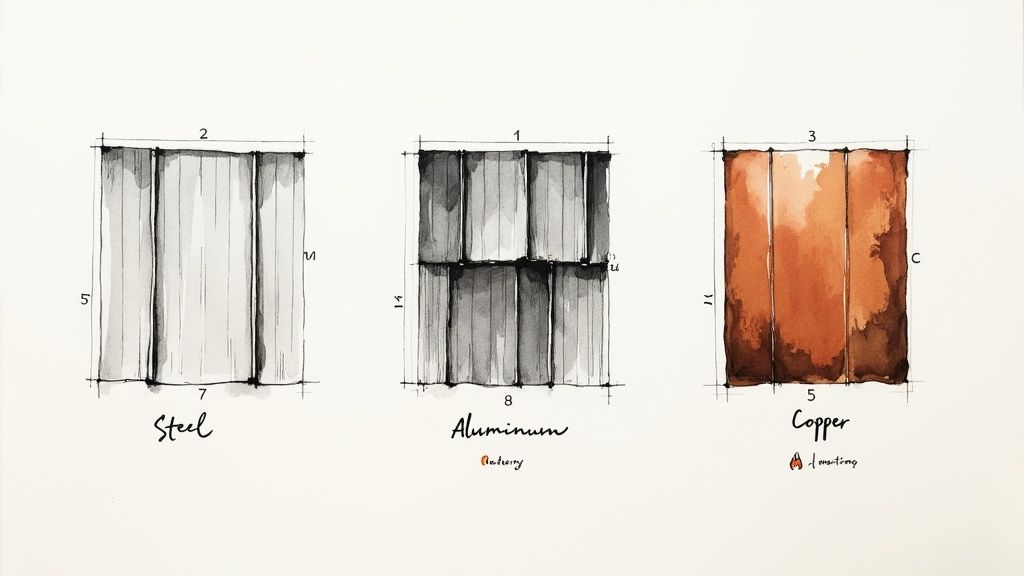
When most people picture a metal roof, they are thinking of the clean, bold lines of a standing-seam metal roof. This style uses vertical panels with fasteners that are completely hidden, creating a minimalist aesthetic that works just as well on contemporary homes as it does on traditional ones.
But the options do not stop there. Metal can also be stamped and shaped to look just like other materials. You can get metal shakes and tiles that give you the classic beauty of wood or clay, but with the unbeatable strength and longevity of steel or aluminum. It is a clever way to get a specific look without sacrificing performance.
Understanding Metal Material Options
The term “metal roof” actually covers a few different materials, and each one has its own characteristics. For residential projects, it usually comes down to three main choices: steel, aluminum, and copper. Knowing the difference is key to picking the right one for your home.
- Steel: This is the workhorse of the metal roofing world—the most common and budget-friendly option. Modern steel panels are coated with zinc (galvanized) or an aluminum-zinc alloy (Galvalume) to prevent rust and corrosion.
- Aluminum: Lighter than steel and naturally rust-proof, aluminum is a fantastic choice for homes near the water, where salt spray is a constant concern. It is also highly recyclable, which is a big plus for eco-conscious homeowners.
- Copper: As the premium choice, copper is prized for its stunning looks and incredible lifespan. It starts with a bright, metallic shine and slowly develops its iconic blue-green patina over the years, creating a truly timeless and elegant roof.
A metal roof is best thought of as a lifetime investment. While the upfront cost is higher than asphalt, its lifespan of 40 to 70 years often means you will never have to re-roof your home again. That is where the real value lies.
This incredible durability is a big reason why metal roofing is gaining so much traction. As homeowners look for more resilient materials that can stand up to anything, metal systems are becoming the go-to for their fire resistance, longevity, and energy efficiency.
Debunking Common Metal Roofing Myths
For all its advantages, a few old myths about metal roofing persist. The biggest one? The noise. People imagine a deafening roar every time it rains.
The truth is, modern installation has completely solved that problem. When a metal roof is installed over solid sheathing with the proper underlayment, it is no louder than any other type of roof. The days of hearing every single raindrop are long gone.
Another huge benefit is energy efficiency. Many metal roofing products come with “cool-roof” finishes that reflect the sun’s heat, which can help lower your cooling bills in the summer. To learn more about these benefits, check out our ultimate guide to metal roofs.
Tile and Slate Roofing: Timeless Beauty and Unmatched Longevity
When you are looking for a roof that will outlast trends and perhaps even the house itself, tile and slate are in a league of their own. These are not just roofing materials; they are architectural statements. Choosing tile or slate is about investing in timeless beauty and a lifespan that can be measured in generations, connecting your home to centuries of building tradition.
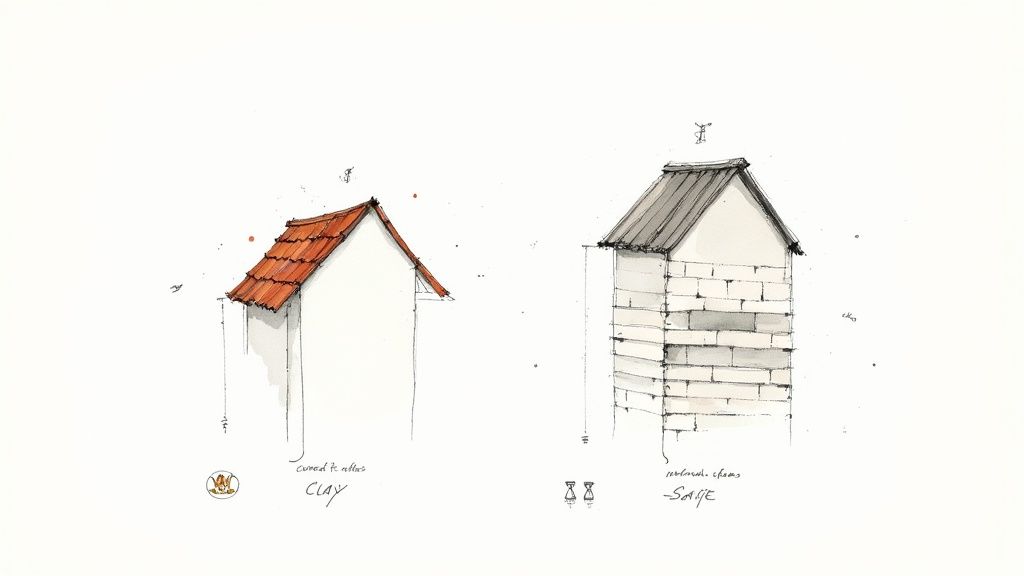
This category of roofing is all about incredible durability. When installed correctly, a tile or slate roof can easily last for 100 years or more. They are completely fireproof, impervious to insects and rot, and they can handle the absolute worst weather our region can throw at them without flinching.
Exploring the Premier Options: Clay, Concrete, and Slate
While we often group them together, clay, concrete, and slate each have their own unique characteristics. Understanding these differences is the key to picking the right one for your home’s style and, just as importantly, its structural capacity.
- Clay Tiles: Known for their classic, warm terracotta color, clay tiles instantly bring to mind Mediterranean or Spanish-style architecture. They are fired in a kiln, which makes them incredibly dense and hard-wearing.
- Concrete Tiles: A more versatile and often more affordable cousin to clay, concrete tiles can be molded into various shapes and colors. They do an excellent job mimicking the look of clay, wood shakes, and even slate, giving you much more design flexibility.
- Natural Slate: This is the pinnacle of luxury roofing. Quarried directly from the earth, every single piece of slate is unique. The subtle shifts in color and texture create a sophisticated, one-of-a-kind roof that is truly breathtaking.
The Two Big Considerations: Weight and Cost
The incredible performance of tile and slate comes with two major footnotes: their weight and their cost. These are some of the heaviest materials you can put on a roof.
Before you fall in love with the look, a structural engineer must give your home the green light. They need to confirm that your home’s framing can handle a load that can be 3 to 4 times heavier than a standard asphalt shingle roof. This often means reinforcing the structure, which adds to the project’s bottom line.
Installation is not a job for just any crew, either. It is a specialized craft that requires artisans who know how to handle these heavy, sometimes brittle materials without causing damage. When you combine the high material cost, potential structural work, and specialized labor, it is clear why tile and slate sit at the top of the price range.
For homeowners who love the tile look but are concerned about the weight, modern composites are a fantastic alternative. You can learn more about these lightweight options by reading about materials like Brava Roof Tile. But for the right home and budget, a tile or slate roof is an investment in permanence and elegance that no other material can replicate.
Wood vs. Composite: The Natural Look and Its Modern Rival
For homeowners seeking that classic, textured look, there are two primary paths you can take. One is the traditional route, embracing the authentic character of natural wood. The other uses modern engineering to capture that same aesthetic but without the demanding upkeep. Let’s break down which might be the right fit for your home.
The Timeless Charm of Wood Shakes
Nothing quite delivers that rustic, organic beauty like a genuine wood shake roof, especially one made from cedar. Here in the Pacific Northwest, cedar shakes are an iconic look, blending seamlessly with our forested landscapes and classic home styles. They give a home a warm, inviting feel that seriously boosts its character and curb appeal.
Beyond just looking great, wood shakes offer natural insulation, which can help keep your home’s temperature more stable. But this timeless beauty comes with a serious commitment, particularly in our damp Puget Sound climate.
A wood shake roof is a living material. It needs consistent, dedicated maintenance to fight off moss, rot, and insects—all of which can quickly degrade it in a wet environment like ours.
This is not just a suggestion; regular cleaning and treatments are absolutely essential if you want the roof to last anywhere near its expected lifespan.
Composite Roofing: The Best of Both Worlds?
What if you could get the stunning look of natural materials without their inherent drawbacks? That is exactly where composite (or synthetic) roofing comes in. These high-tech products are engineered from the ground up to solve the very problems that plague natural wood, slate, and tile.
Composite shingles are typically made from a blend of recycled materials, polymers, and other durable components. This manufacturing process allows them to be molded into incredibly realistic textures and shapes that are nearly indistinguishable from the real thing:
- Cedar Shakes: They capture the deep grain and staggered edges of real wood.
- Slate Tiles: They mimic the chiseled look and subtle color shifts of quarried slate.
- Clay Tiles: They can recreate those classic barrel or flat tile shapes perfectly.
This versatility is a complete game-changer. You can get that premium, high-end look without the punishing weight, fragility, or constant maintenance. If you’re curious to learn more about traditional wood, our guide on what is a cedar shake roof dives deeper into the specifics.
The true advantage of composite materials is their incredible durability paired with minimal upkeep. They are designed to resist everything that damages natural materials. Composites will not rot, curl, or crack, and insects have no interest in them. Many even boast a Class 4 impact rating—the highest for hail resistance—and a top-tier Class A fire rating.
Ultimately, composite roofing offers a tough, lightweight, and low-maintenance alternative for homeowners who refuse to compromise on aesthetics. It is the beauty of nature, perfected by science.
How to Compare and Choose Your Roofing Material
With so many excellent roofing materials on the market, picking the right one can feel like a daunting task. The secret is not to find the one “best” roof, but to find the one that is the absolute best fit for your home, your budget, and your lifestyle.
It is all about aligning your aesthetic preferences, your budget, and your long-term plans for the house. You are looking for the sweet spot where those three things intersect.
To make this easier, let’s put the most common options side-by-side. This gives you a clear snapshot of the trade-offs between what you pay upfront and what you get in return over the decades.
Roofing Materials At-a-Glance Comparison
Here is a quick-reference table that boils down the key differences between the most popular residential roofing materials we see here in the Puget Sound.
| Material Type | Installed Cost (Per Sq. Ft.) | Average Lifespan | Key Advantages | Key Disadvantages | Best For Homeowners Who… |
|---|---|---|---|---|---|
| Asphalt Shingles | $4.50 – $8.25 | 20 – 50 years | Affordable, wide style variety, easy to install | Shorter lifespan, prone to moss in damp climates | …want a reliable, budget-friendly option with lots of design flexibility. |
| Standing Seam Metal | $10.00 – $17.05 | 40 – 70 years | Extremely durable, energy-efficient, fire-resistant | Higher initial cost, requires specialized installers | …are prioritizing longevity and low maintenance for their “forever home.” |
| Clay & Concrete Tile | $11.00 – $24.75 | 50 – 100+ years | Unmatched longevity, classic beauty, superior durability | Very heavy, high cost, requires structural assessment | …have a specific architectural style (like Spanish or Mediterranean) and want a roof that can last a century. |
| Natural Slate | $12.00 – $22.00 | 75 – 150+ years | ‘Forever’ roof, unique natural look, fireproof | Highest cost, extremely heavy, fragile underfoot | …are making a significant investment in a historic or luxury home and want unparalleled beauty and lifespan. |
| Wood Shake | $8.00 – $14.30 | 25 – 30 years | Iconic rustic aesthetic, natural insulation | High maintenance needs, vulnerable to rot & moss | …love the classic Pacific Northwest look and are committed to regular upkeep. |
| Composite/Synthetic | Varies Widely | 40 – 50+ years | Mimics premium materials, lightweight, low-maintenance | Can be expensive, dependent on brand quality | …want the look of slate or shake without the weight, cost, and maintenance headaches. |
While this table is a fantastic starting point, the numbers do not capture the full picture. Your personal priorities are what truly matter.
Your Personal Decision-Making Checklist
To find the material that truly fits, you need to ask yourself the right questions. Running through this checklist will bring a lot of clarity to your decision.
- What is my realistic budget? Be honest with yourself about the total amount you can invest, including a little extra for any surprises. This alone will narrow the field significantly. A slate roof might be your dream, but if it is out of reach, it is far better to focus on a top-of-the-line architectural shingle that fits your budget.
- What architectural style am I trying to match? Your roof is a huge part of your home’s curb appeal. A sleek, modern standing-seam metal roof can look out of place on a historic Craftsman, where cedar shakes or a composite slate might feel right at home. Take a good look at your home’s lines, colors, and overall aesthetic.
- How long do I plan to live in this home? If you are settled in for the long haul, investing in a 50+ year roof like metal or composite is a smart financial move. However, if you think you might sell in the next 5-10 years, a premium architectural asphalt shingle offers a fantastic return on investment without the hefty upfront cost.
- How much maintenance am I willing to do? This is a critical question. If you are a “set it and forget it” kind of person, you will be happiest with low-maintenance options like metal, composite, or tile. If you adore the natural beauty of wood and do not mind scheduling regular upkeep, then cedar shakes are still a great choice.
This simple decision tree can help you see how your feelings about aesthetics and maintenance point you toward certain materials.
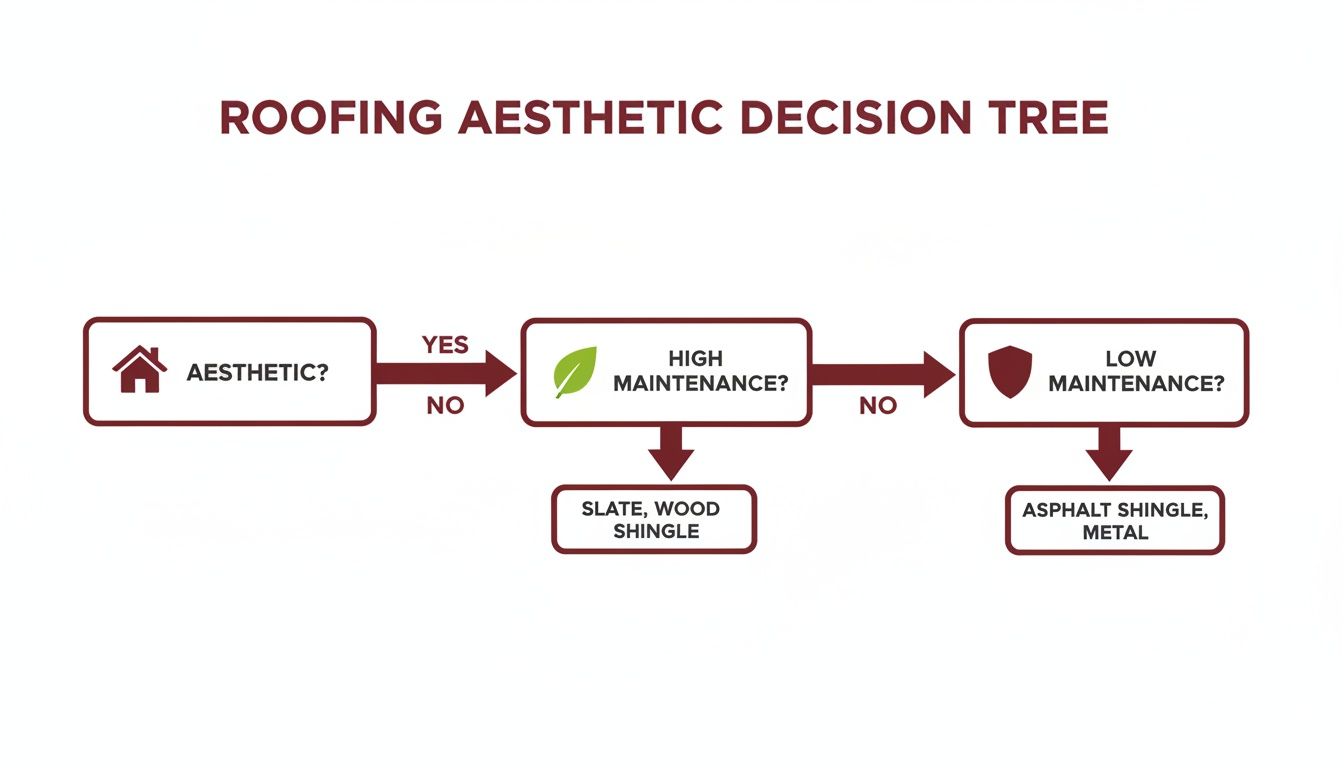
As the chart shows, if you want a specific look but also a low-maintenance lifestyle, you will often land on highly engineered or naturally tough materials like metal and synthetics.
Choosing a roofing material is ultimately a balance of four key factors: Cost, Durability, Aesthetics, and Maintenance. No single material wins in every category, so your job is to decide which of these factors is most important for your home and your peace of mind.
Once you have zeroed in on one or two materials, the next step is to get detailed bids from qualified roofers. This is where the numbers become real. To arm yourself for this critical stage, check out our guide on comparing roofing estimates, which walks you through what to look for in a quality proposal.
Answering Your Top Questions About a New Roof
Making the final decision on a new roof brings up many questions. To provide clarity, we have put together answers to some of the most common things homeowners ask at this stage. Think of this as a final check-in to clear up any doubts so you can move forward with confidence.
How Does Our Local Climate Affect My Roofing Choice?
This is perhaps one of the most important questions you can ask. Here in the Puget Sound, our weather is a significant factor—the constant rain and damp air create the perfect breeding ground for moss, algae, and eventually, rot.
Because of this, you want materials that do not retain moisture. Non-porous options like metal and composite roofing are fantastic because they shed water easily, giving moss and algae nowhere to take hold. Architectural asphalt shingles are still a great and popular choice, but you will need to be more diligent with maintenance to keep them clean and performing well over their lifespan.
In a wet climate like ours, a roof’s ability to dry out quickly and resist organic growth is just as critical as its raw durability. Picking the right material for Western Washington is the key to getting the most years out of your investment.
What is the Real Difference Between Architectural and 3-Tab Shingles?
The conversation about these two asphalt shingles really boils down to three things: aesthetics, longevity, and cost. A 3-tab shingle is the classic, entry-level option. It is made from a single, flat layer, giving roofs a simple, uniform pattern. They are the most budget-friendly choice but have a shorter lifespan, usually around 15 to 20 years.
Architectural shingles, on the other hand, are a significant upgrade. They are thicker because they are built with multiple laminated layers. This construction gives them a rich, dimensional texture that looks a lot like high-end wood shakes. More importantly, that more robust build means they last much longer—often 30 to 50 years—and stand up much better to wind and weather. They cost more upfront, but the longevity and curb appeal deliver far greater value in the long run.
Will a New Roof Actually Increase My Home’s Value?
Yes, absolutely. Year after year, getting a new roof is ranked as one of the smartest home improvements you can make, with one of the highest returns on investment. It is an instant boost to your home’s curb appeal, but more than that, it gives potential buyers incredible peace of mind.
Knowing they will not have to worry about a massive replacement expense for decades is a huge selling point. The material matters, too. A brand-new architectural shingle roof gives a strong ROI, but choosing premium types of roofing materials for homes, like standing-seam metal or a top-tier composite, can turn your roof into a true standout feature that helps justify a higher asking price.
How Do I Know if I Need a Simple Repair or a Full Replacement?
Figuring this out really depends on the scale of the problem. If a few shingles blew off in a storm or you have one small, contained leak, a targeted repair is almost always the right move.
However, if you are seeing signs of wear and tear all over the place, that is your roof telling you its time is up. It is time to start thinking about a full replacement if you see:
- Widespread Cracking: Shingles look brittle and have cracks across many different sections of the roof.
- Major Curling: The edges of your shingles are peeling up, leaving them exposed to wind and rain.
- Granule Bald Spots: You are finding piles of the sand-like granules from your shingles in your gutters.
- Old Age: Your roof is getting close to—or has already passed—its expected lifespan.
When you are facing these issues, a full replacement is a much smarter financial decision than spending money on one temporary patch after another.
Choosing from all the different types of roofing materials for homes can feel overwhelming, but you do not have to figure it out on your own. At Four Seasons Roofing, we have been helping homeowners across Western Washington protect their biggest investment since 1996. We know what works in our climate and use only the best materials to get the job done right.
Ready to talk about your project? Contact us for a free, no-pressure inspection and a clear, detailed proposal.