
You notice a brown water stain on the ceiling after a week of rain. Then you look up and see a few curled shingles, grit in the gutter, and moss starting to thicken on the shady side of the roof. That’s usually when the big question hits. How much is this going to cost?
If you live in the Puget Sound area, that worry is understandable. Roofs here deal with long wet seasons, moss, tree debris, and homes with everything from simple ramblers to steep multi-level roofs. The good news is that learning how to estimate roof replacement cost is a lot less mysterious once you know what drives the price.
Feeling Anxious About Your Roof's Cost? You're Not Alone
Most homeowners don’t think much about the roof until something changes.
Maybe you’ve spotted shingles that look tired. Maybe water showed up around a vent or skylight. Maybe you bought an older home in Seattle, Everett, or Tacoma and you’re not sure whether the roof has a few good years left or needs attention now.
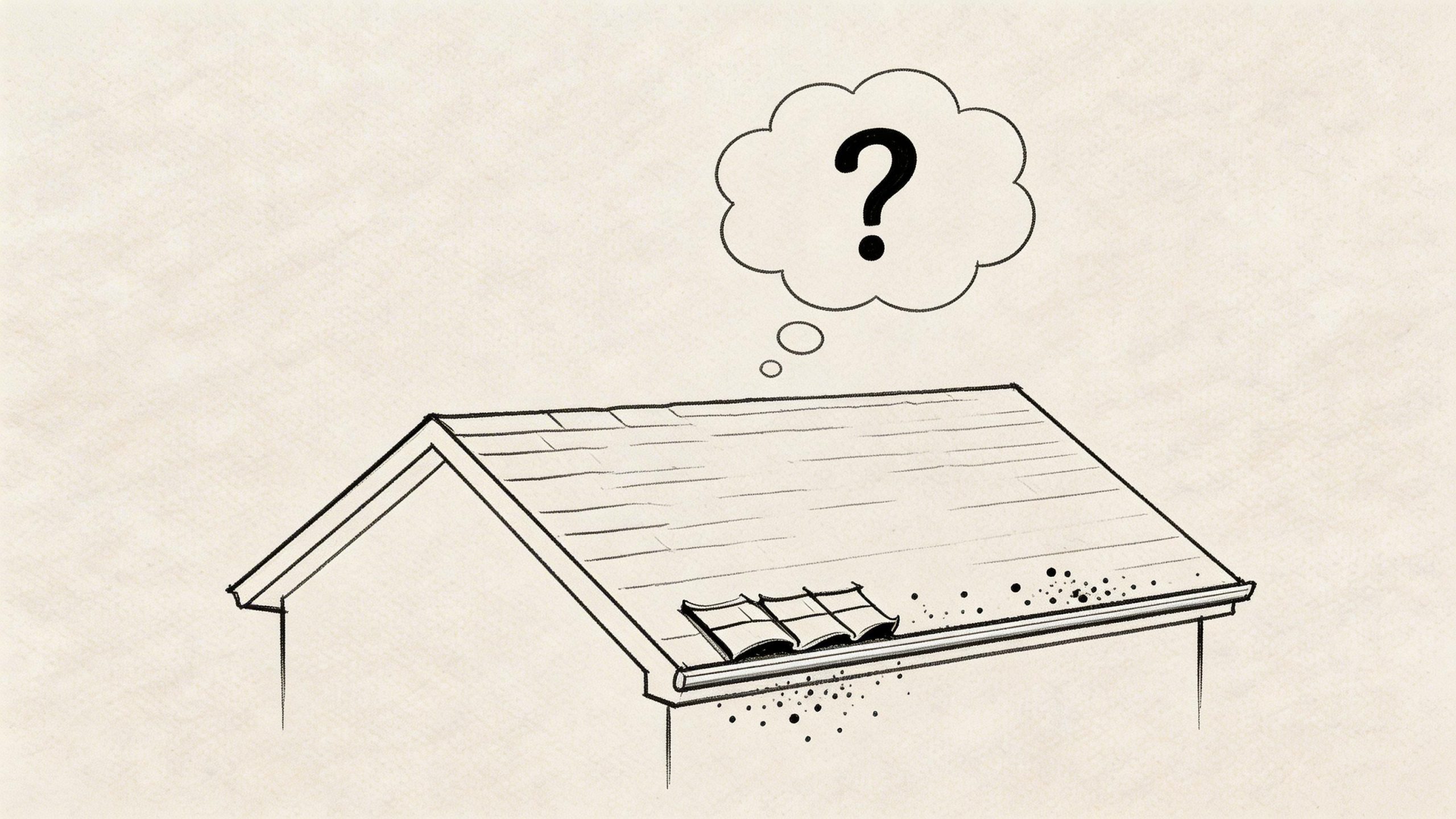
That uncertainty is often harder than the repair itself. When you don’t know the ballpark cost, every drip feels bigger. Every forecast with more rain feels urgent.
What homeowners usually notice first
A roof rarely introduces itself with a neat, obvious answer. It tends to show up as small clues:
- Curling or missing shingles that make you wonder if the roof is just aging out
- Granules in gutters that tell you the shingle surface is wearing down
- Dark streaks or moss that hold moisture against the roof
- A ceiling stain or musty smell that hints water may already be getting in
If your home sits under tall trees in places like Sammamish or Redmond, you’ve probably already seen how quickly shade and damp conditions can change a roof’s condition. If you’re closer to the water in areas like Shoreline or Burien, constant weather exposure can make wear feel more noticeable.
A roof problem feels expensive when it’s vague. It gets easier to handle once you break it into size, material, labor, and removal.
Clarity comes from the process
At Four Seasons Roofing, this is the kind of concern crews hear every day across Western Washington. The company has helped local homeowners with roof replacement and major repairs since 1996. That matters because older Puget Sound homes often need more than a simple online price guess.
A useful estimate doesn’t start with pressure. It starts with knowing what roof you have, what shape it’s in, and what kind of replacement fits your home. If you want a starting point without committing to anything, you can request a free roof estimate for Puget Sound homeowners.
The Core Numbers That Drive Your Roof's Price Tag
A roof bid starts to make sense once you know what contractors are measuring. On most Puget Sound homes, the biggest price drivers are roof size, pitch, complexity, and local prep work.
Those four factors explain why two homes with similar square footage can end up with very different proposals.

Start with roof size, not house size
Roofers price work in squares. One roofing square equals 100 square feet of roof surface.
That sounds simple, but it trips up a lot of homeowners. Your home's interior square footage is not the same as the area a crew has to tear off, dry in, and shingle. A one-story rambler often has a much larger roof than a two-story house with the same living space.
That is why online estimates can feel off. They often start with house size because that is the number homeowners know, while roofers have to price the surface they will work on.
If you want a local reference point before you call for bids, this guide to roof replacement cost per square gives a clearer view of how contractors break pricing down.
Pitch changes the roof's surface area
A steeper roof usually costs more for two reasons. It has more surface area to cover, and it takes more time to work on safely.
According to Buildee’s roof estimating guide, pitch alone can increase the roof’s surface area by 20 to 50 percent over the footprint below. That matters a lot in Western Washington, where many older homes have prominent gables, split-level sections, or steep front elevations that look manageable from the curb but create more roofing area than expected.
For a homeowner, the practical takeaway is straightforward:
- Low-slope or moderate roofs usually need less material and move faster
- Steep roofs need more shingles, more setup, and slower, more careful labor
- Very steep sections can also affect staging and safety equipment
If your roof looks steep from the driveway, budget with caution. The house may be average in size, but the roofing surface may not be.
Complexity raises labor faster than material cost
A simple roof system is cheaper to replace because crews can move efficiently. Once a roof has several valleys, dormers, skylights, chimneys, or intersecting ridges, labor climbs.
Buildee notes that features such as chimneys can add 5 to 10 percent cost in a systematic estimate because they require more detail work around penetrations. That lines up with what Puget Sound homeowners often see in real proposals. Flashing, cutting, sealing, and waterproofing around those areas take time, and mistakes there are where leaks tend to start.
A few common examples:
- Basic ranch or rambler roofs are often quicker to measure and replace
- Homes with multiple gables require more layout, cuts, and waste
- Chimneys, skylights, and roof-to-wall transitions increase flashing work and inspection points
This is also why the cheapest bid deserves a close look. If one contractor prices a complex roof almost like a simple one, something may be missing from the scope.
Puget Sound conditions add their own pressure
Western Washington roofs deal with conditions that homeowners in drier regions do not worry about as often. Moss, wet debris, slick surfaces, and frequent weather interruptions can all affect labor and prep time.
On homes under fir, cedar, or maple trees, crews often have to spend extra time cleaning valleys, clearing buildup, and preparing the deck before installation starts. Persistent moisture can also expose soft sheathing or trouble spots around vents and flashing that were hidden under old roofing.
That does not mean every local roof costs more. It means the final number here is shaped by climate in a very practical way.
A simple homeowner method for rough budgeting
Use the same basic sequence a contractor uses at the early estimating stage:
- Measure the roof area as closely as you can
- Convert it into squares by dividing by 100
- Classify the pitch as low, medium, or steep
- Count detail areas such as skylights, chimneys, valleys, and dormers
- Add room for local prep work such as moss removal, weather protection, and difficult access
That will not replace an on-site inspection, but it will help you ask better questions and spot a quote that seems far outside the normal range.
If you like a structured approach to project budgeting, PropLab has a useful guide on how to accurately estimate rehab costs. The same habit helps with roofing. Define the work clearly first, then compare pricing against the actual scope.
Choosing Your Armor Materials for a Puget Sound Roof
A roof in Western Washington has to do more than look good from the street. It has to shed rain week after week, hold up under moss-prone conditions, and make sense for the years you expect to stay in the home.
Material choice is where many estimates start to spread apart. Two roofs with the same size and similar layout can land in very different price ranges once you choose between composition shingles, metal, or a specialty product.
Why asphalt is still the default choice for many local homes
Asphalt shingles are still the starting point for a lot of Puget Sound homeowners because they balance cost, appearance, and repairability well. They fit the look of many homes in places like Kent, Bothell, Lynnwood, and across older suburban neighborhoods where a dramatic material upgrade may not add much practical value.
As noted earlier, asphalt sits at the lower end of the common replacement cost range. That makes it the material many homeowners compare first.
It also suits our region for a simple reason. A properly installed composition roof can perform well in a wet climate if the ventilation, flashing, and underlayment details are done right. The shingle alone does not make the roof succeed here. The full system does.
For many households, asphalt makes sense when:
- the roof has a standard sloped design
- the budget needs to stay controlled
- resale matters, but a premium material is not necessary
- future repairs should be straightforward and widely serviceable
Where metal earns its higher price
Metal roofing usually costs more up front, sometimes much more depending on the panel type, finish, and complexity of the roof. That higher price can still be justified on the right house.
I usually tell homeowners to pause before comparing metal to asphalt as if they are direct substitutes. They solve different problems and fit different goals. Metal often appeals to people who expect to stay put for a long time, want a distinct look, or are tired of the maintenance cycle that comes with lower-cost materials under heavy tree cover.
In the Puget Sound area, metal can also be a strong fit on steeper roofs where fast drainage is an advantage and on home styles that already lean modern, farmhouse, or cabin-inspired. On the wrong house, though, it can feel like paying luxury pricing for a feature you will never fully value.
Specialty materials are usually a design decision, not a budget decision
Slate and other premium roofing products sit in a different category. Homeowners usually choose them to match a specific architectural style, preserve the character of an older home, or get a very particular appearance.
That choice needs a clear-eyed look at the house itself. A beautiful material does not automatically make financial sense if the structure, neighborhood, or long-term plans do not support it. In many cases, a high-end composition or metal product gets you most of the visual benefit without pushing the project into a specialty budget.
Puget Sound Roofing Material Comparison
| Material | Typical Cost (Installed) | Lifespan | Best For |
|---|---|---|---|
| Asphalt shingles | Lower-cost common option | Varies by product and installation | Homeowners who want the most affordable common option |
| Metal roofing | Higher upfront cost, often with a wide range based on product choice | Generally chosen for long-term durability goals | Homeowners willing to pay more upfront for a premium material |
| Slate | Premium pricing | Specialty material | High-budget homes where appearance is a major priority |
Match the material to the house, not just the brochure
A simple ranch home with a moderate pitch often points toward asphalt. A steep-roofed custom home where the owner plans to stay for decades may justify metal. A home with a low-slope porch or addition may need more than one roofing system, even if the main visible sections use shingles.
That is the part homeowners sometimes miss. The best choice is not the product with the longest label or the highest price. It is the one that fits your roof shape, your maintenance tolerance, and the budget you can live with after the invoice is paid.
If you want a clearer side-by-side look at styles, longevity, and trade-offs, this roofing materials comparison guide lays it out in plain language.
Beyond the Shingles Uncovering Labor and Hidden Costs
Homeowners often start with the shingle price because it’s easy to picture. But the full estimate includes much more than the visible roofing material.
That’s where a lot of confusion comes from. Two bids can use similar shingles and still end up far apart because one includes the complete job and the other leaves key costs vague.

Tear-off and disposal are real costs
Old roofing has to come off somewhere. It has to be handled, loaded, hauled away, and disposed of properly.
According to RoofSnap’s estimating guide, removing and disposing of an old roof can add $0.50 to $2.00 per square foot to the total bill.
That matters a lot in Puget Sound homes with older roofing layers or roofs that have trapped moisture problems underneath. In a damp climate, full tear-off is often the only way to see what’s happening below the shingles and address hidden trouble before it gets covered back up.
Waste is normal, not a mistake
Roofing isn’t like laying one giant sheet over the house. Crews cut around ridges, valleys, vents, and edges. That means some material becomes off-cuts.
RoofSnap notes that contractors need to account for 10-15% material waste on a standard job. If a bid seems to ignore waste completely, it may be leaving out a normal part of the work.
For homeowners, that’s useful because it explains why the material count doesn’t always match the exact roof area.
Labor is where workmanship shows up
A roof replacement is physical, skilled work. Crews aren’t just placing shingles. They’re protecting landscaping, staging materials, removing debris, handling details around penetrations, and keeping the home dry through the process.
This is also where steep roofs in places like North Bend or homes with awkward access in older Seattle neighborhoods can cost more. It takes longer to move safely, longer to stage the project, and longer to finish detail work correctly.
A lower labor number may look attractive on paper. It can also mean a rushed job, a thin scope, or corners you won’t see until the next heavy rain.
Why itemized proposals matter
A trustworthy estimate should help you see what you’re paying for.
RoofSnap reports that homeowners who receive itemized quotes are better able to understand and negotiate costs, and are 65% more likely to achieve a 10% price reduction than those with lump-sum bids. That’s one reason vague one-line proposals deserve extra caution.
A clear estimate should separate out things like:
- Removal and disposal so you know whether tear-off is included
- Material quantities so waste and coverage make sense
- Labor scope so the job doesn’t feel like a mystery
- Permit and cleanup items so you’re not surprised later
If a proposal gives you one big number and very little detail, you’re not really comparing roofers. You’re comparing how much each one is hiding.
For homeowners sorting through multiple bids, this page on comparing roofing estimates can help you spot the difference between a complete proposal and one that only looks cheaper.
Putting It All Together Examples and Our Roof Cost Calculator
Roof costs make more sense when you apply them to real houses.
A homeowner in Sammamish won’t have the same estimate as a homeowner in Shoreline, even if both are replacing asphalt shingles. The roofs may be different in shape, pitch, access, and prep needs.
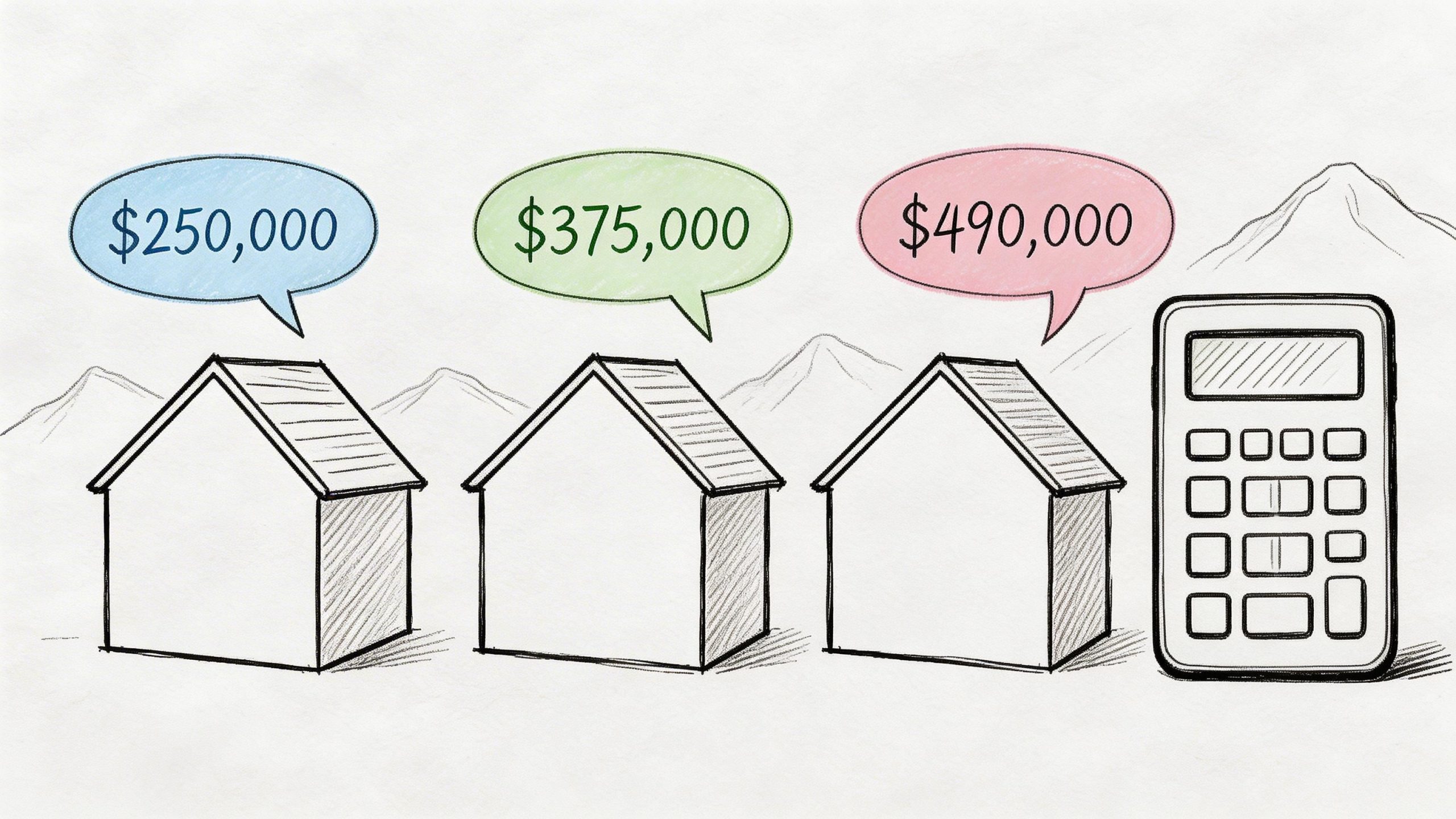
Example one
A family in Sammamish has a larger roof with several ridges and a chimney. The roof sits under trees, so moss removal and cleanup are part of the prep.
For this kind of home, the estimate usually lands above the simplest baseline because complexity and local conditions add labor. If the homeowners choose asphalt, they’re still likely to stay well below the cost of a comparable metal roof, but the steep design and prep work will matter.
Example two
A Shoreline rambler has a simpler roof line, but it’s older and needs a full tear-off before new materials go on.
That kind of house can be easier to reroof than a steep multi-level home. Even so, the tear-off and disposal piece changes the total. If there are signs of trapped moisture or aging wood below the old roof, the homeowner should expect the proposal to reflect careful inspection rather than a bare-bones replacement number.
Example three
A Redmond homeowner wants to compare asphalt and metal on the same house.
This is one of the easiest ways to see how material choice drives the project. The roof shape may stay the same, and the tear-off may stay the same, but the installed price can shift sharply depending on whether the owner chooses asphalt or metal. That comparison is often the moment where a homeowner decides whether they’re buying for today’s budget or for a longer horizon.
A better way to get your own number
You can do rough math by hand, and it helps. But most homeowners don’t want to spend their weekend guessing roof area, adjusting for pitch, and trying to account for all the local variables.
That’s where a calculator is useful. One practical option is the roof cost calculator, which gives homeowners a way to build a personalized budget estimate based on the kind of factors that affect real projects.
It won’t replace an on-site inspection. But it can help you move from vague worry to a more grounded starting point.
Your Checklist for a Transparent and Trustworthy Proposal
Once you have estimates in hand, the job changes. You’re no longer estimating the roof. You’re judging whether the proposal in front of you is complete, fair, and trustworthy.
A good roofing proposal should feel clear. If it feels slippery, rushed, or strangely vague, pay attention to that.
What should be in the proposal
Look for these basics before you compare price:
- Company license and insurance details so you know who is responsible for the work
- Exact roofing material listed including the type being installed
- Clear scope of work covering tear-off, replacement, and cleanup
- Warranty details for both materials and workmanship
- Payment schedule that is written out and easy to follow
- Site protection and debris handling so you know how your property will be treated
If one proposal spells all of this out and another doesn’t, they are not offering the same level of clarity.
Red flags homeowners should take seriously
Some warning signs show up again and again:
- Pressure to sign right away
- One lump-sum number with little detail
- Verbal promises not backed by the written bid
- Unclear answers when you ask about removal, cleanup, or warranty
- A bid that seems dramatically cheaper without explaining why
A homeowner doesn’t need to be a roofing expert to notice when a proposal avoids specifics.
The right contractor shouldn't mind careful questions. A careful homeowner is easier to work with because expectations are clear on both sides.
Negotiation works better with details
If you want to negotiate fairly, start by understanding the scope before you talk about price.
That’s also why outside guidance can help. This article on how to negotiate with contractors offers practical ideas that apply well when you’re reviewing roofing bids. The best conversations happen when both sides are looking at the same detailed scope of work.
Your Confident Next Step to a Secure Roof
Roof replacement feels less overwhelming when you know what shapes the price.
Size matters. Pitch matters. Roof complexity matters. Material choice matters. Tear-off, disposal, labor, and proposal detail matter too. When you understand those pieces, you can look at your own home with a calmer, more informed eye.
That’s especially important in Western Washington. Rain, moss, tree cover, and older housing stock can all affect what your roof needs. If you’re noticing warning signs, the best next move is to replace guessing with clear information.
You don’t need to become a roofing expert overnight. You just need a reasonable budget range and a proposal that tells the truth about the work.
If you want a quick planning number, use a roof cost calculator. If you want a firm quote, schedule an inspection and get eyes on the roof. Either path gives you something better than worry. It gives you a decision you can make with confidence.
If you’re ready for a clearer idea of what your roof may cost, Four Seasons Roofing offers practical next steps for Puget Sound homeowners, including a roof cost calculator and complimentary inspections so you can move forward with a real budget instead of a guess.